On October 23, a live-action version of one of the most emotionally exhausting anime films ever made opens in North American cinemas. 5 Centimeters Per Second (2025), directed by Yoshiyuki Okuyama and distributed stateside by GKIDS, is not a reissue of Makoto Shinkai's 2007 original. It is a full dramatic adaptation — new cast, new screenplay, new runtime — built on the bones of an anime that spent nearly two decades quietly accumulating the cultural weight that makes this kind of investment possible. The move from cult anime to live-action theatrical product in Western markets is not a small step. That it happens with 5 Centimeters Per Second, of all things, is worth examining.
 Official trailer
What the Original Actually Was
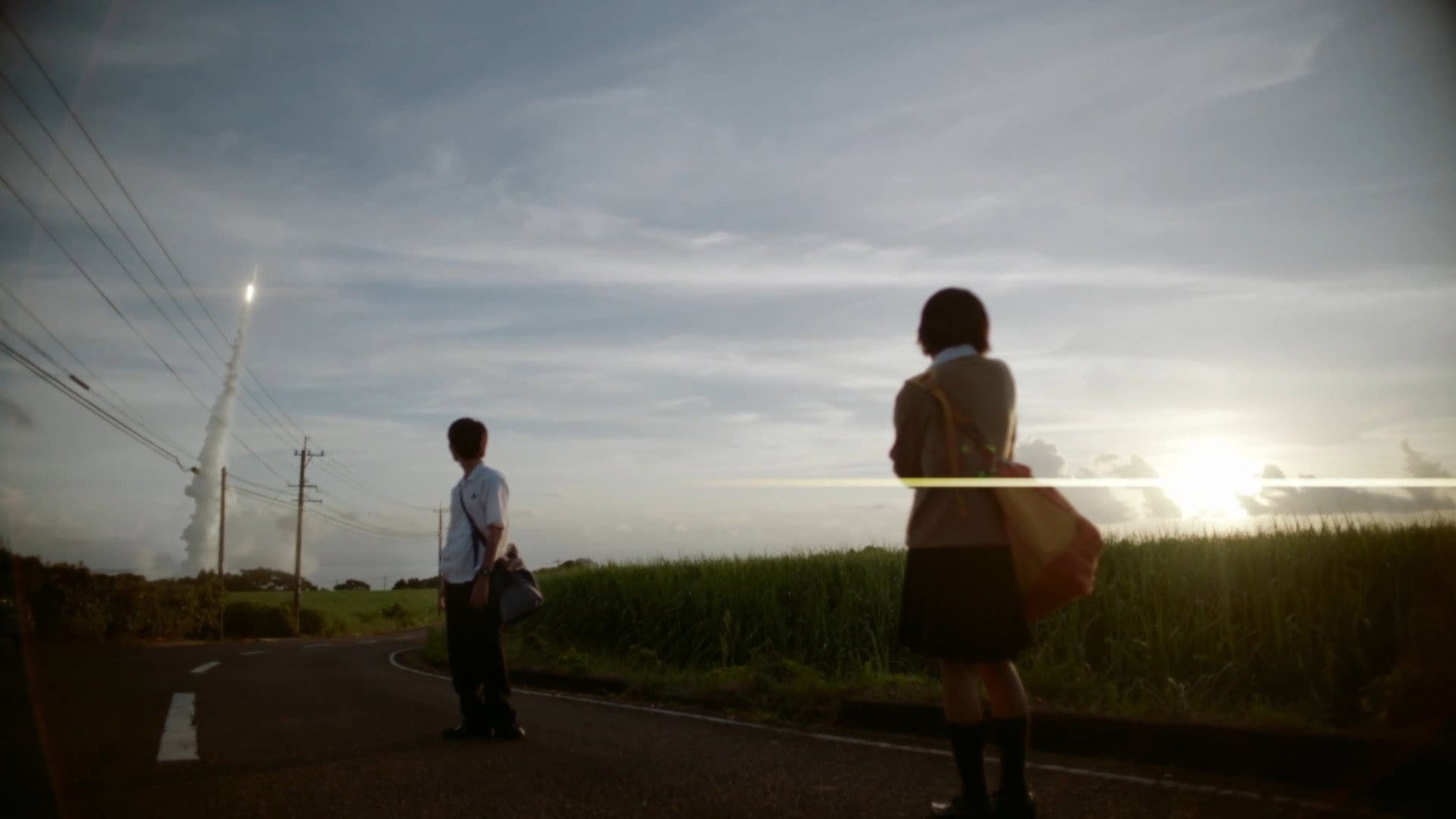
The 2007 anime is Shinkai's second feature, produced at CoMix Wave Films and running just 63 minutes. It consists of three segments in triptych style, each following a different phase in the life of protagonist Takaki Tōno and the relationships that define and then slowly evacuate his interior life. It premiered in Japan on March 3, 2007, and took home Best Animated Feature at the 2007 Asia Pacific Screen Awards. It did not become a blockbuster. It was a precise, quiet film about the physics of growing apart — distance as the default state of adult life — and it connected with audiences the way elliptical literature does: slowly, personally, and without spectacle.
That deliberate restraint is also what made Shinkai's trajectory so dramatically legible in retrospect. The man who made a 63-minute meditation on missed connections would go on to direct Your Name. (2016), which accumulated $405 million worldwide and reset the international ceiling for anime theatrical releases. The relationship between those two films — intimate precursor to global phenomenon — is the through-line that GKIDS is now actively monetizing, though "monetizing" undersells what's actually happening. Shinkai's back catalog has become a kind of institutional credibility. It tells distributors, programmers, and audiences what kind of filmmaker he is. And that reputation is now generating entirely new theatrical products.
The Adaptation and Its Makers
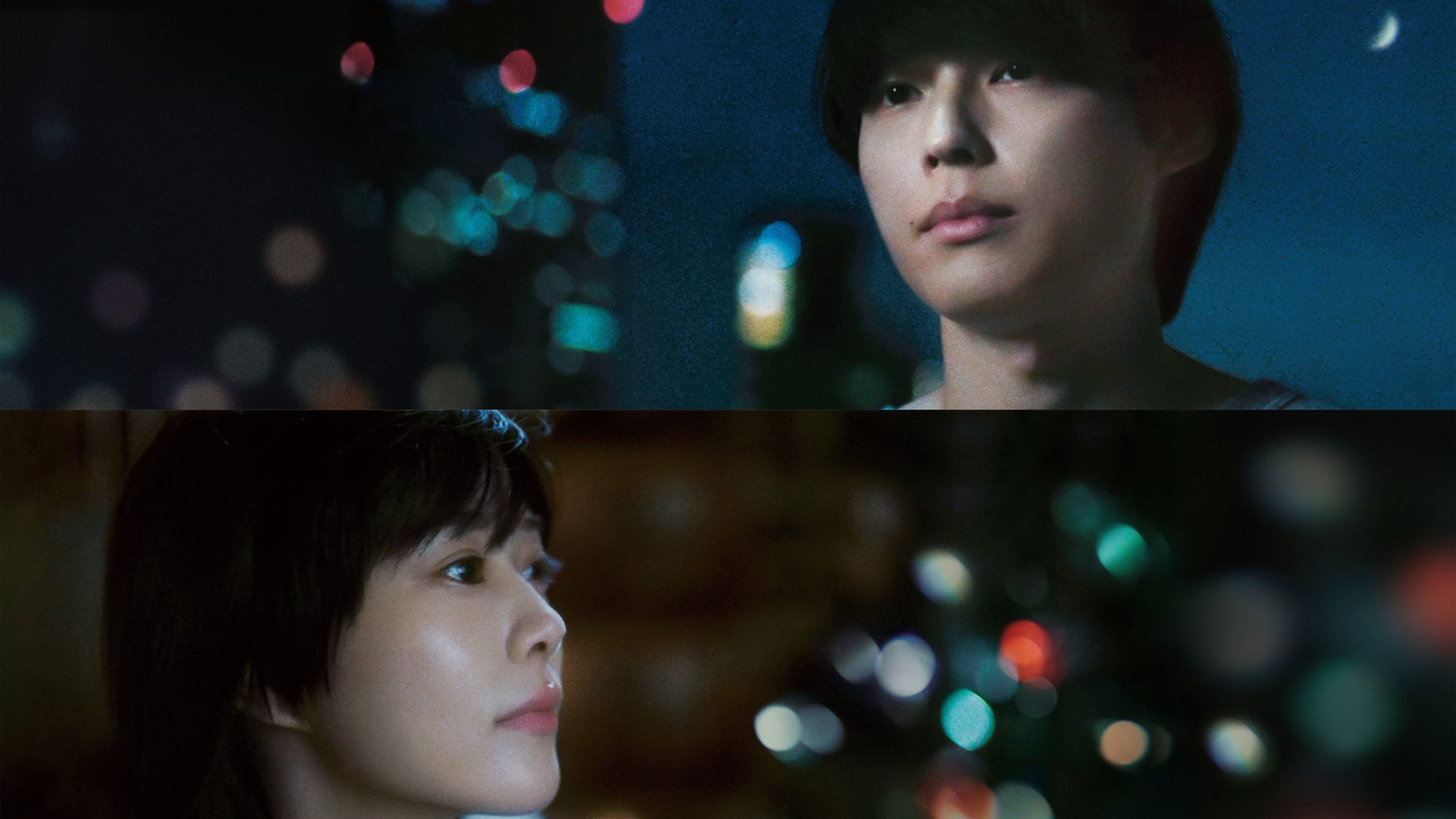
According to GKIDS' announcement, this live-action film is the first adaptation of a Makoto Shinkai animated feature into live-action — a fact worth holding. Given the volume of anime properties that have been live-actioned into mediocrity, the restraint around Shinkai's work is notable. Okuyama is not a franchise director. He is a filmmaker and photographer whose prior feature At the Bench operates at the intimate end of the spectrum, and whose music video work includes collaborations with Kenshi Yonezu — who, in a piece of elegant circularity, also performs the theme song "1991" for this adaptation.
The cast is anchored by Hokuto Matsumura, a member of the Japanese group SixTONES who previously appeared in Shinkai's own Suzume (2022) as Sōta Munakata. That casting decision is deliberate connective tissue — a performer who already inhabits Shinkai's cinematic world now stepping into a live-action translation of its older architecture. The film stars Matsumura alongside Mitsuki Takahata, Nana Mori, and Mai Kiryū, with Ayako Suzuki on screenplay and Ayatake Ezaki composing the score.
The film opened in Japan on October 10, 2025, and ranked at number two in its opening weekend, selling 278,000 tickets and earning approximately 420 million yen — around US$2.78 million — in its first three days. Those are not landmark numbers, but they are respectable for a film that is neither a franchise entry nor a sequel, and they confirmed enough commercial viability for international distribution. The film received four nominations at the 2026 Awards of the Japanese Academy, including Matsumura for Best Actor, Keisuke Imamura for Best Cinematography, Kōshirō Ueno for Best Lighting, and Noa Shiroyama — who plays young Akari Shinohara — for Newcomer of the Year.
GKIDS and the Architecture of Japanese Cinema in America
The distributor's fingerprints are on nearly every serious Japanese animated and live-action film that reaches North American cinemas. GKIDS also handles North American distribution for Shinkai's original animated catalog, including the 2007 anime, Your Name., and Weathering With You (2019). That gives the company an unusual position: it controls both the source text and its first live-action derivative in the same territory. That's less a conflict than a vertical integration — the distributor that built American audiences for Shinkai's anime is also the one positioned to introduce those same audiences to what Shinkai's work generates downstream.
The announcement noted that GKIDS first acquired North American rights to this film at its Anime NYC industry panel in August 2026. The context around that acquisition is instructive. The 2026 GKIDS slate includes 4K restorations of Studio Ghibli titles — Whisper of the Heart and The Secret World of Arrietty — in IMAX, a 10th anniversary 4K theatrical run of Your Name., a restoration of Mamoru Oshii's Angel's Egg, and Satoshi Kon's Perfect Blue in a newly restored 4K. Each of those is GKIDS treating classic anime as a legitimate theatrical product rather than a home-video afterthought. The live-action 5 Centimeters Per Second sits in that same programmatic logic, but it represents a different phase: not a restoration, but a generation — new work authorized by existing IP. That's a harder commercial argument to make, and GKIDS is making it anyway.
The model has a precedent worth tracking. GKIDS also recently brought Hirokazu Kore'eda's live-action adaptation of Look Back — itself derived from Tatsuki Fujimoto's manga — to North American cinemas after its premieres at Venice and Toronto. What's visible is a distributor building a parallel infrastructure: one track for animated originals and restorations, another for live-action works derived from or adjacent to anime IP. Both tracks are theatrical-first, treated as events rather than platform content. That insistence on the cinema window, even for catalog-adjacent material, tells you something about how GKIDS reads its audience and what that audience is willing to pay to see on a large screen.
Why This Title, and Why Now
The question that actually matters is not whether the live-action 5 Centimeters Per Second will outperform its Japanese box office in North America — it won't, the American market for Japanese live-action drama is narrower than for anime — but why this title generates enough confidence to attempt it at all. The answer is that Shinkai's 2007 film has spent nearly two decades operating as a kind of emotional landmark for a generation of anime viewers who encountered it before Your Name. made Shinkai a mainstream reference point. The film's structural melancholy — its insistence that distance is not a problem to be solved but a condition to be endured — made it the kind of work people return to at different life stages and find differently devastating each time.
That accumulated affective weight is the actual asset being brought to market. Not nostalgia for a particular film, but familiarity with a story that has been working on audiences for almost twenty years. The live-action adaptation extends that story's reach into a new medium and a new generation of potential viewers, some of whom will arrive with deep attachment to Shinkai's anime, others of whom will encounter it first through Okuyama's lens. Both pathways are viable. Both are the point. As the idol-anime model has demonstrated, the theatrical window functions as an amplifier of IP value, not just a revenue channel — a way of asserting that a given property has the cultural mass to command a shared, public viewing experience.
What the 5 Centimeters Per Second live-action release demonstrates, in cleaner form than most, is that Shinkai's early catalog has graduated from beloved specialty anime to something sturdier: foundational IP elastic enough to generate entirely new theatrical works. That's not a small distinction. Most anime of the 2007 era remains exactly what it was — a home-video artifact with an enthusiast audience. Shinkai's films from that period are now being used as the raw material for new cinema. The live-action adaptation is the evidence. The GKIDS release is the argument being made to North American audiences. Whether those audiences agree will tell us something about how far that elasticity actually extends.
As the broader landscape of legacy anime IP revival accelerates — remakes, reimaginings, and theatrical reformulations of catalog properties — the 5 Centimeters Per Second live-action stands apart. It is not a reboot trying to recapture a lapsed audience. It is a directorial interpretation by a filmmaker chosen for temperamental alignment with the source, backed by awards recognition and a credible Japanese opening, brought to North American cinemas by the distributor that already owns the emotional relationship with its most likely audience. That is a more coherent strategy than the genre typically produces. Whether the film itself honors it is a separate question — one that opens in theaters on October 23.