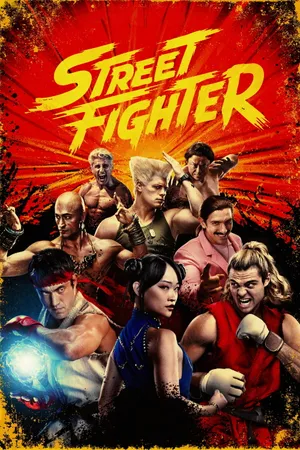
The number that matters most isn't $15.6 million. It's 855. That's how many theaters You Can See Everything (2026) opened in last weekend — fewer than a third of the locations Paramount's Street Fighter used to take the weekend's top slot with $31 million. A documentary, clocking in at two hours and 54 minutes, about a woman already sentenced to federal prison for defrauding investors — a story that has already been told in a bestselling book, an HBO documentary, and an Emmy-winning Hulu series — pulled a per-theater average that would embarrass most wide-release blockbusters. Against those 855 locations, You Can See Everything earned roughly $17,500 per screen. Street Fighter, across 3,575 venues, averaged just $8,671. The documentary didn't just perform well for its genre. It performed well, full stop.
 Official trailer
The confirmed final figure is $15.6 million for the opening weekend, making it the second-biggest documentary opening in domestic box-office history, trailing only Michael Moore's Fahrenheit 9/11 (2004), which debuted to $23.9 million on 868 screens. It breaks the record previously held by Disney Nature's Chimpanzee (2012), which grossed $10.7 million. It also beat this same weekend's other wide openers: 20th Century Studios' Whalefall ($8 million) and Focus Features' Sense and Sensibility ($7.25 million). A24 reported more than 2,000 sold-out screenings over the three-day period. The opening was nearly double the $7–$8 million that industry projections had anticipated.
None of this happened by accident, and none of it was inevitable. The Theranos story carries genuine cultural saturation. A generation of viewers already knows exactly who Elizabeth Holmes is, what she did, and what happened to her. The surface case for You Can See Everything as a must-see theatrical event was not immediately obvious. A24 had to manufacture urgency out of a subject the audience believed it already understood — and it did so by withholding almost everything.
The Architecture of Secrecy
The production was built on concealment from the start. A24 gave directors Nathan Fielder and Lance Oppenheim permission to pursue the project without a deadline or obligation to produce a finished film — if nothing came of it, the footage could simply be scrapped. The result was three years of embedded access to Holmes and her partner, Billy Evans, filmed in the weeks before Holmes reported to federal prison in 2023 to begin serving her sentence for wire fraud and conspiracy. The film premiered on September 6, 2026, at the 53rd Telluride Film Festival as a secret screening — attendees were unaware of what they were about to see and were required to surrender their mobile devices before entering the theater. The teaser trailer dropped the same day and went viral almost immediately.
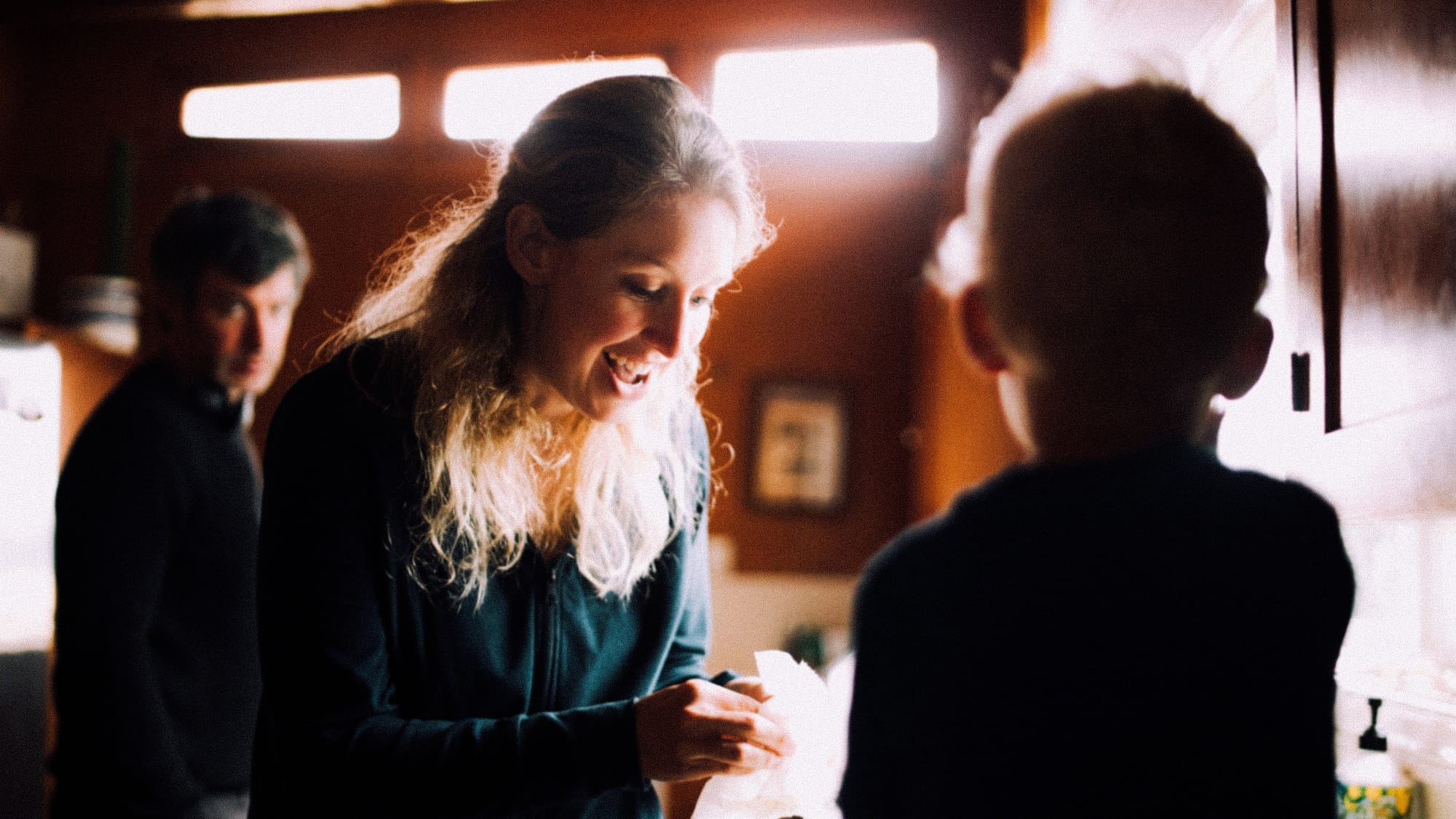
That five-week window between Telluride and the October 16 theatrical release is the entire marketing story. Fielder, a filmmaker whose cult runs deep — built through Nathan for You, The Rehearsal, and his collaboration with Benny Safdie on The Curse (2023–2024) — granted zero pre-release interviews about the film. A24 leaned into the silence, deploying a marketing campaign that treated spoiler anxiety as a primary driver, replicating the urgency that sent audiences to Avengers: Endgame on opening night. The NYFF even struck an unusual agreement with A24 to withhold its post-screening Q&A video until after opening weekend — a gesture of institutional deference to a commercial strategy built entirely around the unknown.
The mechanics here are worth examining carefully, because they reveal something structural about what theatrical urgency now requires. It is no longer sufficient for a film to be good, or even great. It must feel like an event that will be spoiled if you wait. For narrative blockbusters, that pressure is generated by franchise stakes and social media discourse. For a documentary about a person already convicted and imprisoned — a person whose story has been dissected in every available format — the only remaining lever is the experience itself: the suggestion that this version does something to the material that you cannot absorb through a summary or a thread. That is what A24 sold. And audiences, overwhelmingly, bought it.
What the Film Actually Does
The critical consensus — the film holds a 98% rating on Rotten Tomatoes from 146 reviews — suggests that the theatrical urgency was warranted. Reviewers at Telluride described the film as unlike any documentary they had seen, with Fielder's deadpan on-screen role as interviewer drawing comparisons to Sacha Baron Cohen's confrontational access journalism. But the more precise description of what makes the film formally unusual comes from those who've written about its structure: You Can See Everything begins as observational cinema — a portrait of Holmes preparing for prison, apparently offering radical transparency — and then mutates. After Holmes reports to prison and leaves the filmmakers without their subject, the film continues. Two years pass. Fielder and Oppenheim establish a porous boundary between the ongoing documentation of Holmes's saga and re-enactments of their own journey, creating a concluding section in which reality and re-enactment enter into mutual dialogue.
This is the structural move that makes the film genuinely difficult to spoil without diminishing, and therefore genuinely suited to the spoiler-dread marketing A24 deployed. The film is not simply about Holmes. It is about what happens when a filmmaker who specializes in blurring reality and fiction — whose career has been built on manufacturing sincere discomfort in the space between performance and authenticity — comes into contact with a subject who may be doing exactly the same thing. Holmes built a $9 billion company on the premise that people would believe her. Fielder built a career on the premise that he would make you believe he believes. The collision between those two logics is the film's actual subject.
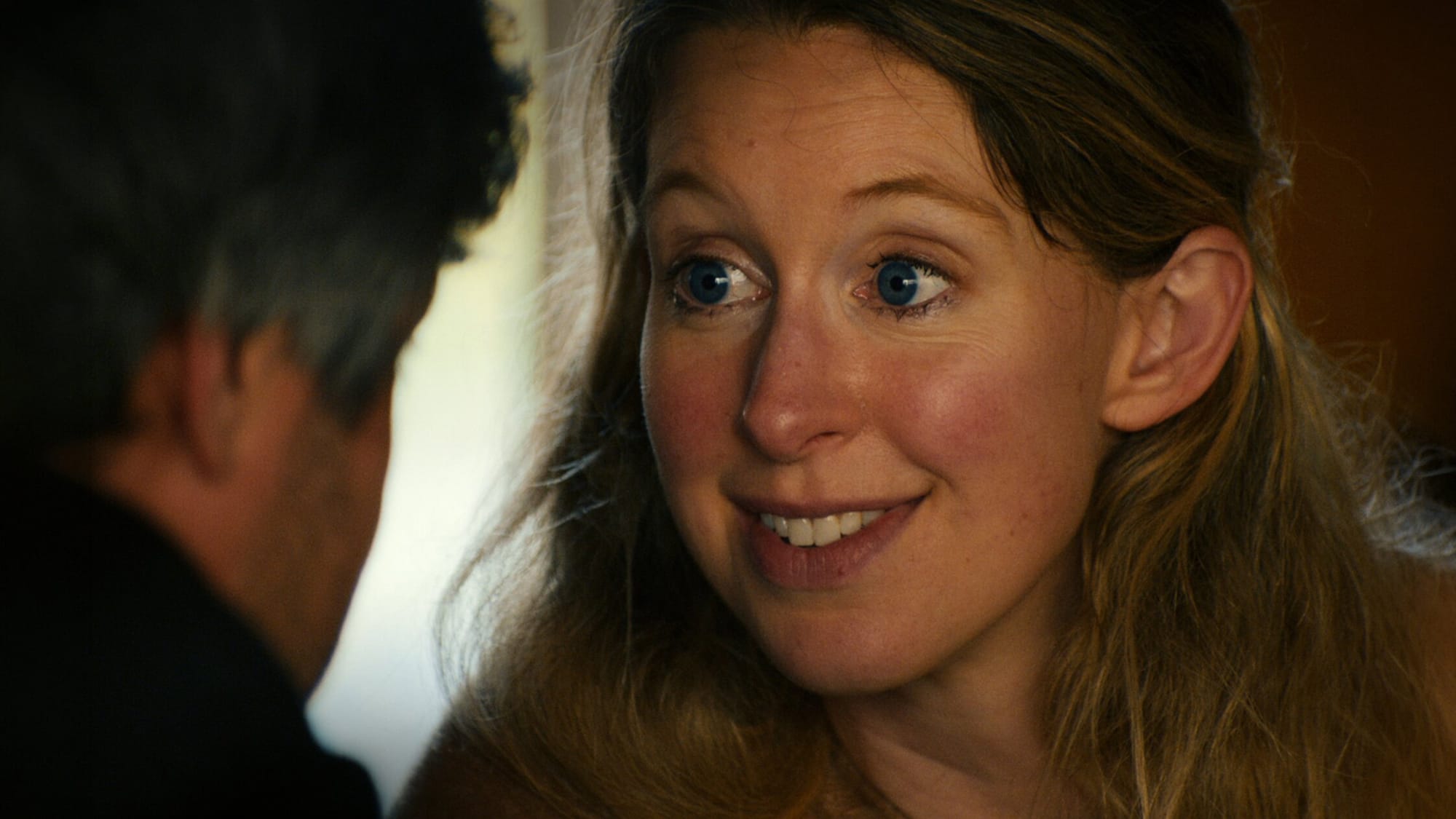
The result was what the SF Chronicle described as one of the most talked-about movies of the year — a 174-minute documentary in an era of fragmented attention, playing in under a thousand theaters, produced by a studio that has redefined what indie distribution looks like at scale. It is also, not incidentally, the biggest opening weekend for a film playing on under 1,000 screens since Borat in 2006.
What This Number Actually Diagnoses
The comparison to Fahrenheit 9/11 is instructive, but only up to a point. Moore's film in 2004 was a genuine political event — a direct intervention in a presidential election cycle, released at the peak of institutional fury over the Iraq War. Its $23.9 million opening was not purely a product of cinematic excellence; it was a mobilization. People went to see it as an act. You Can See Everything operates under entirely different cultural conditions. Holmes is not a political symbol in the way Bush was for Moore's audience. She is something harder to categorize: a figure of generational fascination, a subject of genuine interpretive dispute, a woman who may or may not have believed in her own fraud and who, as the film documents, appears to still be trying to rebuild Theranos while her children play nearby.
What both films share is the conversion of civic or cultural urgency into theatrical necessity. The lesson A24 has drawn — and refined into something approaching a repeatable model — is that the theatrical experience must feel irreplaceable. Not just preferable, but genuinely unavailable elsewhere. That requires either spectacle (the concert film model), or mystique (the secret-project model), or community (the event-film model where the audience is as much the point as the screen). You Can See Everything managed all three simultaneously. The secrecy created mystique. The Fielder fandom created community. The subject — too strange, too layered, too resistant to scroll-speed consumption — created something that streaming simply cannot replicate: the sustained, collective confrontation with ambiguity.
This is also, quietly, an argument about documentary form at a moment when the genre has largely migrated to streaming. For studios and distributors watching this weekend's numbers, the question isn't whether You Can See Everything is exceptional — it plainly is. The question is whether its model is extractable. The answer, probably, is that it requires a specific convergence: a director with a pre-existing cult audience, a subject with unresolved cultural stakes, a marketing strategy that weaponizes secrecy, and a film that actually earns the urgency it's been sold on. Those conditions don't replicate easily. But the fact that they aligned here, producing the second-largest non-concert documentary opening in history, tells you more about the current state of theatrical cinema than most trend pieces manage in twice the space.
A24 spent three years and $7 million making a film nobody knew existed. It has already earned more than double that back in a single weekend — and it's still playing. The spoiler window, by the way, is closing fast.