The rumour was always thin. On November 11, a fan account on X — the Marvel 1943 Rise Of Hydra Countdown page — posted a "BREAKING NEWS" claim that Marvel 1943: Rise of Hydra (TBA) had been cancelled, with an announcement imminent. The claim spread fast enough to reach fan circles, even though Skydance had said nothing to confirm it and no outlet had verified it. The account has since deleted the post. By any standard of games journalism, that is not a credible cancellation notice. What followed Skydance's denial, however, is.
 Official trailer
According to Kotaku, executive producer Lu Gigliotti told Skydance employees that he had spoken with the studio's executive leadership team and that the game had not been cancelled — writing in the company's Slack group: "They asked me to make sure you all hear that directly. There is no truth to these claims." The fan account had previously flagged Skydance's restructuring before the company officially announced it, lending it enough credibility to give the cancellation rumour real traction throughout the afternoon. An internal Slack message from an executive producer is precisely the kind of denial that should put the story to bed. The problem is what else Kotaku found out while reporting it.
Seven Years In, Still Not at Alpha
The game began as Amy Hennig's project within the newly established Skydance New Media in 2019. It was teased in 2022 and fully revealed in 2024, with plans to release during the 2025 holiday season. It was first delayed to "beyond early 2026" and then further delayed into 2027 and beyond. That is now a seven-year development cycle for a game that, according to the same Slack post cited by Kotaku, is only now approaching its Alpha milestone — expected later this month. Alpha, in standard game development terminology, means the point at which core features are functionally complete and the game can be played from start to finish, however roughly. It is not a finishing line. It is, in most pipelines, the beginning of the final stretch — which itself can take six months to a year or more. Kotaku's source calls the project "close to done," but that characterisation sits in uncomfortable tension with what the same reporting reveals about the game's current state.

The original pitch for Marvel 1943 was as a Netflix game, but it transitioned to a console and PC release during development. It is also well over budget, and has been significantly cut back from its original vision both in terms of length and content. Most of its action is apparently mapped to a single button, and it is "lacking significant interaction" during gameplay. That last detail is the one that stops the article dead. A Netflix interactive experience — think Bandersnatch logic — is built for a television remote or a touchscreen, not a DualSense. When that design philosophy is then ported into a full-price console release marketed on the strength of Unreal Engine 5 visuals and Hennig's Uncharted pedigree, the gap between promise and product becomes a structural problem, not a polish issue. Reports also indicate that Hennig has become less involved during the later stages of development — a detail that casts a long shadow over the leadership that generated the game's commercial expectations in the first place.
The Context Around the Denial
The rumour did not emerge in a vacuum. Skydance Games underwent a round of layoffs just over a month after the landmark merger between Warner Bros. and Paramount. On October 6, the Skydance-owned Paramount Games Studio was combined with Warner Bros. Games' internal developers, including Avalanche Software, NetherRealm Studios, and Rocksteady Studios. That consolidation triggered immediate cuts. The move impacted at least 25 staffers in the games division — with Kotaku's own reporting on the layoffs putting the number at least 30, while noting that the Marvel 1943 team does not appear to have been significantly affected. Co-CEOs David Ellison and Ynon Kreiz have promised Wall Street at least $6 billion in cost synergies from the merger, which will include layoffs. Those are the conditions in which a fan account claiming cancellation finds oxygen. When staff have watched colleagues walk out the door days before, an anonymous social media post about a game with no release window lands differently than it would otherwise. You can read more about the broader restructuring at Kynari in our coverage of Skydance Games cutting staff a month after absorbing Warner Bros.
The company itself had already confirmed it had "made the difficult decision to scale down some of our projects" in the wake of the restructuring — without specifying which ones. The gaming portfolio includes Marvel 1943: Rise of Hydra and other titles, but neither game has been identified by Skydance as affected by the layoffs, and the restructuring announcement does not establish that either project has been cancelled. That careful ambiguity is itself telling. A company confident in a release-ready product tends to say so loudly. Skydance has said, essentially, nothing publicly about Marvel 1943 in any substantive capacity.
What "Not Cancelled" Actually Means Here
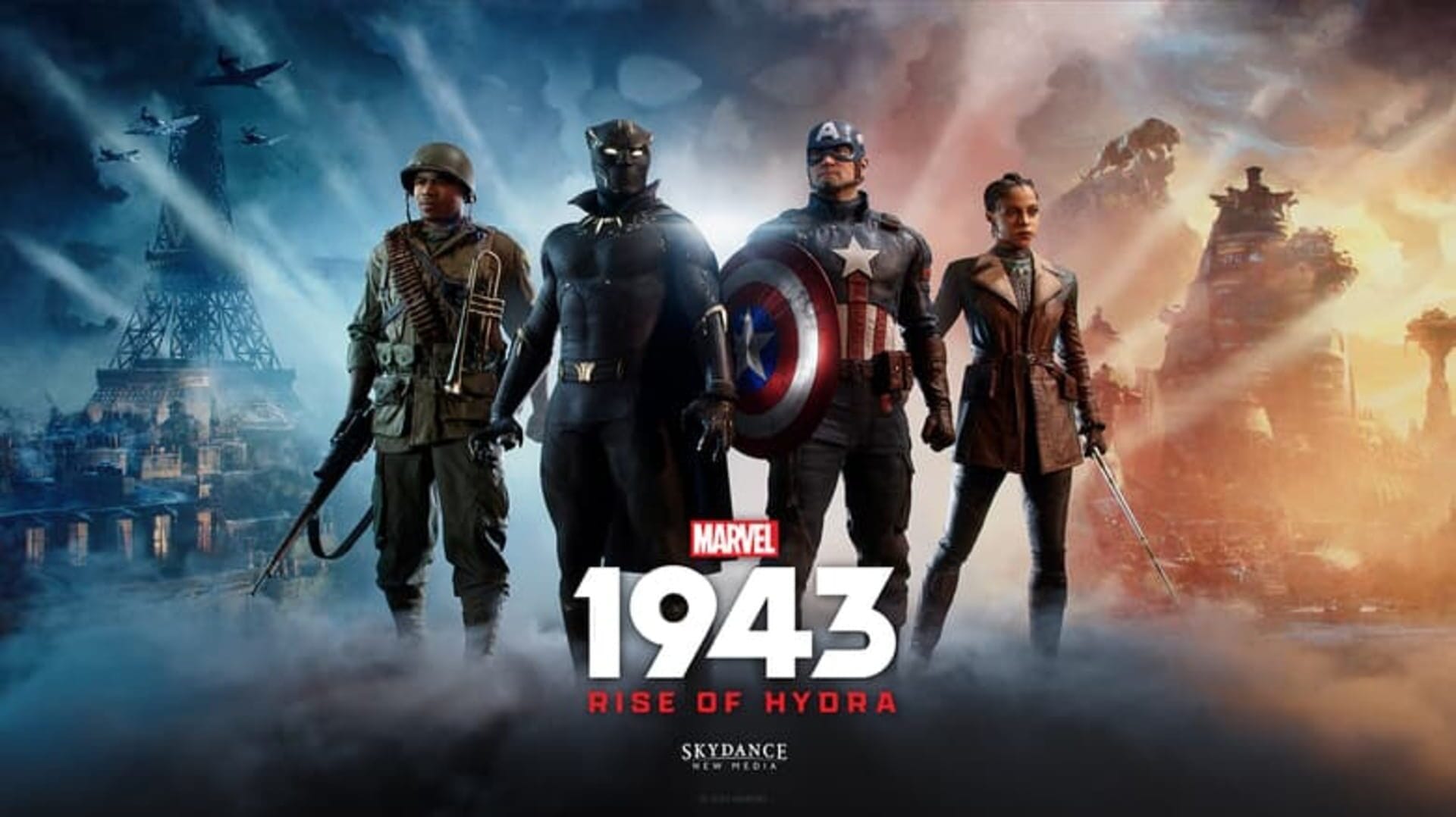
There is a meaningful difference between a game that is alive and a game that is well. Marvel 1943: Rise of Hydra has not been cancelled, but it may be a much smaller game than the one announced in 2022. The Uncharted creator making a cinematic WW2 action-adventure with Captain America and Black Panther — the story of Captain America, Black Panther, Gabriel Jones, and Nanali taking down the budding terrorist organisation Hydra — was always a compelling pitch. The 2024 GDC reveal made that case in visuals alone, showcasing Unreal Engine 5 rendering that generated genuine enthusiasm. But the project has already far exceeded its original budget, and yet it also had to be scaled back from its original vision and overall length. Those two facts in combination describe a development process that is not just running long — it describes one that spent heavily and then had to retreat from what it spent on.
According to a source, the team expects to reach Alpha status by the end of November 2026. If that milestone lands on schedule, it will be the first real signal in years that the project is structurally stable. But Alpha does not resolve the question of what the game actually is in its current, reduced form. Reports claim the game is close to being finished, but that conflicts with reports claiming the team is still struggling as content needs to be cut to reduce its budget. Skydance and Marvel have not issued a public statement addressing the reported development issues.
The studio's silence on the specifics is the inverse of reassurance. Executive producer denials routed through internal Slack — however sincerely meant — are designed to stabilise a team, not to address the external record. What the external record shows is a seven-year-old game, conceived for a streaming platform, now pitched as a full AAA console release, still without a launch window, still running over budget, and only now reaching the milestone that marks the beginning of its final development phase. The rumour that it had been cancelled was wrong. The conditions that made that rumour believable are still entirely intact. That is the story Skydance's denial cannot extinguish. The industry's current moment — studios contracting, publishers restructuring, ambitious projects collapsing — makes the distinction between "not cancelled" and "on track" more important than ever, as we've seen elsewhere with Bit Reactor's Star Wars: Zero Company layoffs illustrating just how quickly a live project can deteriorate under corporate pressure.
Marvel 1943: Rise of Hydra is not dead. Whether the game that eventually ships can carry the weight of seven years, an Amy Hennig credit, and a Marvel IP — after all the cuts — is a question the Alpha build will begin to answer. The denial bought it more time. What it does with that time is everything.