Robert Kirkman has done this before. In 2003, he launched Invincible with a deceptively simple premise — what if Superman's son inherited everything, including the worst parts — and spent seventeen years proving that creator-owned superhero comics could sustain genuine consequence. Terminal #1, out now from Skybound, is his first attempt to build an entirely new superhero universe since that book ended in 2018. The difference is that the world Kirkman is entering in 2025 is not the world he left.
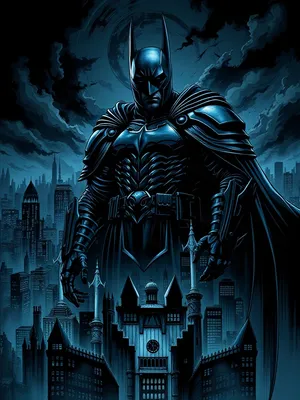
The book arrives with serious craft behind it. Andy Kubert, David Finch, and Neal Adams — three artists whose careers span the definitive commercial peak of superhero illustration — share the artistic workload across what Kirkman has structured as an anthology-style first issue, introducing multiple characters and corners of a universe simultaneously. The visual register is deliberate: muscular, shadow-heavy, built on a vocabulary of power and spectacle that reads as a conscious invocation of the 1990s independent boom. This is not accidental nostalgia. It is an argument.
The Argument the Book Is Making
That argument goes roughly as follows: the superhero genre belongs to no single corporation, the most interesting work has always happened at the margins of the mainstream, and the direct market still has the capacity to support a universe built on story rather than synergy. Terminal #1 is making this case through execution rather than manifesto, which is the correct instinct. The characters introduced — their powers, their conflicts, their tonal registers — suggest a universe designed with internal logic rather than demographic targeting. There is no sense that any of these figures was reverse-engineered from a pitch deck.
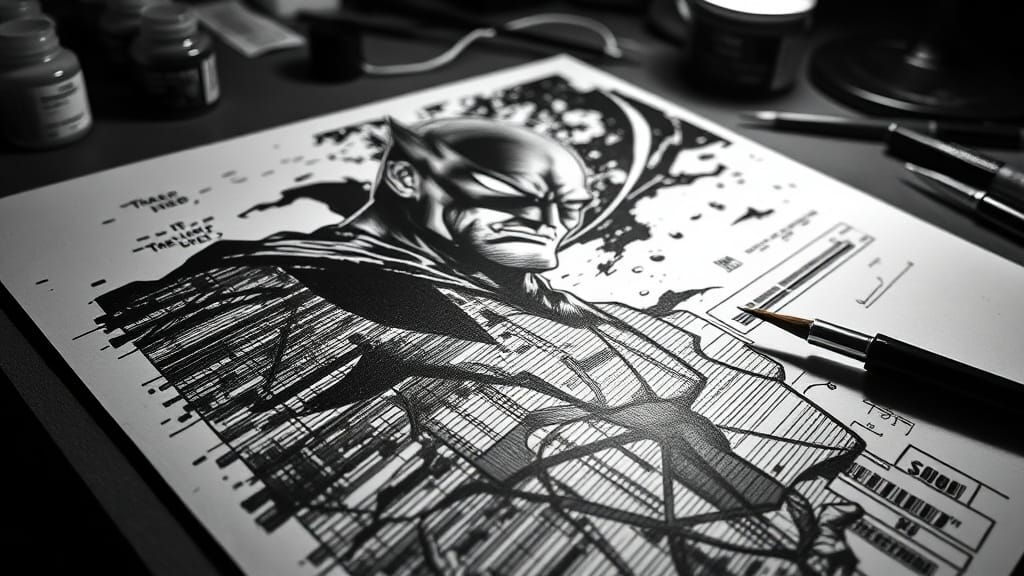
Kirkman's dialogue remains one of the most economical in mainstream comics: characters reveal themselves through pressure rather than exposition, and the first issue is careful to establish stakes before it establishes mythology. That discipline is rare in universe-launch books, which have a structural incentive to worldbuild at the expense of character. Terminal #1 mostly resists it.
What the Market Is Doing While You Read It
None of that changes the structural problem. Invincible (2003) succeeded in a direct market where creator-owned superhero properties were genuinely scarce and where a long runway — years of monthly issues before any adaptation conversation — was commercially viable. The Amazon series arrived nineteen years after the comic launched. That timeline no longer exists.
The IP acquisition apparatus now moves faster than publication cycles. A successful first issue generates option conversations before the second issue ships. This is not speculation; it is the documented experience of nearly every high-concept independent comic of the last decade. The question is not whether Terminal will attract that attention — it will, if it sustains quality — but what that attention does to the creative and commercial logic of building a universe designed to be independent.
Kirkman is not naive about this. He built Skybound partly as a mechanism to retain control through the adaptation process, and the Invincible television run is the clearest proof of concept that creator-owned properties can survive that transition with authorial integrity largely intact. But Invincible got to accumulate two decades of story before anyone touched it. Terminal does not have that buffer. The IP machine has learned to be patient in the specific way that makes it dangerous: it will wait for issue three.
Whether Any of This Matters to the Book
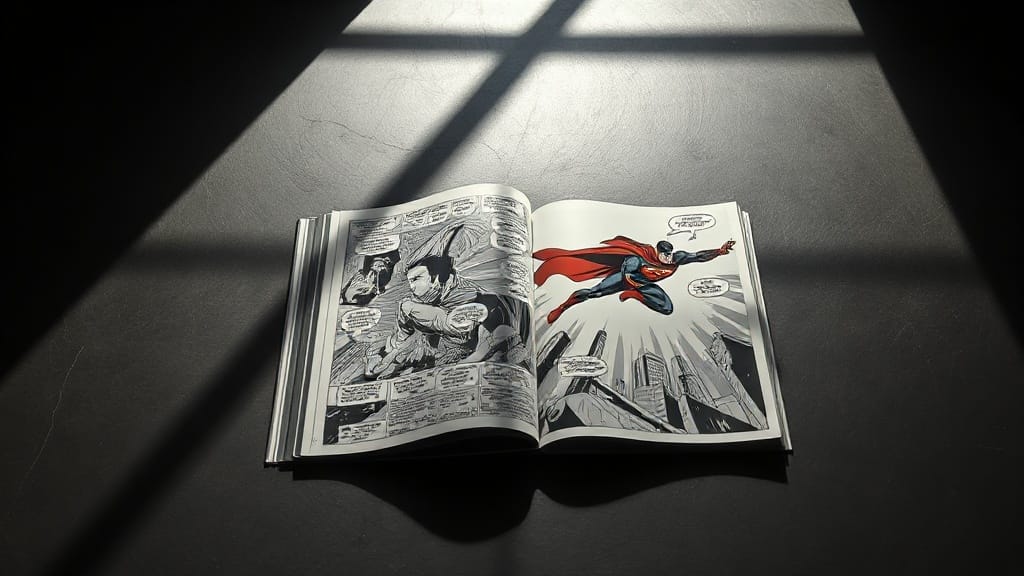
The honest answer is that it doesn't — yet. Terminal #1 is a strong first issue in the specific ways that matter: it creates characters worth following, it establishes a visual identity coherent enough to sustain a universe, and it demonstrates that Kirkman's instinct for superhero construction remains sharp. The Kubert and Finch pages in particular carry the kind of confident kinetic weight that reminds you illustration at this level is its own form of argument.
But a universe is not built in a first issue. It is built in the gap between what a first issue promises and what issues two through fifty actually deliver — in the accumulation of consequence, in the willingness to break things that readers have learned to love. That is the only test that ever mattered for Invincible, and it is the only test that will matter here.
The IP machine can circle. What it cannot do is read the book for you. Terminal #1 has earned the next issue. That is exactly as much as a first issue should do, and exactly as fragile as it sounds.