The word "housewife" appeared on a screen at the start of Tate McRae's Lollapalooza set on August 2, 2026, in plain sight in front of thousands of people, and almost no one noticed. Her fanbase, as she cheerfully acknowledged later, "always catch onto things that are completely wrong" — the most obvious Easter egg was sitting right there and they missed it. It is a minor anecdote, but it captures something real about where McRae stands at the start of her fourth album era: she is moving faster than the conversation about her.
"Housewife" was released through RCA Records on October 15, 2026, and will likely serve as the lead single from McRae's currently-unannounced fourth studio album. It is her first single since "Nobody's Girl," which was released in November 2025. Nearly a full year of silence from one of pop's most prolific chart presences is not an accident — it is a choice, and "Housewife" makes the reason for the wait legible.
The song is three minutes and twenty-eight seconds of deliberate rebranding. The video sees McRae strut and dance across a mansion, a yacht, and various lavish landscapes, and at one point she pushes a baby carriage filled with cash. The music video was directed by Pierre-Ange Carlotti and shot in the South of France. The visual grammar is immediately, unmistakably different from the tightly choreographed, body-horror-adjacent "Revolving Door" video of early 2025, or the retro-camera softness of "Nobody's Girl." This is wide-angle and sun-drenched, more Riviera editorial than TikTok-optimized pop clip. Whether intentional or not, it is the first time McRae has presented herself primarily as a scene rather than a performance.
Shortly after announcing the single, McRae appeared on the October 7, 2026, episode of The Tonight Show Starring Jimmy Fallon, where she described the song as being about "a woman who can't be contained." She also mentioned in a game with Billboard that the song is "tongue-in-cheek" and probably the opposite of what everyone is expecting. That framing matters. The title "Housewife" is not aspirational in the domestic sense — it is inverted, weaponized. The song is about financial and romantic self-sufficiency: wanting a partner as optional decoration rather than necessity. The irony built into the word is the whole point.
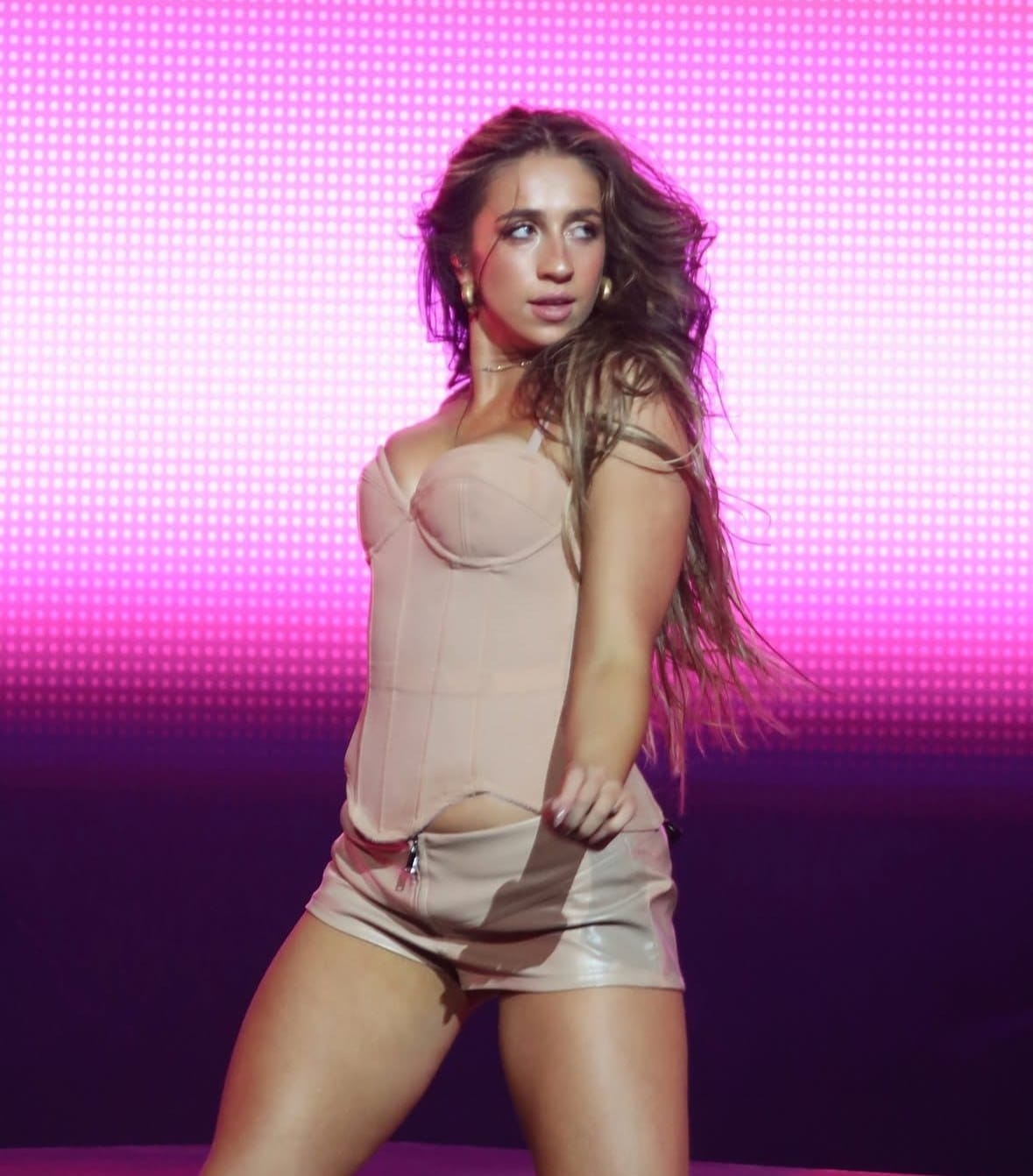
What "Housewife" is not, notably, is confessional. The mode that McRae built her core audience on — the hyper-specific, almost diaristic romantic grief of Think Later (2023) and much of So Close to What (2025) — is absent here. There is no forensic dissection of a failed relationship, no anatomization of longing. The emotional posture is declarative rather than reflective. Whether that represents artistic evolution or commercial calculation depends on what the full album turns out to be, but as an opening statement it is remarkably clean. It announces a territory without fully inhabiting it.
The stakes of getting this transition right are high, because the momentum McRae is working from is genuinely significant. So Close to What, released in February 2025, topped the Billboard 200 with 177,000 total album-equivalent units earned, according to Luminate. It launched with the biggest debut week for a studio album by a woman in five months. The deluxe edition's lead single "Tit for Tat" debuted at number three on the Billboard Hot 100, making it her third top 10 hit on the chart. That is a artist with proven commercial infrastructure — the kind that can sustain a genuine pivot rather than just a visual rebrand.
The creative team on "Housewife" is largely the same one that built that infrastructure. The song was produced by Grant Boutin and Ryan Tedder, with songwriting credits shared by McRae, Boutin, Tedder, Julia Michaels, Pablo Diaz-Reixa, and Jasper Harris. Tedder and Michaels have been central to McRae's sound since her commercial breakthrough, and their continued presence means this is not a production-side reinvention. The shift is tonal and conceptual, not structural. Tedder's production here leans into a breezier, more expansive register than the tightly wound dance-pop of So Close to What, but the bones are recognizable. That is probably wise. Radical reinventions from artists mid-momentum tend to read as panic; this reads as confidence.
The album's broader shape is still opaque. In an August 2026 interview with Harper's Bazaar, McRae announced she was working on new material, revealing that she was headed to the recording studio immediately after the interview. She told Variety that one of her inspirations for the new album is a book of Dolly Parton's lyrics, as well as some of the country icon's songs. That is an interesting signal. Parton's artistic identity rests on a very specific kind of self-possession: warmth deployed as armor, irony worn as glamour, financial independence made into mythology. The title "Housewife" slots directly into that tradition without being derivative of it. McRae has described the need for a complete "hard reset" after the intense promotional cycle, framing the new phase as a return to a more introspective, instinct-driven creative process shaped by intentional distance from external noise.
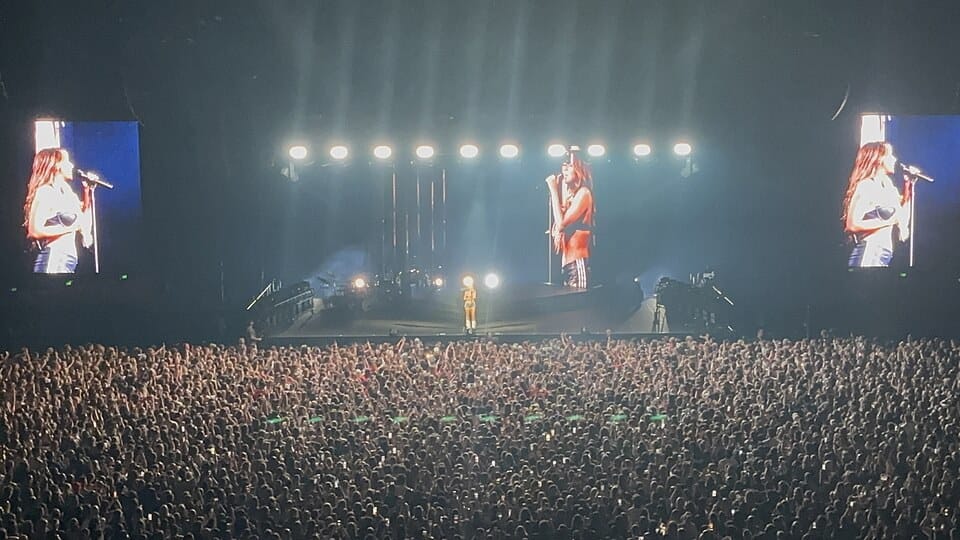
The visual world McRae has been building toward this release also telegraphs the shift. At Lollapalooza, she closed her headlining set by submerging herself in a vat of gold paint, a deliberately spectacular stunt that went viral — and during the same set she teased her next era with a video clip featuring a ticking clock soundtracked by an unreleased snippet. Fans had already clocked a change when McRae began previewing a new aesthetic on Instagram on July 26, posting images with bright minimalist lighting that moved away from her sporty, bold Y2K look. The gold imagery — liquid, transformative, expensive — runs through all of it. "Housewife," shot in the South of France with Carlotti's sun-bleached visual language, is the first song to actually inhabit that world rather than just gesture at it.
McRae is set to perform at the 2026 Victoria's Secret Fashion Show on October 18 — the same week "Housewife" dropped. That is not incidental scheduling. It places her in the company of the entertainment industry's most explicitly image-driven spectacle at the precise moment she is asking her audience to update their picture of her. It is a smart deployment of visibility. The question now is whether the rest of the fourth album can sustain the claim "Housewife" makes: that McRae has moved from a pop artist defined by romantic vulnerability into something more cinematic, more self-authored, more interested in power than in heartbreak.
That is a meaningful artistic question, not just a commercial one. The artists who have managed that transition — who graduate from confessional intimacy into something more projected and constructed without losing the specificity that made them compelling — are relatively few. The ones who stumble tend to do so not because the new music is bad, but because it stops feeling true in the way the early work did. "Housewife" does not raise that alarm. It is too specific in its irony, too committed to its own visual logic, to feel like a committee decision. But one single cannot answer the question the fourth album will have to answer. Rolling Stone and UPI both reported the release with the framing of a new era beginning — and that framing is correct. Whether it ends in consolidation or dissipation depends on what comes next.
The momentum is real. The pivot is legible. The fourth album, whenever it arrives, will tell us whether "Housewife" was a thesis statement or an outlier. Right now, given what McRae has built over the last three years, the smarter bet is on the thesis.