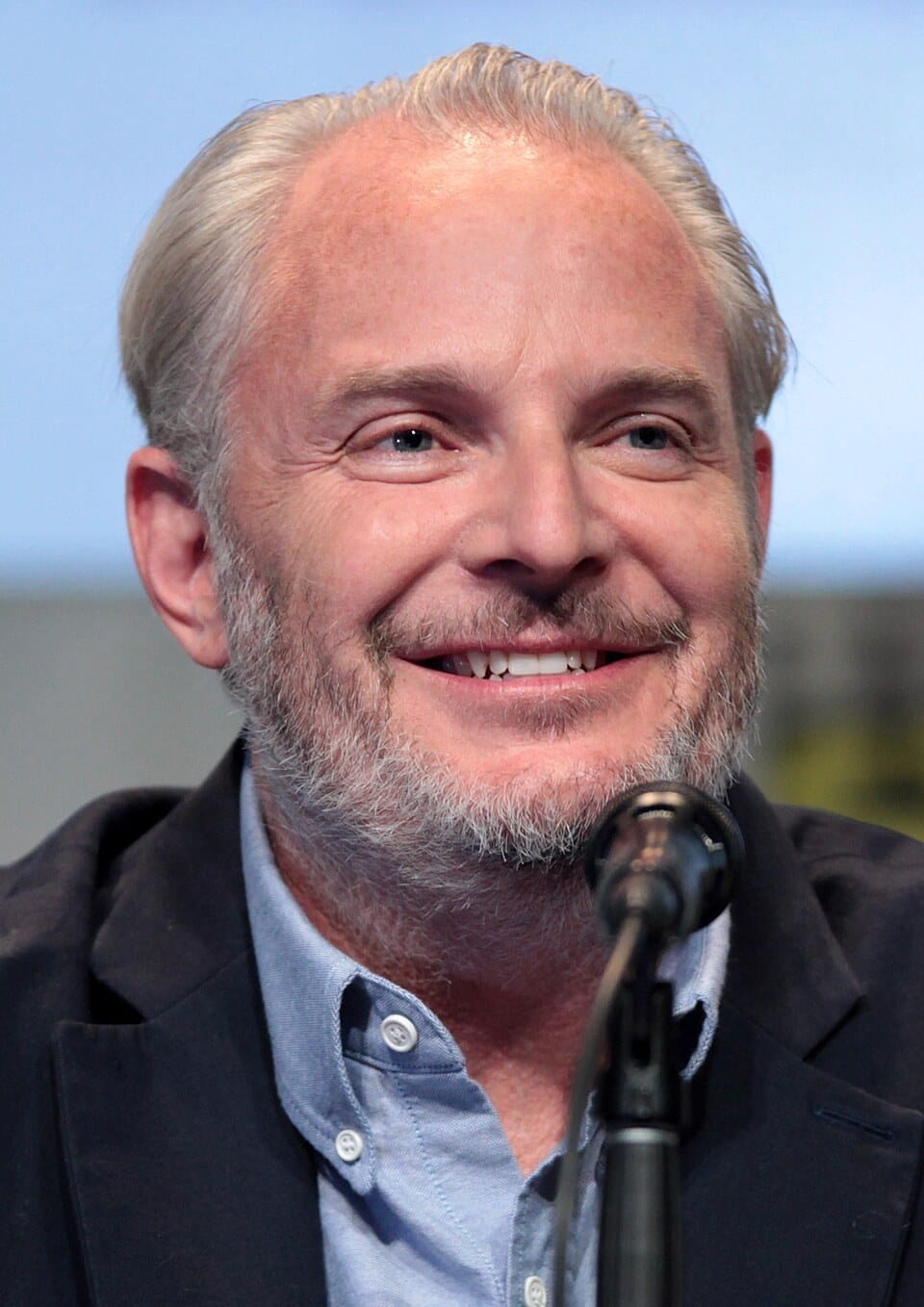
Paramount has acquired the rights to Pierce Brown's Red Rising (2014) with Francis Lawrence attached to direct an adaptation of the first novel, Deadline confirmed on October 16, 2026. Justin Rhodes — whose credits include Terminator: Dark Fate (2019) and whose prior collaboration with Lawrence on a BioShock adaptation at Netflix never materialized — will write the script. Lawrence and Cameron MacConomy produce for About:Blank alongside Francesco Goedhuis, with Brown executive producing. The announcement lands during a week when Paramount also has The Hunger Games: Sunrise on the Reaping bearing down on a November release. The studio is not being subtle about what it wants.
 Official trailer
What it wants is a franchise machine. The math is not hard to read. The Hunger Games series — all of whose post-original sequels Lawrence directed — has grossed over $3.3 billion worldwide across five films, making it one of the highest-grossing young adult franchises in cinema history. The Ballad of Songbirds & Snakes (2023) underperformed relative to its predecessors, but the core trilogy numbers still make the IP one of the most reliable theatrical propositions of the last fifteen years. Paramount is not acquiring Red Rising because it fell in love with Brown's prose. It is acquiring a color-coded caste system, a miner-turned-revolutionary named Darrow, six published novels with a seventh on the way, and more than six million copies sold — and it is hiring the one director in Hollywood whose entire recent filmography is a credential for exactly this kind of material.
The Case for Lawrence
The argument for Francis Lawrence as director of Red Rising is almost self-assembling. He has directed every Hunger Games film since the original, including Catching Fire (2013) — still the franchise's single best film and its highest-grossing, at roughly $865 million worldwide. He understands, at a granular craft level, how to render a color-coded oppression system cinematically legible without reducing it to agitprop, how to keep the camera close enough to a protagonist's interiority that spectacle doesn't swallow character. His 2025 adaptation of Stephen King's The Long Walk — another story in which young people are compelled into a lethal endurance competition by a totalitarian state — grossed $63 million against a $20 million budget, demonstrating that his grip on the genre holds outside the franchise context too.
The surface-level parallel between Red Rising and The Hunger Games is real and acknowledged, though it flattens what makes Brown's first novel interesting. Both center on a young protagonist conscripted into high-stakes competition by a ruling class that wants their suffering to double as spectacle. But Brown's architecture is more structurally Roman than Suzanne Collins's — the Red Rising caste system maps explicitly onto Roman social hierarchy, the Institute sequences in the first book draw from Roman military history, and Darrow's arc is closer to a Brutus-shaped revenge tragedy than a reluctant rebel's coming-of-age. That tonal density is both the series' greatest asset and its most persistent adaptation problem.
Why Universal Failed — and Why It Matters
Lawrence is not the first director attached to this property. The current Paramount deal is the third distinct attempt to bring Red Rising to screen. In February 2014, months after the novel's publication, Universal Pictures acquired the rights in a seven-figure auction, with Marc Forster — director of World War Z (2013) — attached to direct and Brown drafting screenplays. Progress stalled. The rights eventually reverted to Brown. In 2018, Brown began developing a television series with a showrunner and an undisclosed network; by 2022 he was still publicly calling it alive, though with mounting hedges. In March 2026, he confirmed the television adaptation was dead — "the thing that's online is a corpse," he told interviewer Maude Garrett — and that he had only been informed the project wouldn't move forward in October of the prior year.
Brown's account of the Universal experience is also instructive. He has noted that the studio wanted significant changes and had, in his view, not engaged seriously with the source material. That is a familiar story in IP development, but it points to something specific about Red Rising: the book is not obviously translatable. The Institute section — in which Darrow, surgically remade to pass as a Gold, infiltrates a brutal simulation of Roman conquest alongside the ruling-class heirs he intends to eventually overthrow — runs to roughly half the novel's length and constitutes its emotional and tactical core. Compress it into thirty minutes of a feature and you lose the psychological groundwork that makes the third act coherent. Expand it at a television pace and you risk losing the propulsion that keeps the plot kinetic. Every adaptation attempt so far has apparently failed to find a workable architecture before collapsing at the development stage. The streamer environment in which a television version might have found a home has also changed dramatically, as major platforms retreat from ambitious prestige commitments.
The Feature Problem
The Paramount announcement defaults to a feature. That is the logical move given Lawrence's track record and the franchise model the studio is replicating, but it is not a neutral choice — it is a structural decision with consequences that Rhodes's script will have to address from the first draft. The novel's opening movements require Darrow's life as a Red to be emotionally established before the plot erupts; the transformation sequence that follows requires the audience to believe in both the Darrow who enters it and the Darrow who emerges. Then the Institute has to function as both a physical gauntlet and a moral crucible across a sufficiently sustained duration to earn the climax. That is a lot of story to carry in what will plausibly be a 130-to-150-minute film.
The Rhodes hiring is worth examining here. Terminator: Dark Fate (2019) was not a critical success, but it was a structurally ambitious attempt to reset a franchise by taking its mythology seriously. Rhodes also worked with Lawrence on the Netflix BioShock adaptation — a project that never made it to production, but which signals a shared appetite for material that resists easy genre categorization. Whether that collaboration developed instincts that transfer to Red Rising is unknowable from the outside; what can be said is that the pairing is not a studio defaulting to the path of least resistance.
What Paramount Is Actually Buying
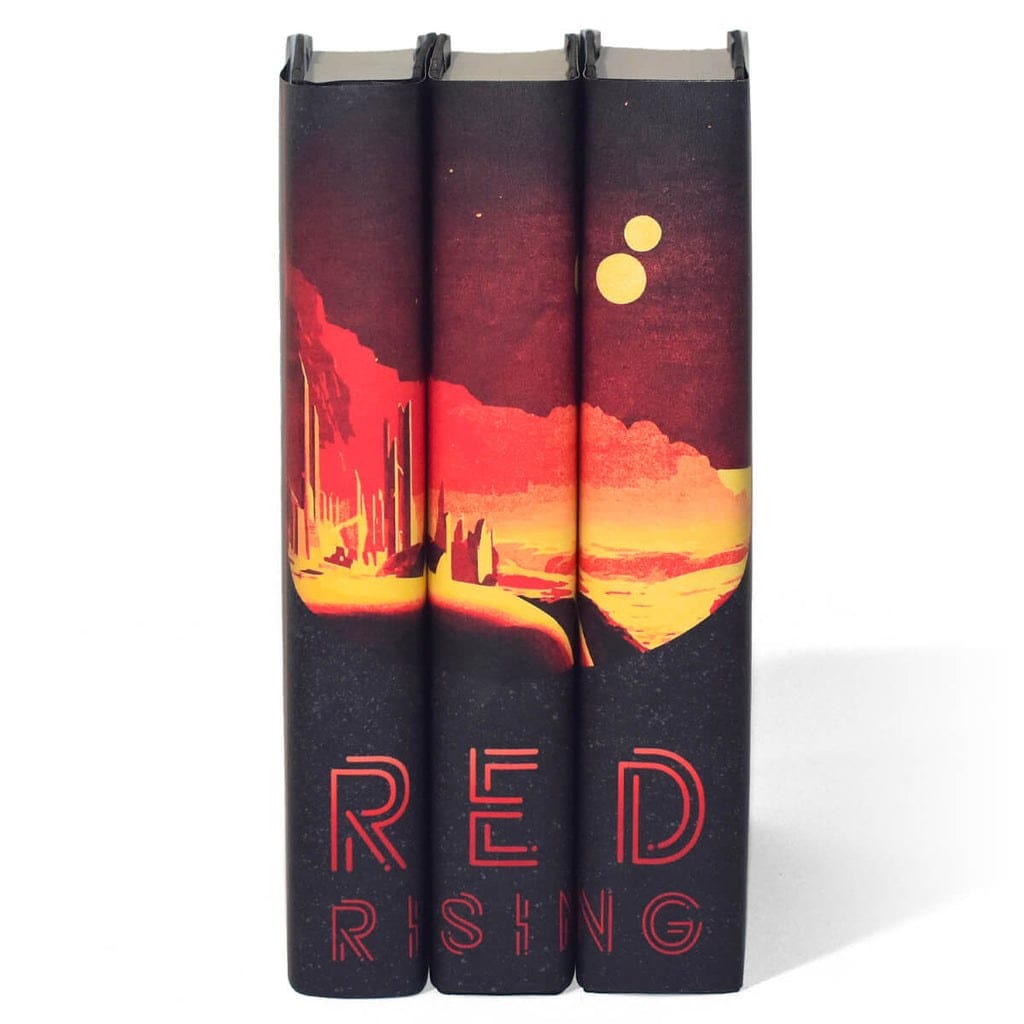
The IP calculus here is straightforward. Brown's saga currently runs to six published novels with a seventh forthcoming, organized as two interlocking trilogies. That is franchise runway comparable to what The Hunger Games offered Lionsgate in 2012. The color-coded caste system is visually distinctive and thematically durable in a cultural moment still processing questions about inherited hierarchy and systemic exploitation. The fandom is passionate, literate, and has been waiting for a credible adaptation long enough that a well-executed feature would arrive with significant pent-up goodwill. The literary IP market in 2026 rewards studios that can demonstrate genuine fidelity to source material — audiences increasingly punish adaptations that acquire a book and then discard what made it worth acquiring.
The casting decisions, which have not yet been announced, will tell more about Paramount's actual level of commitment than any director attachment. Lawrence found Jennifer Lawrence for Catching Fire and built a franchise on that casting. Darrow is a role with comparable demands — physical enough to carry action sequences at scale, interiority-rich enough to anchor scenes of moral ambiguity, young enough to sell a multi-film arc over several years. Get that wrong and no amount of directorial craft recovers it.
The Broader Signal
What Paramount is doing with Red Rising is less about this specific property than about a larger strategic ambition: owning the successor to a YA franchise paradigm that is now more than a decade old. The Hunger Games model — literary IP, dystopian world, color-coded or otherwise branded factions, a morally burdened young protagonist forced into systemic violence — spawned imitators throughout the 2010s, most of which failed. Divergent collapsed mid-adaptation. The Maze Runner faded. Ender's Game never launched a sequel. The model does not produce franchises automatically; it requires source material with actual structural depth and a production team capable of respecting it. Red Rising has the former. Whether Paramount has secured the latter is the question that will take years to answer.
For now, the announcement is exactly what it looks like: a studio making its most intelligent available move on a piece of IP that has been waiting for the right combination of commitment, format, and creative authority. Francis Lawrence is credible in a way Marc Forster, whatever his talents, was not specifically suited to be. The feature format is a risk, not a solution. And Brown's executive producer credit — given his experience watching two previous development processes collapse without him being meaningfully informed — suggests he is not ceding creative oversight this time. That might be the most encouraging sign of all. Or the most complicated one.