The contract was always the problem. A small white creature (Kyubey) with red eyes and the voice of an angel offers a single wish — anything, truly anything — in exchange for a life of service. The terms are never hidden. The cost is simply never explained. That transaction, repeated across decades of magical girl fiction as a premise so comfortable it had become invisible, is what Puella Magi Madoka Magica (2011) chose to detonate. Thirteen years later, Puella Magi Madoka Magica: Walpurgisnacht – Rising (2024) arrives to measure the blast radius.
What Shaft Built, and Why It Couldn't Be Ignored
To understand the weight of Walpurgisnacht – Rising, you have to resist the temptation to treat the original series as merely a "dark deconstruction" — that lazy critical shorthand that flattens what Madoka Magica actually accomplished. Gen Urobuchi did not simply apply grimdark aesthetics to a girls' genre and call it subversion. He interrogated the genre's foundational logic: the idea that feminine sacrifice is inherently noble, that purity of heart is its own reward, and that suffering, when endured with enough grace, eventually redeems itself. Madoka Magica called that ideology what it is — a trap — and then dramatized the trap's mechanics with the precision of a philosopher and the cruelty of an engineer.
The show aired in January 2011, and within weeks it had become something rare in seasonal anime: an event that demanded engagement on structural terms, not just emotional ones. Kyubey, the series' incubator-mascot, is the most effective villain in modern anime not because he is malevolent but because he is rational. He does not lie. He omits. His ethics are utilitarian at a cosmic scale — the suffering of a finite number of adolescent girls is an acceptable ledger entry against the thermodynamic entropy of the universe. The horror is not that he is wrong by his own logic. The horror is that his logic is coherent.
Shaft's visual language met Urobuchi's philosophical architecture at every level. Director Akiyuki Shinbo and character designer Ume Aoki's deceptively soft aesthetic — pastel palettes, rounded silhouettes, the graphic flatness of Gekidan Inu Curry's witch labyrinths — created a constant dissonance between what the series looked like it was and what it actually was. The witch sequences in particular function as expressionist painting in motion: jagged collage, nursery-rhyme imagery rotting from the inside, space that doesn't obey Euclidean rules. They are not action sequences. They are psychological autopsies.
The Gravitational Pull No Successor Escaped
The years following Madoka Magica produced a generation of magical girl works that could be sorted almost entirely by their relationship to its shadow. Some fled from it. Some genuflected toward it. Almost none processed it cleanly.
Yuki Yuna is a Hero (2014) attempted a structural parallel — heroines who pay physical costs for their powers, a system that conceals its cruelty behind institutional warmth — but ultimately flinched at the moment of full consequence, retreating into a resolution that Madoka had already proven intellectually dishonest. Day Break Illusion (2013) borrowed the darkness without the rigor, producing suffering that felt decorative rather than argued. Even Sailor Moon Crystal (2014), a remake of the genre's foundational text, seemed to exist in awkward conversation with what Urobuchi had made possible — suddenly the earnestness of Naoko Takeuchi's original felt less like innocence and more like a position requiring active defense.
The more interesting cases were the works that tried to negotiate coexistence. Magical Girl Raising Project (2016) adopted Madoka's mortality without its metaphysics, producing something closer to a death-game thriller wearing magical girl clothes. Magical Girl Site (2018) pushed suffering past the point of philosophical utility into near-exploitation, losing the argument in the process. Mahou Shoujo Ore (2018) chose parody, which is at least an honest acknowledgment that the genre's relationship to its own conventions had become too complicated for straight-faced engagement.
The one work that came closest to genuine independence was Flip Flappers (2016) — a series so invested in its own surrealist visual grammar and its exploration of adolescent identity that it operated largely outside Madoka's moral framework, constructing a different set of questions entirely. It remains the most underexamined counter-argument to the notion that the post-Madoka magical girl landscape was creatively exhausted. But even Flip Flappers was working in a field Madoka had fundamentally changed the conditions of.
Madoka Magica did not simply darken the magical girl genre. It made it impossible to engage with the genre's conventions without declaring a philosophical position on them — and most of what followed struggled to articulate one.
The Rebellion Problem
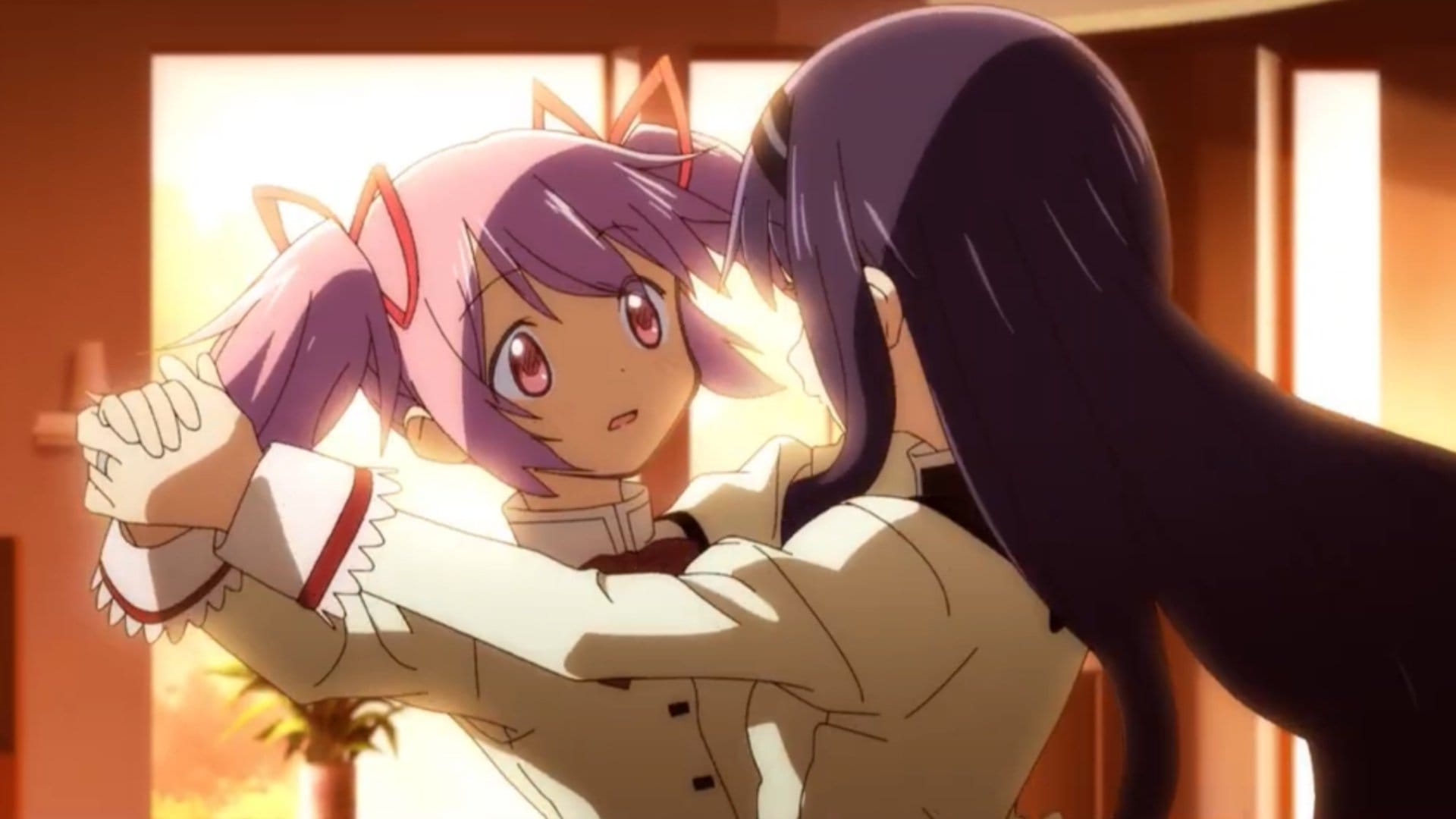
Before Walpurgisnacht – Rising, the franchise's most significant statement was Puella Magi Madoka Magica the Movie: Rebellion (2013). Its critical reception was divided for reasons that remain genuinely interesting. The film takes Homura Akemi — the series' temporal architect, the character whose love and grief are the engine of the entire narrative — and gives her an act of radical, arguably villainous agency. She rewrites reality. She steals Madoka's divine sacrifice and reconstructs a world where Madoka exists as a person rather than a cosmic abstraction. She does this knowing it is wrong. She does it anyway.
Some viewers read this as a betrayal of the series' themes. Others recognized it as the most honest extension of those themes imaginable: a story about systems that exploit feminine sacrifice arriving, finally, at a character who refuses to accept that sacrifice as sacred. Homura's fall in Rebellion is not a corruption arc. It is a refusal arc. Whether it is heroic or monstrous depends entirely on which ethical framework you bring to the theater, which is precisely the point Urobuchi had been building toward since episode three.
Rebellion ended on a cliffhanger of almost antagonistic confidence — Homura enthroned in a rewritten world, Madoka somewhere beneath the surface of her own altered memory, and the audience left to sit with a conclusion that refused comfort without offering nihilism. It was a genuinely difficult ending. Eleven years passed before an answer came.
Walpurgisnacht – Rising: The Architecture of Return
Walpurgisnacht – Rising does not arrive to vindicate either reading of Rebellion. It arrives to complicate both. The film, directed by Shaft veteran Yukihiro Miyamoto from a script credited to the original creative team, takes Homura's rewritten world as its starting point and immediately begins applying pressure to it — not through external attack but through the structural impossibility of what Homura has built. A world constructed from love and guilt, maintained by the suppression of a god's true nature, contains its own entropy. The Walpurgisnacht of the title is not merely a witch. It is a deadline.
What the film understands — and what makes it a legitimate extension of the original's intellectual project rather than a commercial continuation — is that the questions worth asking were never about plot mechanics. They were about cost, consent, and the ethics of protection. Homura's grand act in Rebellion was a mirror image of Kyubey's original contract: a powerful agent making a unilateral decision about another person's sacrifice for what they genuinely believe is that person's benefit. The horror was always structural, and Walpurgisnacht – Rising has the rigor to keep pulling on that thread rather than cutting it.
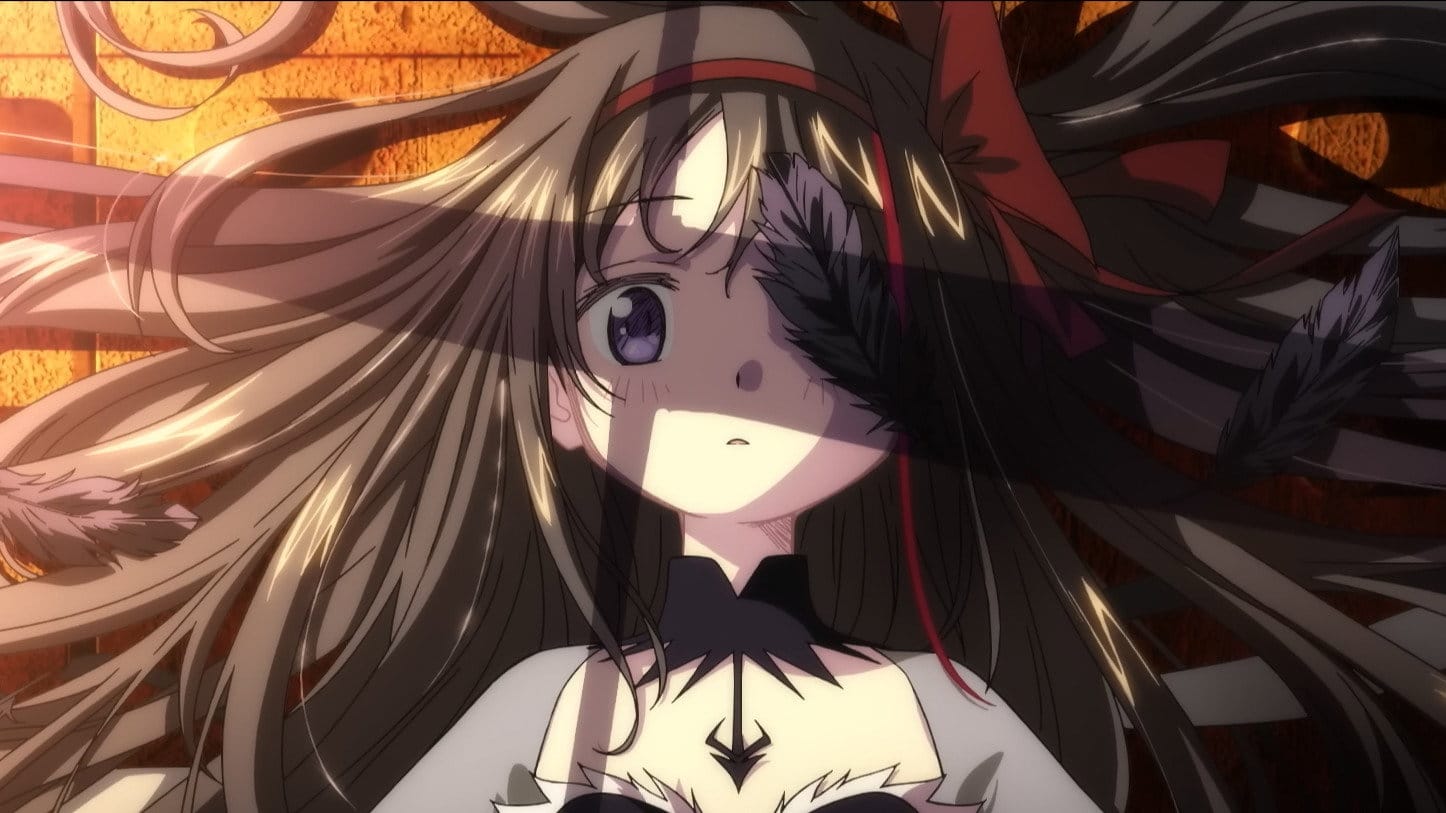
Shaft's visual production has evolved in the thirteen intervening years, and the film reflects that — there are sequences here that demonstrate a command of digital animation techniques that the 2011 series simply could not access. But the studio's core aesthetic intelligence remains intact. The witch labyrinths return with the same commitment to visual grammar as psychological state, and the film's climactic sequences achieve a scale that the television format always implied but could never fully render. There is a particular sequence involving layered temporal realities and the visual language of recursion — imagery eating itself — that represents some of the most formally ambitious animation Shaft has ever committed to screen.
What the Genre Is Still Owed
The deeper question Walpurgisnacht – Rising forces is not whether it satisfies as a sequel. It does, on its own demanding terms. The question is what the magical girl genre's relationship to Madoka Magica ultimately produced, and whether the influence was generative or paralytic.
The honest answer is that it was both, often in the same works. Madoka Magica made it impossible to tell a story about young girls gaining power through contracts and sacrifice without that story being in some sense an argument — for or against the genre's inherited assumptions. That is an enormous amount of philosophical freight to attach to what had been, for decades, a commercially comfortable formula. Some creators rose to the challenge. Many were simply crushed under the weight of having to take a position.
What the genre still owes Shaft's creation is an honest reckoning with what it borrowed and what it abandoned. The wave of dark magical girl content that followed Madoka largely adopted its aesthetics — the mortality, the existential stakes, the willingness to harm its heroines — without adopting its rigor. Darkness without argument is not deconstruction. It is decoration. And the magical girl genre, for all the sophistication its best practitioners have brought to it, has spent thirteen years occasionally confusing the two.
Walpurgisnacht – Rising makes that confusion harder to sustain. By returning to its own architecture with the same analytical seriousness that built it, the franchise demonstrates what it actually looks like when suffering in fiction earns its place — when every cost paid on screen is the result of an argument, not an aesthetic preference. Homura Akemi has been waiting thirteen years for this film to tell her what her choices meant. The genre that grew up in her shadow has been waiting just as long for someone to show it the difference between inheriting a tradition and actually understanding one.
The contract, as always, was never hidden. The cost was simply never explained. Walpurgisnacht – Rising is the explanation.