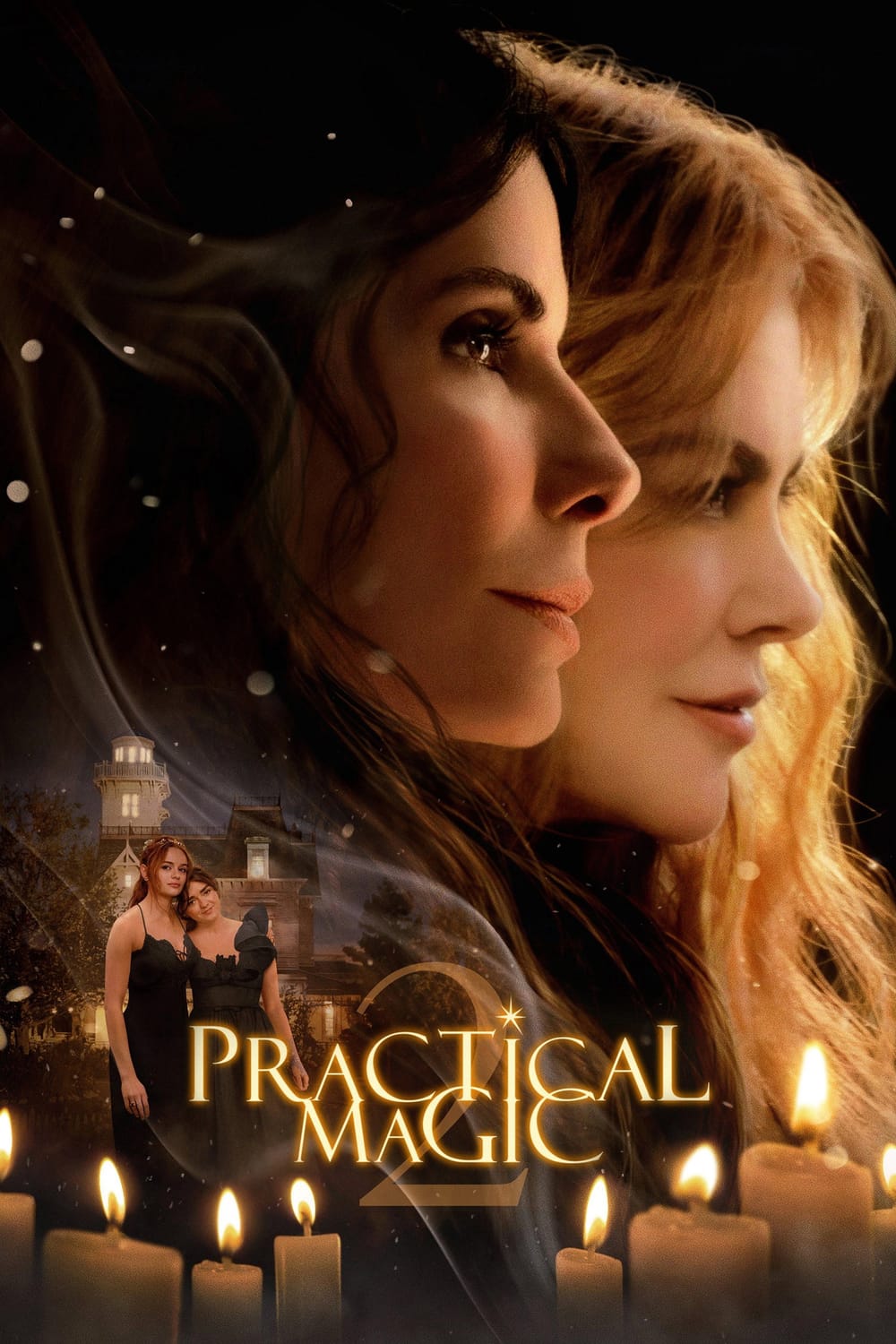
There is a number that tells you almost everything about where mainstream cinema stands right now, and it is not a box-office figure. It is a gap: 55 points, separating the 38% critical score and the 93% audience score that Practical Magic 2 (2025) posted in its opening week. That distance is not an anomaly to be explained away. It is a fault line, and the pressure building along it has been accumulating for years.
To understand what the gap means, you have to understand what each score is actually measuring — and resist the comfortable assumption that they are measuring the same thing in opposite directions.
Two Different Contracts
Critics arrive at a film carrying a set of normative expectations that are, broadly speaking, craft-oriented and contextual. A sequel to Practical Magic (1998) is evaluated against the body of work that surrounds it: the current grammar of supernatural drama, the ambient sophistication of prestige television that has recalibrated what audiences will tolerate in terms of pacing and depth, and a quarter-century of accumulated opinion about whether the original was actually a good film or merely a beloved one. By those standards, 38% is a coherent verdict. The critics who issued it were not wrong on their own terms.
Audiences arrive carrying something else entirely: a relationship. For a significant portion of the people who bought a ticket or clicked play on Practical Magic 2, the original film is not a cinematic text — it is an autobiographical one. It is the movie they watched on a Saturday night in 1999, the one that soundtracked a specific version of themselves. When the sequel delivers the Owens sisters, the Massachusetts coastal gothic atmosphere, the particular texture of that world, and does so with evident care and affection, audiences are not grading on a curve. They are reporting an experience that the critics' framework was never designed to capture.
Neither score is dishonest. They are simply answering different questions.
The Nostalgia Economy Has Its Own Logic
What makes the Practical Magic 2 case analytically interesting rather than just another data point in the culture-war discourse about "out-of-touch critics" is the specificity of its fanbase. The original film was not a blockbuster. It earned $46 million domestic against a $75 million budget — a commercial disappointment by any measure. What it became over the following decade was something studios rarely plan for and almost never fully understand: a word-of-mouth institution, passed along generationally with the intensity of a private recommendation.
That kind of cult formation produces a fanbase with unusual properties. It is deeply loyal but not reflexively uncritical — these are not audiences who will cheer anything that carries a familiar logo. They stayed engaged with the material precisely because the original film meant something specific to them, which means they know exactly what they want from a continuation. When a sequel delivers it, their response is not nostalgia-impaired enthusiasm. It is the satisfaction of a very particular expectation met.
The 93% audience score, in this light, is not a crowd being fooled. It is a crowd being served.
What Studios Have Learned to Read
The more consequential story here is institutional. Studios have spent the last decade developing increasingly sophisticated tools for measuring exactly this kind of pre-existing audience capital. Social listening, streaming completion rates, search-trend archaeology, franchise sentiment analysis — the apparatus for identifying which dormant properties carry genuine latent demand has become formidable. The greenlight for Practical Magic 2 was not an act of faith. It was an act of data.
This represents a genuine structural shift in how nostalgia projects get authorized. The old model required a property to have been a proven commercial success the first time around — sequels followed hits. The new model can identify a film that failed commercially but succeeded culturally, map the size and intensity of its residual audience, and make a reasonably confident bet that the sequel will convert. The critical consensus is factored in, but it is no longer the gating variable it once was.
Legacy fanbases, in other words, have quietly rewritten the terms of the greenlight. They did it not through advocacy or organized pressure, but through the aggregate evidence of their sustained engagement — the streaming hours, the anniversary rewatches, the social media activity that never fully went quiet. Studios learned to read those signals, and reading them changed what gets made.
The Critical Framework Under Pressure
This does not mean critics are irrelevant — but it does mean the terms of their relevance have shifted in ways the critical establishment has been slow to articulate. A 38% score on a film that earns 93% from its intended audience exposes a genuine philosophical divergence about what cinema is supposed to do and for whom it is supposed to do it.

The critical case against Practical Magic 2 is, in broad strokes, predictable: the narrative does not take risks commensurate with its talent, the emotional beats are engineered rather than discovered, the film is more interested in fulfilling a promise to its existing audience than in expanding the formal possibilities of its genre. These are legitimate observations. They are also observations that describe the film's goals from the outside and then penalize it for not having different ones.
There is a version of critical practice that takes seriously the question of whether a film succeeds on its own terms before applying external evaluative criteria. That version would ask: given what this film is attempting — a careful, emotionally generous continuation of a specific world for a specific audience — does it succeed? The audience score suggests emphatically that it does. The critical score suggests that the critics were not primarily interested in that question.
The Gap Is Not a Problem to Be Solved
The instinct, when a divergence this wide appears, is to look for the corrective — to ask which side is right, or to advocate for a metric that reconciles the two. That instinct should be resisted. The gap is not a measurement error. It is a genuine reflection of the fact that different communities are bringing different frameworks to the same object, and that both frameworks have legitimate standing.
What the gap does usefully expose is the fiction of a unified critical-cultural consensus. For most of cinema's history, the institutional architecture of criticism — trade reviews, broadsheet coverage, award bodies — operated as though its standards were universal and its audience was general. The data produced by streaming platforms, aggregator sites, and social media has made that fiction unsustainable. There is no general audience. There are specific audiences, with specific histories with specific works, and their responses carry information that the traditional critical apparatus was not built to process.
Practical Magic 2 did not create this situation. It simply made it visible with unusual clarity, because 55 points is a number too large to explain away. The conversation it demands is not about whether critics or audiences are right. It is about what we actually want from cinema — and who gets to decide when a film has delivered it.
That conversation has been deferred long enough. The gap will keep widening until it starts.