A documentary about Gaza opens today at a single cinema in lower Manhattan. No studio acquired it. No Neon, no A24, no MUBI, no Magnolia. The company that stepped in to co-distribute it is a French arthouse brand and a British newspaper. The film will eventually be available to stream, globally, for free. This is not a scrappy guerrilla release born of obscurity — it is a calculated, deliberate bypass of every established lane in American film distribution, executed by filmmakers who could not get those lanes to open.
NAZA (2025), directed by Yuval Abraham and Rachel Szor, is a documentary filmed inside Gaza during the ongoing war. Abraham is also a journalist and activist; Szor is a cinematographer. Together they have produced what is, by any reasonable account, an extraordinarily difficult film to place commercially — not because of its craft, but because of its subject, its politics, and the particular institutional cowardice that subject tends to produce in organizations whose revenue depends on broad goodwill. The film opens exclusively at IFC Center in New York through a self-distribution model co-led by The Guardian and mk2, with a planned free global stream to follow. That sentence, parsed carefully, is a diagnosis of where political documentary cinema stands in 2025.
The Distributor as Risk Calculator
Film distribution is, at its core, a risk management business. Every acquisition decision — theatrical, streaming, hybrid — is a bet on whether a film's revenue potential and reputational upside outweigh its downside exposure. For most documentaries, that calculus is relatively straightforward: festival heat, subject matter familiarity, talent pedigree, and awards viability combine to produce an acquisition price and a release strategy. The system is imperfect but functional for a wide range of work.
What the NAZA release exposes is the category of films for which that calculus breaks down entirely — not because the film is uncommercial, but because the political risk is perceived as unquantifiable. A distributor acquiring NAZA does not simply acquire a film; it acquires a position. It invites boycott threats, advertiser pressure, social media campaigns, and the kind of institutional scrutiny that most film companies are structurally unprepared to absorb. In the current climate, the Gaza conflict is not a subject that American distributors — including the ones with reputations for risk tolerance — have shown any appetite to touch on Palestinian terms.
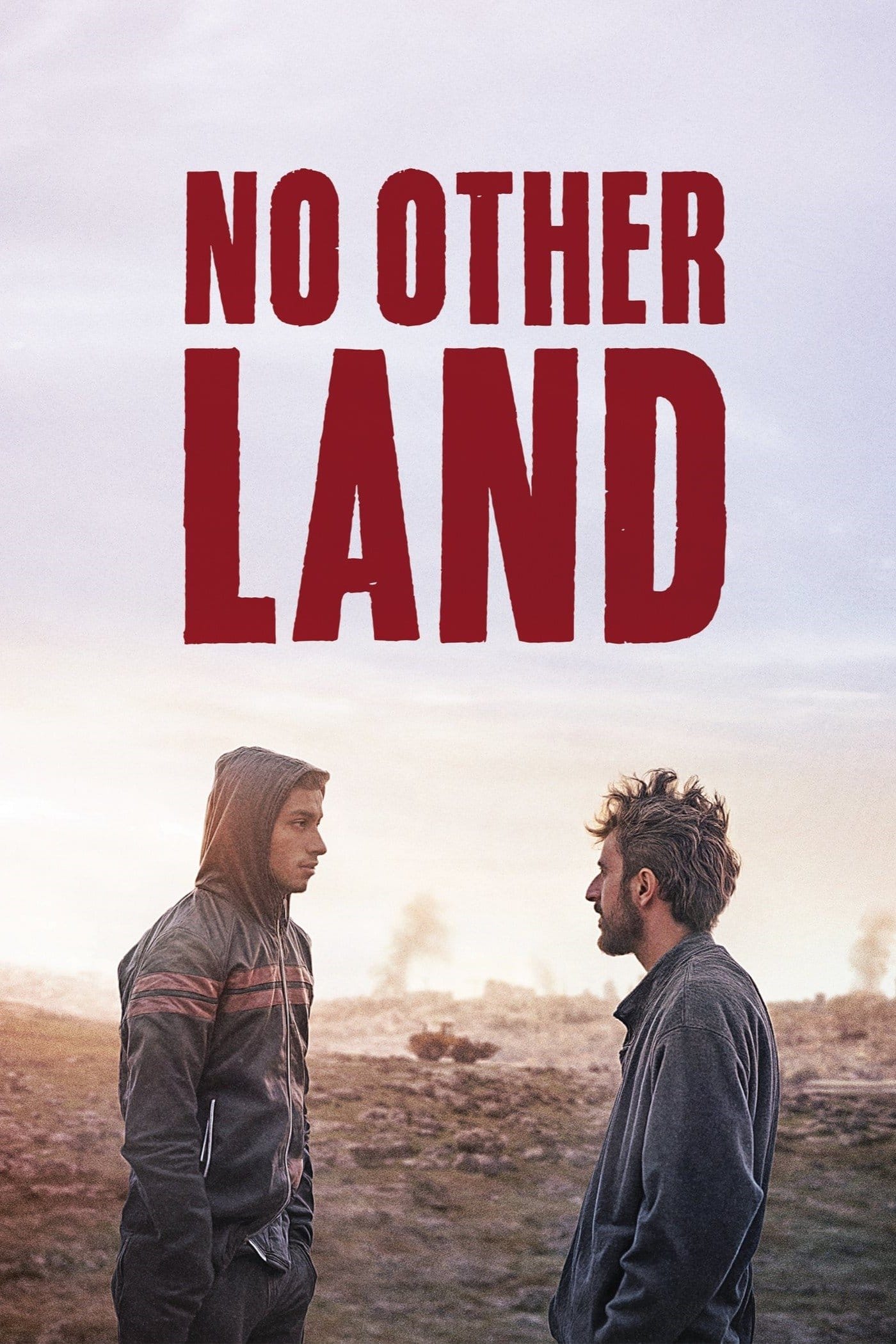
This is not speculation. It is the implied logic behind every non-acquisition. When no buyer emerges from a festival marketplace for a film of NAZA's profile and provenance — Abraham won the Documentary Direction prize at Berlin's Berlinale alongside Basel Adra for No Other Land (2024), a film that similarly struggled to find American distribution before a grassroots theatrical campaign forced the issue — the silence is not coincidental. It is structural.

What mk2 and The Guardian Are Actually Doing
mk2, the French production and distribution company, has a history of backing politically uncomfortable cinema. It is not a neutral actor choosing to be brave; it is a company whose identity has long been built around a certain kind of committed European arthouse cinema that takes the political seriously as an aesthetic category. Its involvement here is coherent with its brand in a way that is not true of most American distributors.
The Guardian's role is more unprecedented and more interesting. A newspaper functioning as a film co-distributor is not a precedent that exists in any established playbook. What it signals is that the logic of journalism — publish, inform, reach — is being applied to documentary film precisely because the logic of film distribution has failed. The Guardian is not in the business of managing theatrical releases, negotiating exhibition windows, or building awards campaigns. It is in the business of publishing things it believes the public should see. In the absence of any other institution willing to perform that function for NAZA, it has stepped into the gap.
That step has consequences worth examining. When a newspaper becomes the distributor of last resort for political documentary cinema, it raises a question about what the film industry's refusal actually costs. The infrastructure of theatrical distribution — publicity, booking, marketing, critical engagement — exists to do something that journalism alone cannot fully replicate: it places a film in the cultural conversation as a cultural object, not merely as reportage. A film distributed through a newspaper risks being received as extended journalism rather than cinema. Whether NAZA escapes that framing will depend partly on IFC Center's ability to give it a real theatrical life, and partly on how critics and audiences choose to engage with it.
The Free Stream as Political Statement
The planned free global stream is the most radical element of this release model, and the one that most directly challenges the logic of the film industry. Theatrical exclusivity windows exist to protect revenue. PVOD windows, subscription platform deals, and transactional streaming all assume that the film's value can be monetized across a sequence of distribution tiers. A free stream collapses that sequence by declaring that the film's value is not primarily financial — it is informational, political, civic.
This is not without precedent in documentary film; direct-to-audience models have existed for years, particularly in activist filmmaking. But the combination of a legitimate theatrical run, major institutional partners, and a planned free release represents a kind of hybrid that the industry does not have a ready category for. It is simultaneously a prestige release and an act of public broadcasting. The IFC Center booking gives NAZA the critical infrastructure it needs to be taken seriously as cinema; the free stream gives it the reach that theatrical alone could never provide and that no streaming platform was apparently willing to offer on terms the filmmakers could accept.
The Question the Industry Won't Ask Itself
The release of NAZA will be covered primarily as a story about Gaza, about courage, about the filmmakers' commitment to bearing witness. All of that is true and worth saying. But the distribution story is equally important and less likely to be told clearly, because it implicates institutions that are also part of the media ecosystem covering it.
What the NAZA release actually demonstrates is that the American film distribution system — including its most progressive-presenting nodes — has a functional ceiling on political risk that falls well short of the most urgent political realities of the moment. Films that challenge power in directions that are commercially safe will find buyers. Films that challenge power in directions that are commercially dangerous will not, regardless of their quality or their necessity. That ceiling is not a policy; it is an incentive structure, and incentive structures are far harder to reform than policies.
Abraham and Szor did not wait for the structure to change. They found partners willing to operate outside it, accepted the constraints that came with that choice, and opened their film at a single cinema in New York on a Tuesday. Whether the industry learns anything from that choice, or simply files it under "exceptional circumstances" and moves on, is the question that will determine whether NAZA's release is a rupture or a footnote.
The film is playing now. The argument it makes about distribution will outlast its theatrical run.