There is a very specific kind of silence that precedes the opening chord of "Stairway to Heaven." Anyone who has heard Led Zeppelin's 1971 magnum opus knows it — that half-second of held breath before Jimmy Page's fingerpicked arpeggio arrives and the room subtly shifts. Netflix understood this. Whoever cut the first trailer for Greta Gerwig's Narnia: The Magician's Nephew banked everything on that silence, and on what it means culturally that the song has never, in over fifty years of cinema, appeared in a licensed theatrical or streaming release. Until now.
 Official trailer
That is not a footnote. It is the entire argument of the trailer.
The Rights No One Could Get
Led Zeppelin's catalog is among the most jealously protected in the history of recorded music. The band — and particularly Jimmy Page and Robert Plant — have declined licensing requests from virtually every major studio across five decades, reportedly including offers tied to blockbuster franchises that would have dwarfed any fee Netflix paid. The mythology around the song's unavailability had, over time, become its own cultural artifact: "Stairway to Heaven" existed in film the way certain locations exist in travel — referenced constantly, accessible to almost no one.
When Netflix secured the rights for this trailer, they did not merely acquire a piece of music. They acquired a piece of that mythology. The song arrives in the opening moments of the teaser — soft and liturgical over images of a pre-Narnia void, an empty cosmos waiting to be spoken into existence — and its effect is immediate and disorienting in the best possible way. You recognize what you are hearing before you fully process that you are hearing it in this context. The cognitive dissonance is the point. Something previously impossible is happening, and that impossibility is being used to frame a story literally about creation.
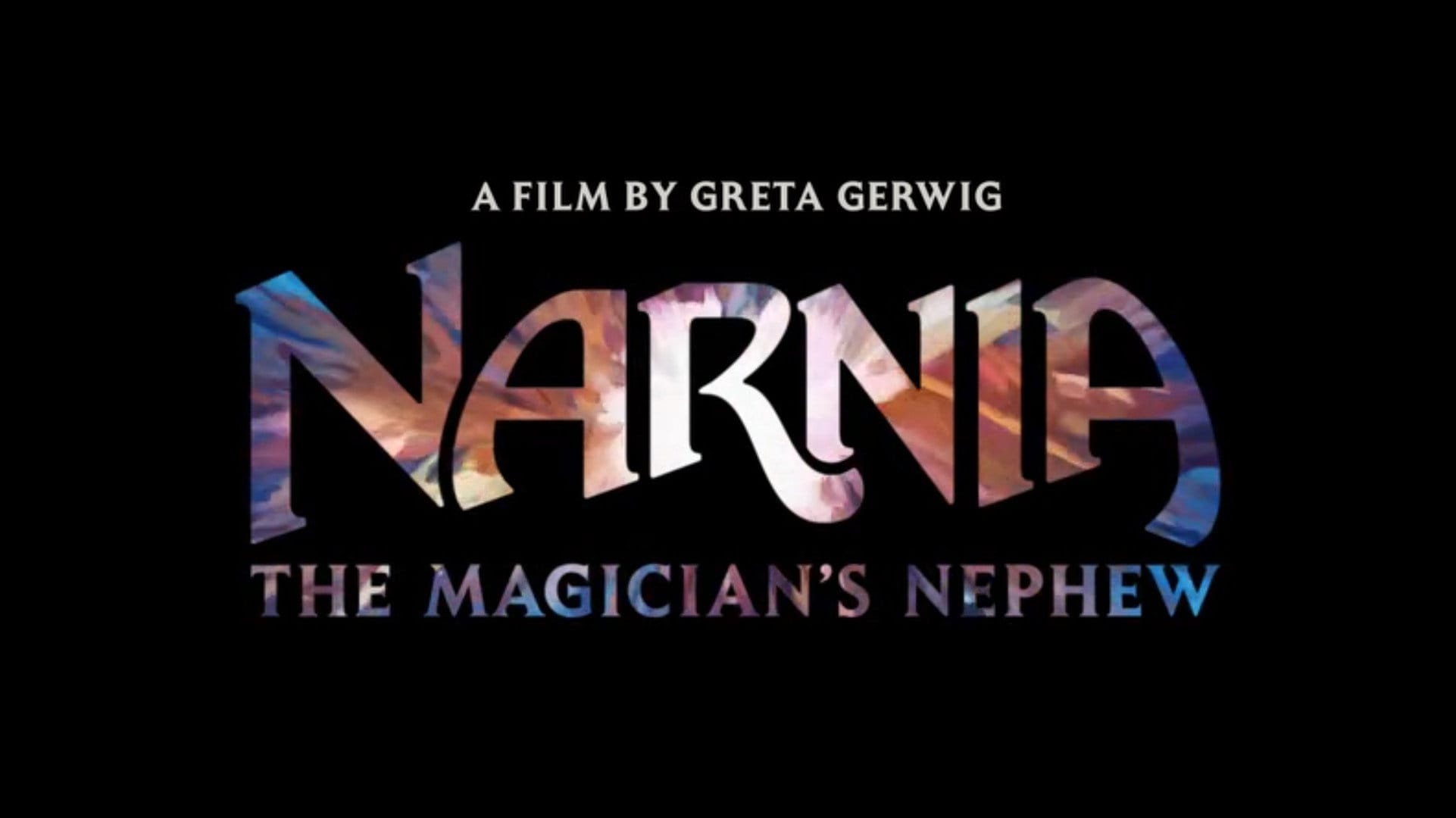
The alignment is too clean to be accidental. C.S. Lewis's The Magician's Nephew (1955) is the origin story of Narnia — the book in which Aslan sings a world into being. Gerwig and her team chose a song that has functioned, in Western pop culture, as a kind of secular hymn: eight minutes of ascent, of yearning, of something reaching toward the ineffable. Putting it against footage of a lion's breath condensing in the dark before stars ignite is not subtle. It is, however, precise.
What the Trailer Refuses to Show
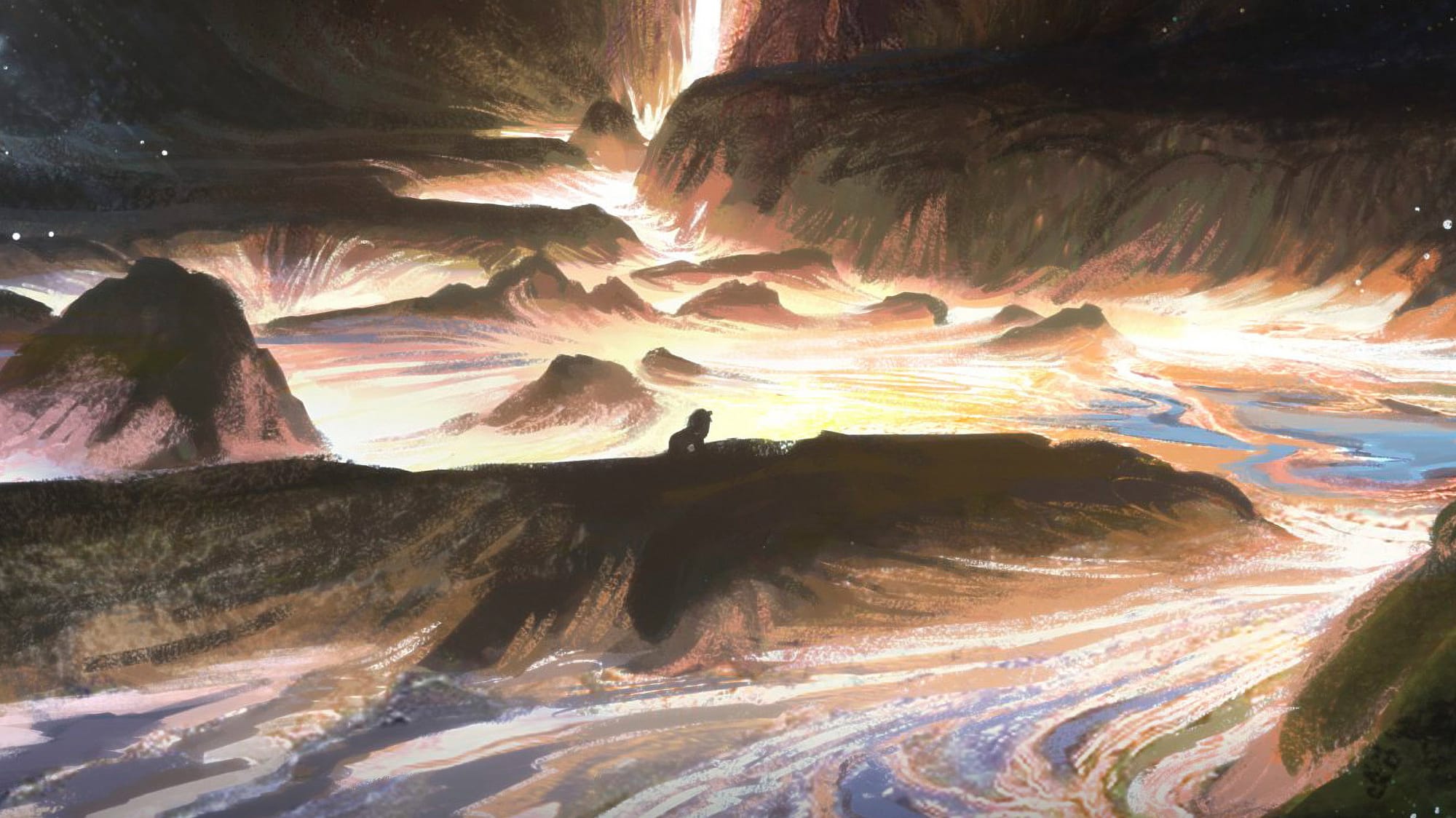
Notably, the teaser reveals almost nothing about the film's plot, its cast in action, or its tone beyond the cosmic and the elemental. There are images — golden light fracturing through what appears to be the Wood Between the Worlds, a silhouetted figure at a threshold, the unmistakable suggestion of Charn's dying red sky — but no dialogue, no character introductions, no antagonist reveal. By the standards of contemporary blockbuster marketing, which typically treats the trailer as a contractual obligation to spoil the second act, this is a radical act of restraint.
That restraint is itself a message. Netflix is signaling that Narnia: The Magician's Nephew does not need to sell you on its story. It needs to sell you on its seriousness. The studio is betting that Gerwig's name, combined with the most storied unlicensed song in cinema history now licensed for the first time, constitutes a cultural event sufficient to generate anticipation without narrative bait. They are probably right.
Gerwig and the Weight of the Source Material
The choice of The Magician's Nephew as the entry point into this new Narnia cycle is itself worth interrogating. The Andrew Adamson films for Walden Media — beginning with The Chronicles of Narnia: The Lion, the Witch and the Wardrobe (2005) — followed publication order, starting with the story most readers encounter first. Gerwig is starting chronologically, with the creation myth. It is a harder, stranger book: less plot-driven, more concerned with theodicy, temptation, and the metaphysics of worlds. It features a boy whose dying mother hovers over every scene, a girl who functions as his moral anchor, a villain whose tragedy Lewis renders with uncomfortable sympathy, and a creation sequence that has no real cinematic precedent.
This is not a straightforward commercial calculation. Beginning a potential franchise with its most philosophically dense installment is the kind of choice that suggests either extraordinary confidence or a filmmaker who was given final cut and used it. Given that Netflix reportedly granted Gerwig significant creative autonomy following the extraordinary commercial performance of Barbie (2023), the latter seems likely. Gerwig has spoken in interviews about Lewis's cosmology as genuinely complex theological architecture rather than simple allegory, and the trailer — with its emphasis on void and voice and breath — suggests she intends to honor that complexity rather than sand it into something more immediately legible.
Netflix's Theatrical Anxiety, Expressed in F-Sharp Minor
Underneath all of this sits a structural tension that the trailer inadvertently illuminates. Netflix has spent years attempting to convince the industry and its subscribers that its original films are cinema — not product, not content, but capital-C Cinema. The results have been mixed. Despite individual critical successes, the platform has struggled to generate the kind of cultural gravity that theatrical releases accumulate almost by default: the shared experience, the opening-weekend discourse, the sense that a film is an event rather than an option.
"Stairway to Heaven" is Netflix's answer to that problem, or at least an attempt at one. A song that has never appeared in a film carries with it the full weight of its own absence — every film it was denied, every director who asked and was refused. When it finally appears, in this trailer, for this film, on this platform, it arrives loaded with fifty years of accumulated significance. Netflix is borrowing cultural capital from a source so deep and so long-denied that the borrowing itself becomes news. The trailer has not just marketed a film. It has generated a cultural conversation about access, rights, prestige, and what it means when a streaming platform can do something Hollywood studios spent half a century failing to accomplish.
Whether the film justifies the statement its trailer makes is, for now, entirely unknown. Gerwig has earned the benefit of the doubt — her filmography suggests a director who understands the difference between spectacle as ego and spectacle as emotional architecture. But trailers are promises, and this one has made a very large promise in a very specific register. The song builds, as it always does, toward something. So, apparently, does the film.
We are in the silence before the first chord. The world is about to be spoken into being. What comes next is what matters.