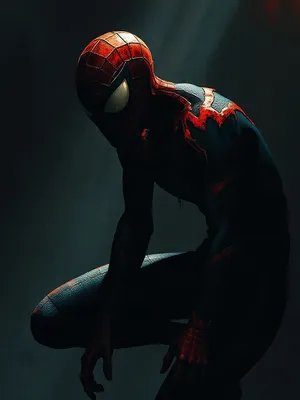
Marvel has done stranger things than launch three first issues in the same week, but it has rarely done anything that so nakedly exposes its own calculation. Midnight: Spider-Man, Midnight: X-Men, and Midnight: Fantastic Four all hit shelves on the same Wednesday, each wearing the Midnight Universe banner like a uniform — a coordinated blitz that is being positioned as an event but functions more accurately as a gamble on reader loyalty at scale.
Let's be precise about what this is. The Midnight Universe is not a crossover. It is not a limited event with a ticking countdown. It is an imprint — or imprint-adjacent enough to matter — built around horror reimaginings of Marvel's most structurally load-bearing franchises. Spider-Man, the X-Men, and the Fantastic Four are not peripheral properties selected because they have room to experiment. They are the core. Putting all three into a simultaneous darkness-soaked relaunch is the publishing equivalent of renovating the foundation and the roof at the same time and asking tenants to keep paying rent while you do it.
The Simultaneous Drop as Strategy — and Signal
Releasing three #1s in a single week is a flex when it works and a confession when it doesn't. The logic, on paper, is sound enough: flood the market with enough Midnight Universe product that the imprint registers as a reality rather than a rumor. A single horror-reimagined #1 can be dismissed as a curiosity. Three of them, arriving together, are harder to ignore. They demand a category. They force the conversation.
But the strategy carries a hidden weight. Simultaneous launches split attention rather than compound it. A reader who might have evangelized one title to a friend, walked them through the premise, sold the vision — that reader now has to make three separate cases on the same weekend budget cycle. Comic shops have to dedicate shelf real estate and promotional energy across three distinct series simultaneously. The concentrated cultural moment that Marvel is hoping to manufacture requires every piece of that machinery to function at once, which is precisely when machinery tends to fail.
There is also the question of what the simultaneity signals about Marvel's own confidence in any individual title. When a publisher believes unambiguously in a concept, it tends to let that concept breathe — it gives a flagship book room to establish itself before deploying the rest of the line. The coordinated drop implies that none of the three titles alone is expected to carry the weight of introducing the Midnight Universe. Each one is backstopped by the others. That is either elegant redundancy or a sign that Marvel isn't sure which premise will land, and is covering its bets by making all three bets at once.
What Horror Costs These Characters
The Midnight reimaginings are not simply aesthetic repaints. Horror, as a genre, operates through vulnerability, dread, and the loss of control — which puts it in immediate structural tension with Marvel's core trio of properties. Spider-Man's power fantasy is built on agency; the horror genre works by dismantling agency. The X-Men's foundational metaphor is about refusing to be monstrous in a world that insists you are; a horror reimagining risks collapsing that tension by literalizing the monstrousness. The Fantastic Four are defined by their optimism about the unknown — horror, almost definitionally, reframes the unknown as something to fear.
None of these tensions are insurmountable. The best horror comics have always understood that genre disruption of a beloved character can produce something revelatory — that forcing Spider-Man into genuine powerlessness, or letting the X-Men become the creature under the bed rather than the misunderstood neighbor, can expose something true about those characters that sunlit adventure storytelling conceals. The question is whether the Midnight titles are interested in that depth of engagement or whether the horror framing is largely cosmetic: darker palettes, more sinister antagonists, a few body-horror splash pages.
What the first issues actually do
Now that all three books are on shelves, that question has early answers, and they are better than the launch strategy deserved. The line is built on names, not just concepts. Midnight X-Men marks Jonathan Hickman's return to mutants after his Krakoa era, and opens with Storm sinking her teeth into Jean Grey: a world where vampirism, not mutation, is the thing that divides humans from what they fear. AIPT's review argued that Hickman clears the enormous bar the hype set, at least on a first read.
Midnight Spider-Man, from Phillip Kennedy Johnson and ScieTronc, rewrites the core of the character in a single line spoken by Richard Parker: power makes monsters, every time. Oscorp is the engine of the horror, and the body-horror is real rather than decorative. Midnight Fantastic Four, by Benjamin Percy and Kev Walker, sends Reed Richards and a startup-founder Susan Storm into an interdimensional void that is treated, at last, as something to fear rather than conquer.
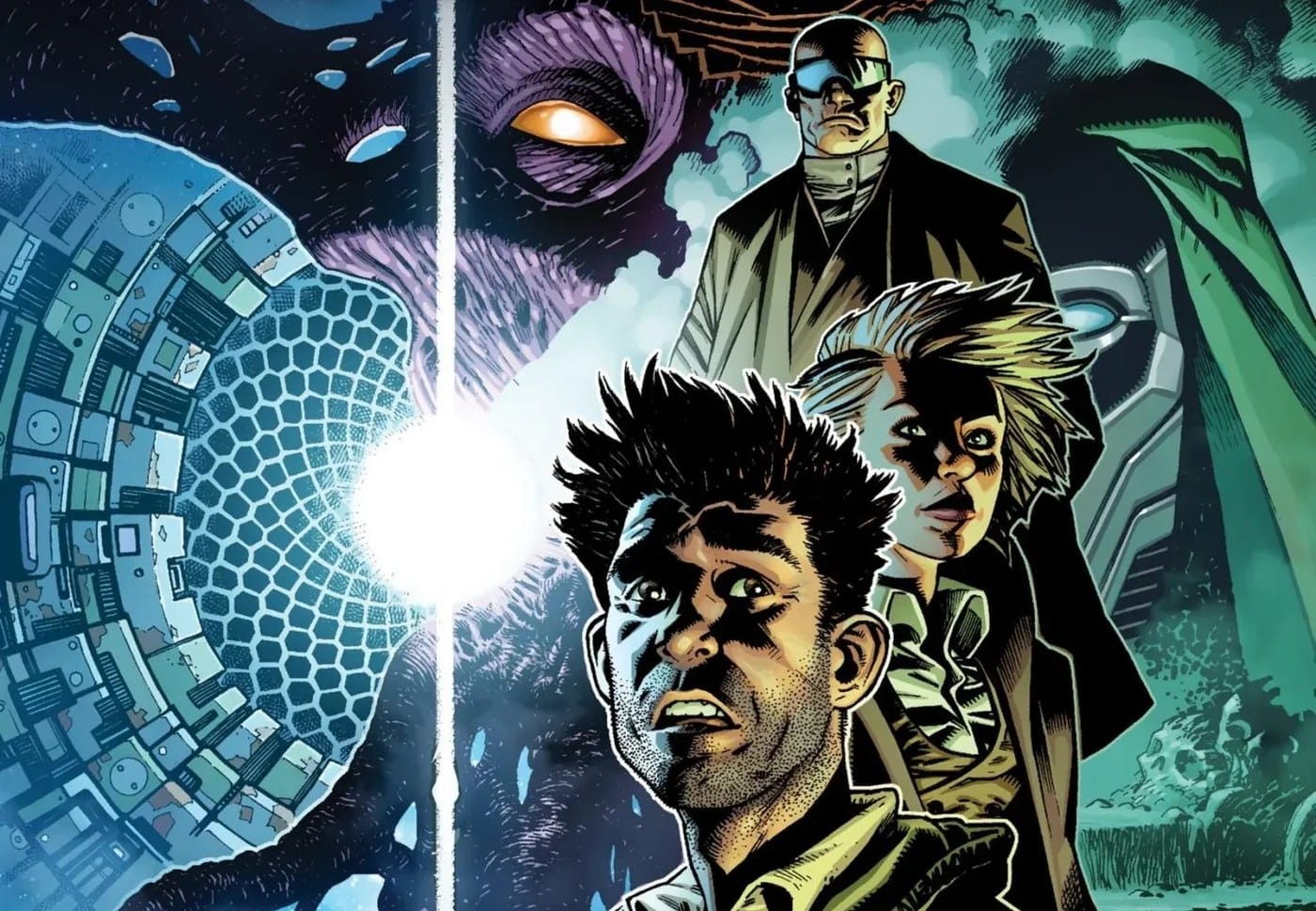
In other words, the horror is not cosmetic. Each book uses the genre to invert the founding promise of its team, which is exactly the depth of engagement the premise needed. That does not settle the question of the launch strategy, which we examined in detail the day the line arrived, but it changes its stakes. Marvel made all three books the only titles it released that week. The risk was never that the comics would be shallow. It was that three demanding horror books, arriving at once, would split the audience's attention and money before any of them had the chance to build a following.
The real test is issue four
The line is also an answer to a competitor. DC's Absolute Universe proved that a reimagined line, built around star creators and a clear tonal identity, could outsell the main continuity; we traced how it redefined what counts as canon. Midnight is Marvel's version of that bet, with horror as the identity and Hickman as the anchor. The difference is that Absolute launched book by book. Midnight launched as a wall.
The answer will not come from launch-week sales, which are always inflated by variant covers and speculation. It will come in January, when the fourth issues arrive without the event machinery behind them. If readers are still buying all three, Marvel will have shown that a horror line can stand next to its core titles. If one or two fall away, the simultaneous launch will look less like confidence and more like a hedge.