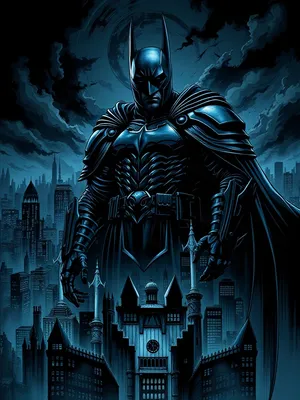
There is a structural problem at the center of DC's mainstream continuity, and the publisher has finally stopped pretending it isn't there. The Absolute Universe — the line anchored by Absolute Batman, Absolute Superman, and Absolute Wonder Woman — is not a reboot in the traditional sense. It is a controlled experiment designed to answer one specific question: what happens to DC's trinity when you remove the eighty-year sediment of canon that has calcified around them?
The answer, so far, is that they become interesting again.
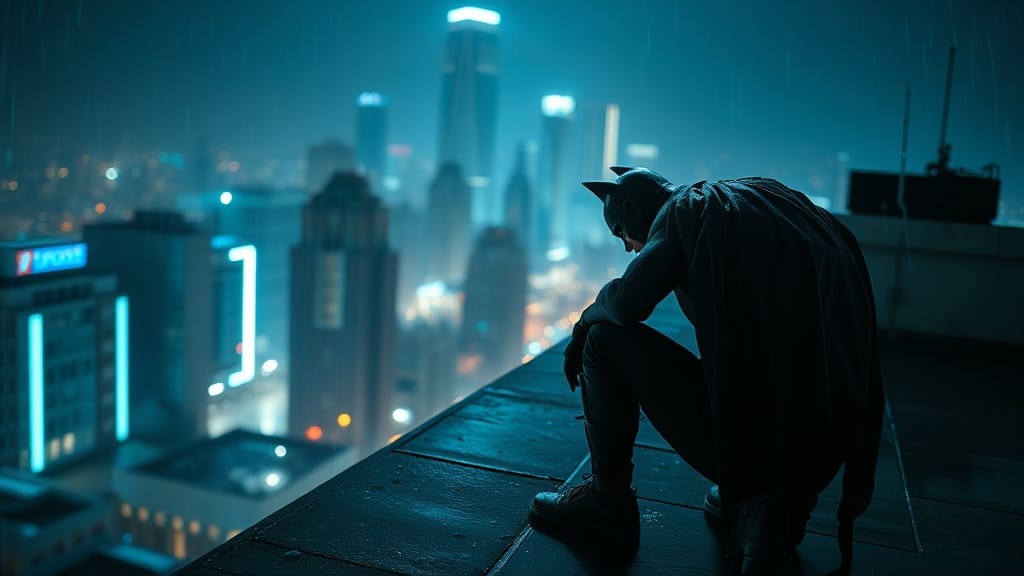
Scott Snyder's Absolute Batman strips Bruce Wayne of his inheritance. No Wayne fortune, no butler, no manor — just a man whose psychology still bends toward the same obsession, but who has to build everything from raw material and sheer will. The premise sounds reductive on paper. In execution, it exposes something the main DCU has struggled to articulate for decades: the myth of Batman was never about the resources. It was about the architecture of grief transformed into method. Without the wealth as a given, that architecture has to be constructed in front of the reader, and the result is a Batman whose ideological core feels earned rather than inherited.
Jason Aaron's Absolute Superman operates on a parallel logic. Kal-El lands not in the pastoral American heartland of Smallville but in a context that reframes what his alien-ness actually means — socially, politically, physically. The Superman of the main DCU has spent the better part of a century absorbing contradictory editorial mandates until the character became a vessel for whatever the current creative team needed him to represent. Aaron's version has the coherence of a first draft written with intent. It knows what it's about before the first page.
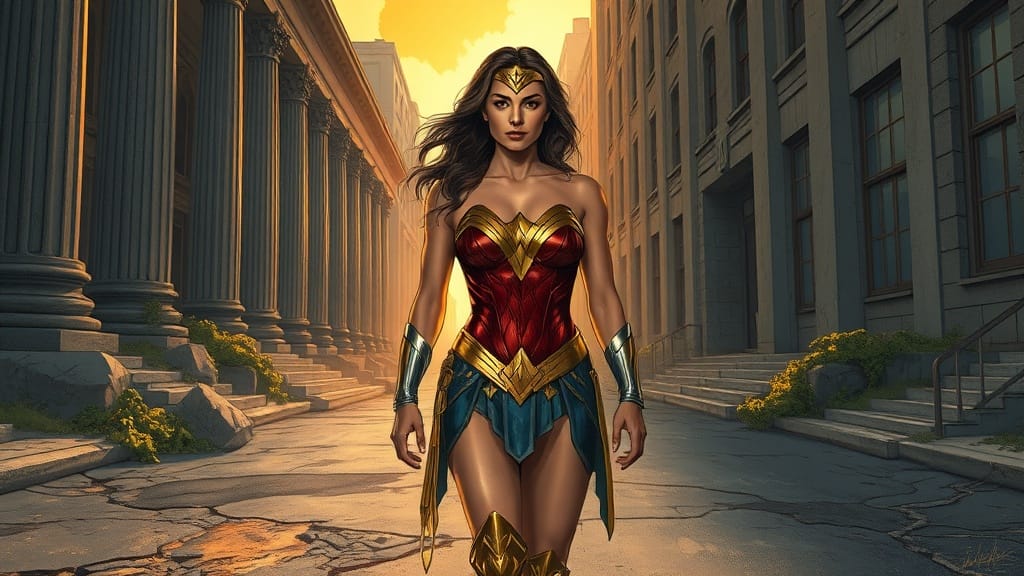
Kelly Thompson's Absolute Wonder Woman may be the most formally ambitious of the three. Thompson relocates Diana's origin to a Detroit shaped by mythological interference, collapsing the distance between the ancient and the contemporary that has always been Wonder Woman's most underexplored tension. The Amazons are not a civilization frozen in Hellenic amber. They are something stranger, more present, more dangerous. The effect is a character who finally operates in a register that matches her actual narrative potential.
What distinguishes the Absolute line from prior DC experiments — the New 52, Rebirth, the various Elseworlds that never quite stuck — is the structural commitment behind it. This is not a prestige imprint designed to run for twelve issues and be quietly canonized or quietly forgotten. DC is treating these titles as a parallel mainstream, releasing them on a consistent monthly cadence, building crossover architecture, and — critically — allowing the Absolute versions of these characters to develop relationships and histories with each other. By the time the line reaches its projected expansion through mid-2026, it will have accumulated enough internal continuity to function as a genuine alternative universe rather than a collection of isolated reimaginings.
That distinction matters. Elseworlds worked as thought experiments. The Absolute Universe is being constructed as a living system, which means it will eventually face the same pressures that corrupted the original continuity: the need to protect legacy, to accommodate new characters, to satisfy the editorial logic of crossover events. The question is whether DC has learned anything from watching the main DCU collapse under those pressures, or whether the Absolute line is simply a delay before the same structural decay sets in.
The honest answer is that it's too early to know. What can be evaluated now is intent and execution, and on both counts the Absolute line is the most coherent creative statement DC has made about its core characters in years. The implicit argument running through all three titles is not that the classic versions were wrong, but that decades of continuity management have made them illegible — too loaded with contradictory interpretations, too obligated to past storylines, too expensive to read in terms of the context required to understand them.
By July 2026, if DC holds the line editorially, the Absolute Universe will have done something the New 52 explicitly attempted and failed: created a secondary entry point that doesn't feel like a consolation prize. The difference is that the Absolute titles are not being positioned as the easier, simpler version. They are being positioned as the version where the creative teams have the most freedom — and freedom, historically, is where the best superhero comics get made.
DC's mainstream continuity is not going away. But it is, for the first time in a long time, no longer the only place where the company's most important characters are being taken seriously.