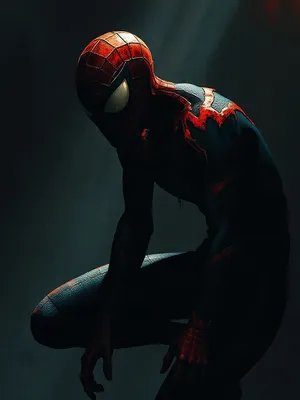
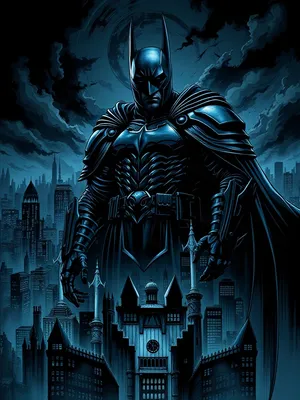
Next Wednesday, October 7, Marvel will ship three comics. Not three new launches among a dozen regular titles — three comics, total, and nothing else from the publisher that day. Midnight X-Men #1, Midnight Fantastic Four #1 and Midnight Spider-Man #1 will have the shelves to themselves. In an industry that usually floods the market every week, that kind of silence is the loudest launch decision Marvel has made all year.
Clearing the Shelf
We have already written twice about what the Midnight Universe means as an idea — why Marvel chose to build horror in a separate universe rather than inside its main continuity, and what that segmentation says about the publisher's appetite for risk. A week out, the more revealing story is in the launch mechanics, because they show how seriously Marvel is taking a line that could easily have been treated as a seasonal Halloween stunt.
Shipping only the Midnight books on launch day does several things at once. It gives retailers a single, unambiguous event to order around. It removes the internal competition — no new X-Men issue from the main line pulling attention from Midnight X-Men, no Amazing Spider-Man cannibalizing Midnight Spider-Man. And it signals to readers that this is not a side project. Coming on the heels of Amazing Spider-Man #1000, it is a deliberate pivot from celebrating the past to selling something new.
Three Books, Three Kinds of Horror
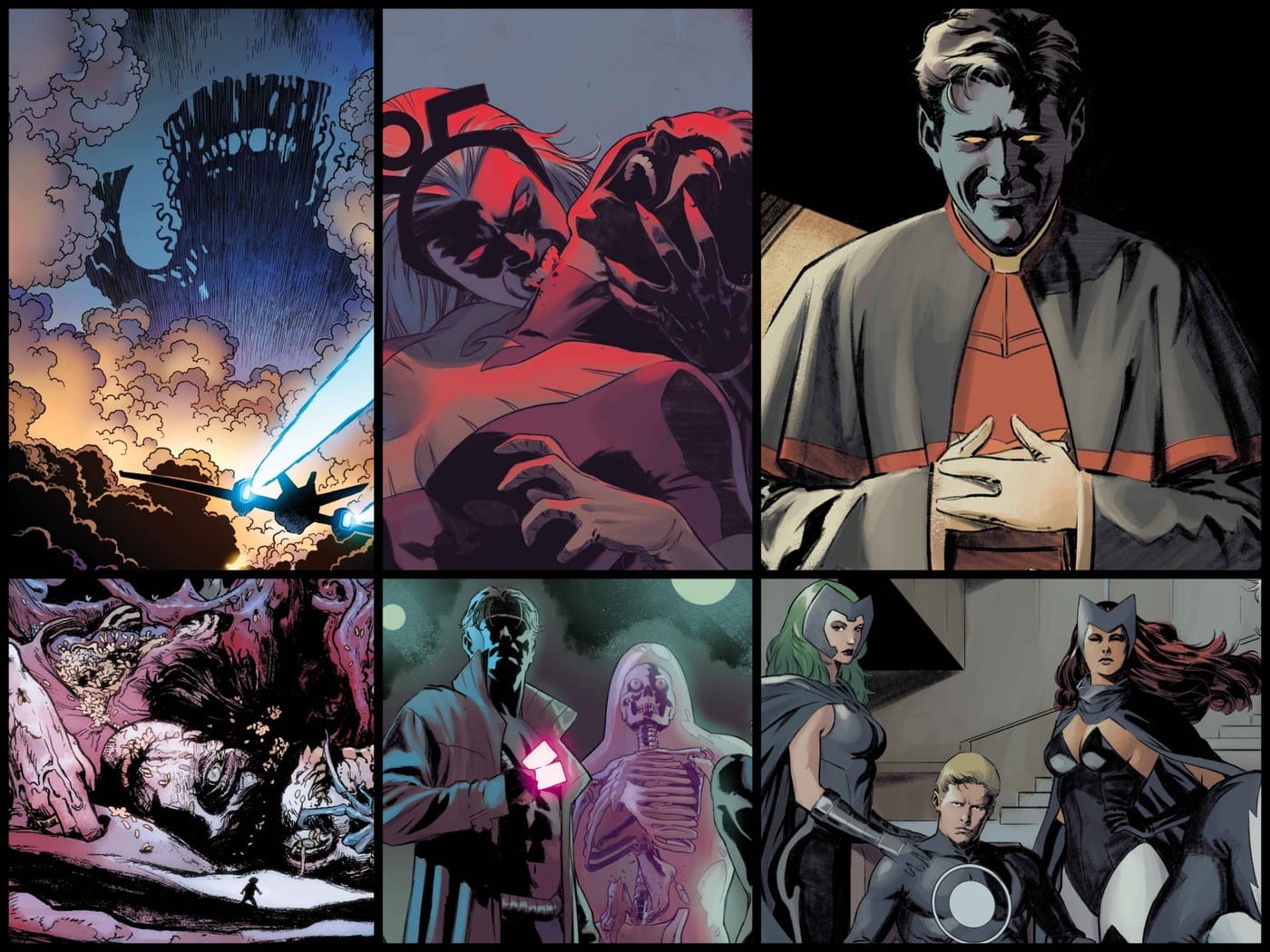
The line's strength on paper is that its three titles are not variations on one idea. Each reaches for a different register of fear.
Midnight X-Men reunites the franchise with Jonathan Hickman, the architect of the 2019 House of X era, working with artist Matteo Della Fonte. The premise turns mutants into vampires — rival empires fighting a political war in the shadows of New York. It is horror as faction drama, which is exactly the kind of intricate, institution-building storytelling Hickman has always gravitated toward; he has described the line as a home for ambitious stories with complicated plots.
Midnight Fantastic Four, by Benjamin Percy and Kev Walker, is cosmic horror. An obsessive scientist and three companions are warped by dimensional experiments, and the book's central question is what they found on the other side. It inverts the original Fantastic Four's optimism: exploration as trespass rather than discovery.
Midnight Spider-Man, from Phillip Kennedy Johnson and ScieTronc, is body horror. Oscorp's experiments turn Peter Parker into a grotesque human-animal hybrid, and he has to accept that body to stop the company making more. Johnson has called it the most epic series of his career and named H.R. Giger and David Cronenberg among his influences — names that tell you precisely how far from the friendly neighborhood this goes.
Priced and Packaged as Premium
Each #1 runs 40 pages at $5.99 and carries a Parental Advisory rating — a statement of intent in itself, since Marvel's core line is aimed at teen readers. The covers are "cloaked," concealing the artwork until the reader opens the book, a design choice that turns the first look at each character into a small reveal. The variant program leans into the genre, with "Midnight Bloodbath" and "Midnight Horror Homage" covers from artists including Ryan Stegman and Clayton Crain.
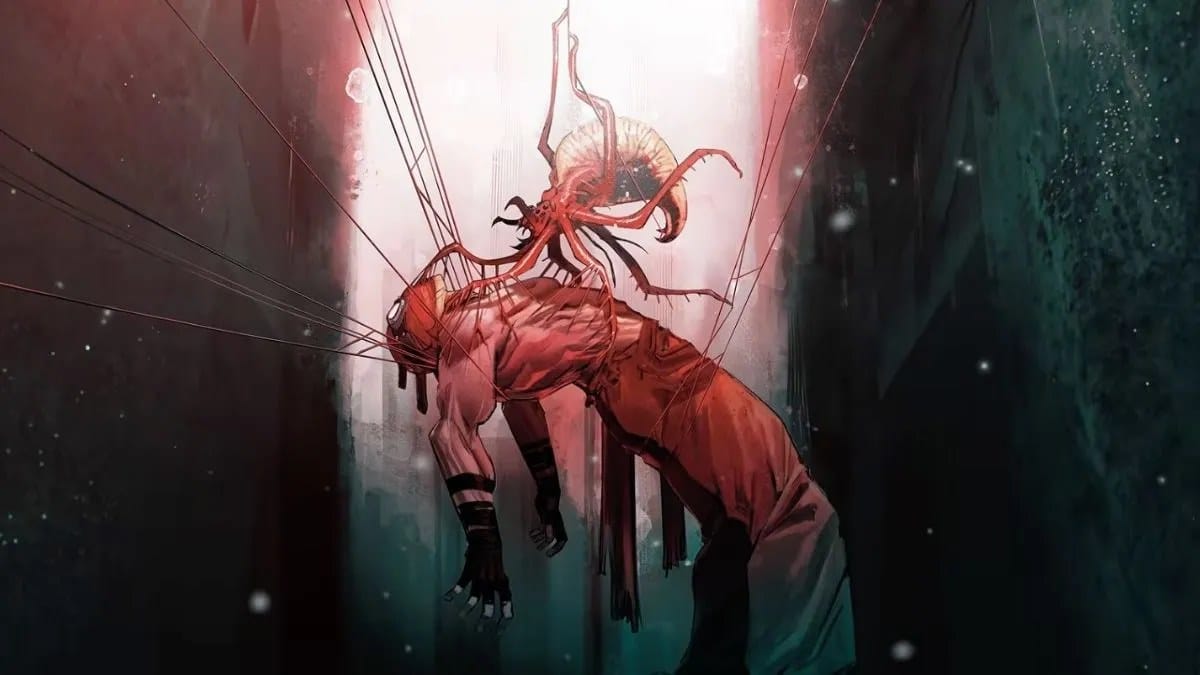
Executive editor Dan Buckley — Marvel's president — oversees the line and has spoken of its long-term potential, and the schedule backs that up. Second issues arrive November 18 and third issues December 16, a monthly cadence that frames Midnight as an ongoing universe rather than a limited event. Marvel has been explicit on that point.
What Week One Will Tell Us
Superhero horror is not new; Marvel has run zombie universes and monster titles for decades. What is new is the decision to build a full parallel universe around reimagined flagship heroes rather than established horror characters like Blade or Morbius, and to launch it with the shelves cleared, under its own Midnight Universe banner. That puts the brand's most recognizable names — Spider-Man, the X-Men, the Fantastic Four — at the center of the experiment, the same characters currently anchoring events like DNX in the main line.
If the three #1s sell through and the #2 orders hold in November, Marvel will have proven that its flagship characters can support a second, adult, genre-driven universe alongside the main one. If they do not, the empty shelf on October 7 will be remembered as an unusually expensive way to discover the limits of the brand. Either way, it is the most consequential Wednesday on the comics calendar this autumn.