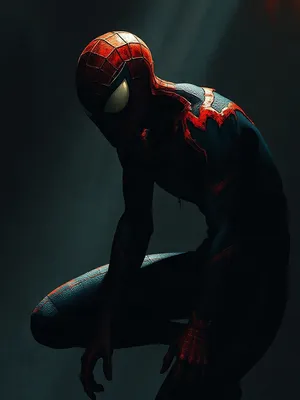
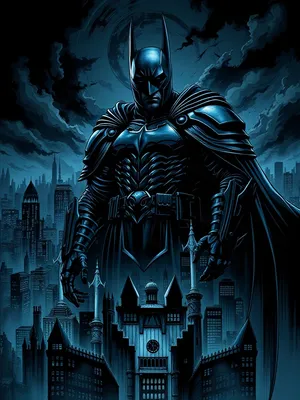
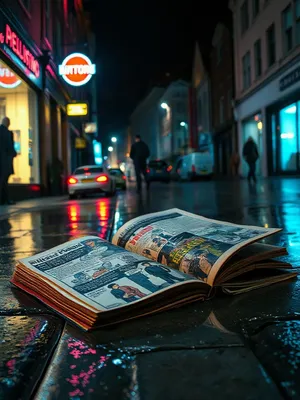
Marvel doesn't quarantine things it's confident about. When the X-Men became culturally indispensable, they stayed in the main continuity and reshaped it around themselves. When the Avengers needed to anchor a new era of storytelling, they were handed the keys to the universe's central mythology. So when Marvel builds a separate, walled-off alternate universe for its horror output — the Midnight imprint — the architecture of that decision demands scrutiny. What looks like a creative expansion is also, structurally, a kind of confession.
The Logic of Separation
The Midnight imprint operates under a simple premise: horror stories set in a universe adjacent to, but distinct from, the main Marvel continuity. Blade, Werewolf by Night, Elsa Bloodstone, and their kin inhabit a space where the rules of horror — irreversibility, dread, moral ambiguity without heroic resolution — can function without being neutralized by the proximity of the Avengers or the omnipresent architecture of Marvel's timeline continuity.
That logic is sound. Horror is an inherently fragile genre in shared universe contexts. The moment a reader knows that Spider-Man could theoretically swing in and solve the problem, the genre's essential condition — helplessness — collapses. Isolation is not merely atmospheric in horror; it is structural. By building a separate universe, Marvel is acknowledging that horror requires a different set of narrative physics entirely.
But acknowledgment is not the same as solution. The question is whether separation liberates the genre or merely protects the main universe from having to accommodate it.
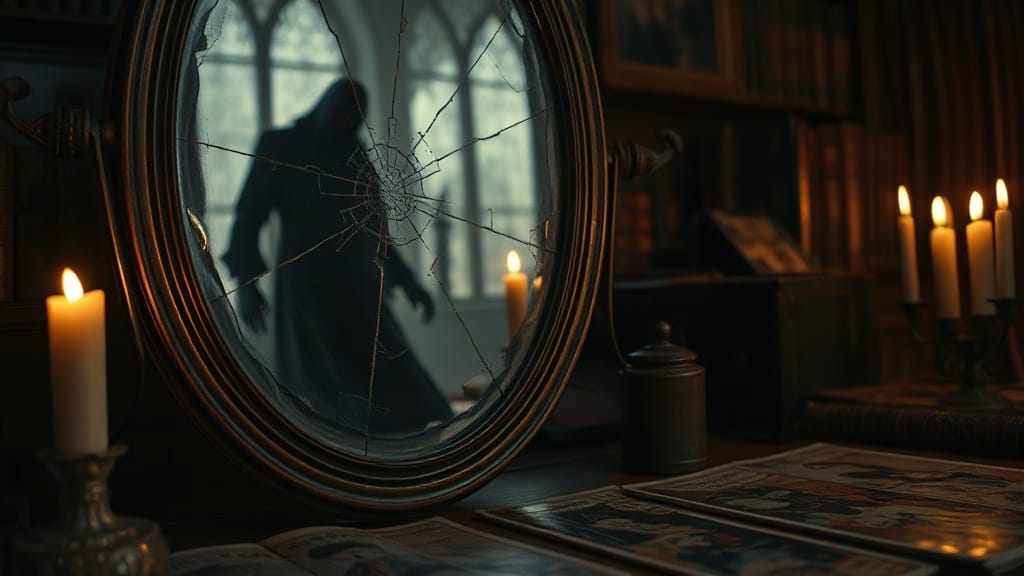
What the Main Universe Cannot Hold
Marvel's central continuity is, at its core, a universe of consequence management. Events escalate, timelines reset, deaths are reversed, and the moral weight of catastrophe is routinely absorbed and neutralized by the machinery of crossover storytelling. This is not a flaw unique to Marvel — it is the thermodynamic reality of any shared universe that must remain commercially viable across decades. Entropy is the enemy of serialized superhero fiction, and so the universe is constantly, invisibly, being reset toward equilibrium.
Horror resists this. The genre's power is proportional to the permanence of its damage. A monster that can be undone is not a monster — it is a plot obstacle. A curse lifted by the next issue's heroic intervention is not a curse — it is a detour. The main Marvel Universe, structurally obligated to protect its investment in its characters' futures, cannot afford to let horror be what horror needs to be. The Midnight imprint is, in this reading, less a creative initiative than an escape valve.
The Commercial Weight Behind the Decision
None of this happens in a vacuum. Marvel's horror pivot is partly a response to measurable cultural appetite. The MCU's own tentative steps toward horror — Werewolf by Night (2022), the gothic textures woven into Doctor Strange in the Multiverse of Madness (2022) — generated disproportionate critical enthusiasm relative to their scale. Audiences responded to the tonal shift with a hunger that suggested the genre wasn't a niche detour but an underserved appetite inside Marvel's own fanbase.
The imprint model also provides commercial insulation. If a horror line underperforms, it does not drag the main universe's brand equity down with it. If it overperforms, the IP can be absorbed upward into the mainline. Separation, in publishing terms, is a hedge — and hedges are deployed when confidence is incomplete.
Precedent and Its Discontents
Marvel has done this before. The MAX imprint gave creators license to operate outside the Comics Code Authority's reach and outside continuity's protective embrace. It produced genuinely corrosive, adult work — Garth Ennis's Punisher MAX run being the canonical example — precisely because it was structurally freed from the obligation to preserve character legacies. The Midnight imprint follows this logic, but with a key difference: it is not primarily a content-rating workaround. It is a genre-preservation mechanism.
That distinction matters because it reframes what Marvel is actually building. This is not a sandbox for creators who want to write without editorial guardrails. It is a controlled environment designed to let horror function as horror — which means Marvel understands, at an institutional level, that horror and its main universe are fundamentally incompatible cohabitants.
What It Reveals
The Midnight imprint is a structurally honest move disguised as an expansion. By building horror its own house, Marvel is admitting that the main Marvel Universe is not a neutral container into which any genre can be poured — it is a specific narrative environment with specific immunities, and horror is one of the things it is immune to. That admission, embedded in the architecture of a publishing imprint, is more candid about the limits of the superhero shared universe than any editorial statement could be.
Whether the imprint succeeds commercially will determine if Marvel doubles down or quietly retreats. But the more durable insight is already baked in: the House of Ideas needed a second house to fit the ideas that the first one couldn't hold. A companion piece on Kynari digs into whether Marvel has the risk appetite to actually let it stay strange.