The number four is not arbitrary. In 2026, Marvel published four Comics Giveaway Day titles: Amazing Spider-Man #1000/Queen in Black #1, Armageddon/X-Men #1, Alien, Predator & Planet of the Apes #1, and Spidey & His Amazing Friends #1 — a spread designed to cover every demographic quadrant the House of Ideas could identify. Flagship readers, event-hunters, licensed franchise fans, and children all got something to pick up off the shop counter. The logic was retailer-facing: maximise foot traffic by maximising variety. It is the same calculus that has governed giveaway events since Free Comic Book Day launched in 2002, and it has never been seriously challenged.
Marvel just challenged it.
Marvel Comics has revealed it will release only one Comics Giveaway Day title in 2027: a brand-new Hulk #1, by Ultimate Wolverine writer Chris Condon and artist Alessandro Cappuccio. The issue hits shelves on May 1, 2027. More pointedly, the full debut issue will premiere on Comics Giveaway Day 2027 completely free — not a preview, not a sampler, not a half-length teaser. The whole first issue. No conditions.
Four to One: The Arithmetic of Attention
Usually the free comics available from Marvel are short teasers for other stories and series, or half-length stories from current series' creative teams. Launching a major new ongoing series with the first full-length issue completely for free simply hasn't been done in the history of the event. That is worth sitting with. This is not an incremental tweak to the format. It is a structural inversion: rather than spreading product across a range of curiosities, Marvel is concentrating its entire investment on a single point of entry and betting that one genuinely complete experience will out-convert four promotional fragments.
In 2026, Marvel had four titles. This narrowing down reflects a new philosophy at Marvel, as articulated by Editor-in-Chief Steve Wacker at NYCC, when he talked about the Midnight Universe launch: "Three books, one day, with nothing else from us," he said. The Hulk decision is that philosophy applied to a retail event rather than a launch week — the same logic, different arena. Fewer titles means every unit of retailer and reader attention converges on a single object. The free issue stops functioning as a business card and starts functioning as an actual book people might return to buy issue two of.
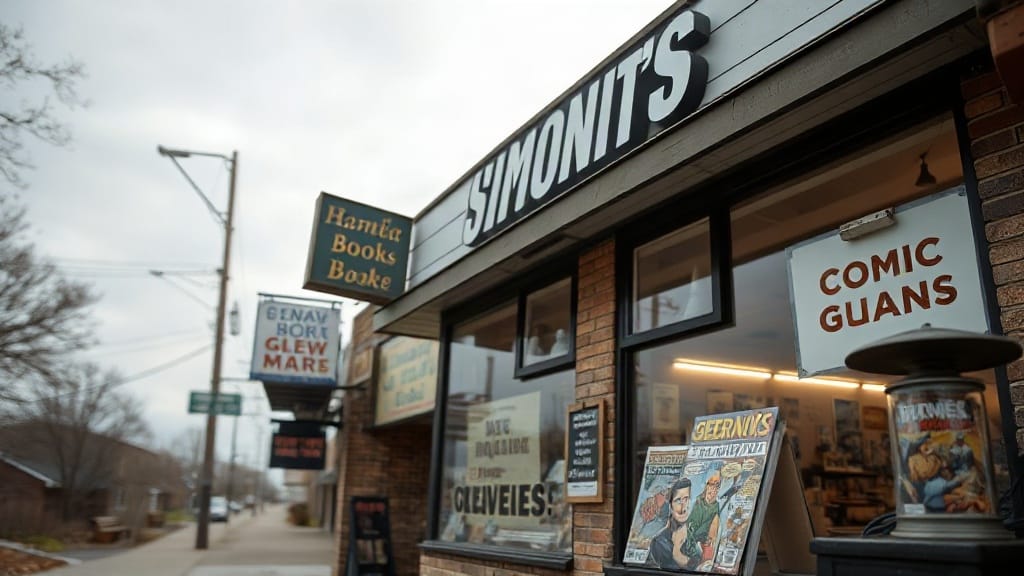
Traditionally, Free Comic Book Day and industry giveaway events offer samplers, short backup stories, or reprints. Marvel's decision to publish the complete, full-length first issue of an ongoing A-list series for free on May 1 represents an aggressive push to drive foot traffic into local comic specialty shops. The logic of foot traffic has not changed. What has changed is the theory of conversion: that a reader who finishes a satisfying complete chapter is more likely to return for issue two than one who reads twelve pages designed to leave them wanting more. The former creates investment; the latter creates friction.
Condon and Cappuccio: The Bet Behind the Bet
The strategy only works if the book earns the investment. Following Hulk War: Infernal Rage, the event that brings Phillip Kennedy Johnson and Nic Klein's acclaimed Infernal Hulk saga to its epic conclusion, writer Chris Condon and Marvel Stormbreaker artist Alessandro Cappuccio reunite after their best-selling Ultimate Wolverine run to unleash an all-new era of Hulk. That framing matters: Condon and Cappuccio are not unknown quantities being handed a character to warm up. They built something together.
Ultimate Wolverine #1 became a fan favorite quickly. The series presented a brutal, almost horror-like reimagining of the character — a Weapon X meets Winter Soldier take that sees Logan transformed into a weaponized monster, a tool used by the Eurasian Republic in service to The Maker. Cappuccio's visual language on that run was precise and propulsive: heavy shadow, controlled negative space, action choreography that never let the eye rest. That sensibility translates directly to the Hulk, a character whose physical enormity has always been both asset and trap — easy to render large, difficult to render meaningful.
The new Hulk series will start a new era for the character following Hulk War: Infernal Rage, which launches in February 2027 and wraps up the Infernal Hulk storyline by Phillip Kennedy Johnson and Nic Klein. Johnson and Klein's run set a high bar — a genuinely horrific reimagining that treated Banner's condition as cosmic-scale body horror rather than allegory-lite. Condon has said he hopes what he and Cappuccio are crafting is "in tribute to everything from Stan Lee and Jack Kirby's initial debut to Phillip Kennedy Johnson, Nic Klein, and company's horrifyingly brilliant Infernal Hulk saga." That is a writer announcing lineage, not distance. The goal is not to erase what came before but to inherit it cleanly — to let the event series serve as the bridge and arrive at the first issue of a new ongoing with narrative weight already in place.
The Blind Bag Layer
The economics here are more complex than "free book, good vibes." While the issue itself will be free, variant covers will only be available in blind bags. Marvel will also offer retailers a True Believers Display Box that includes 20 blind bags, one of which is a display box exclusive glow-in-the-dark cover by artist Patrick Gleason. This is the corrective mechanism — the structure that keeps retailers solvent while Marvel pursues the conversion bet. The free copy drives foot traffic. The blind bags, priced and packaged for the collector market, turn that traffic into revenue on the same day, at the same counter.
It is not a new idea in retail. The model of using a free or deeply discounted entry product to establish proximity to a premium upsell is older than comics. What is new is the specificity with which Marvel has calibrated the two tiers: the free tier offers a genuinely complete, non-teaser issue, and the premium tier restricts variant access entirely to the blind bags. Variant covers for the issue will only be available inside the Hulk #1 True Believers Blind Bags. There is no way to buy variants separately at launch. The collector is structurally required to participate in the event-day retail ecosystem to access them.
What the Decision Means for the Event Format
Following Diamond's bankruptcy and liquidation in 2025, rights to FCBD were acquired by Universal Distribution, with competitor Penguin Random House holding a parallel event called Comics Giveaway Day. The split distribution landscape that produced this new event has also produced new pressure on publishers to differentiate their giveaway strategies. When the event was monolithic — one FCBD, one distributor, every shop on the same page — volume made sense as a signal of commitment. The more titles a publisher offered, the more seriously it took the day.
In a split landscape, the signal has inverted. Volume now reads as diffusion. A publisher that shows up with four sampler titles is spreading attention rather than building it. Marvel, by going all in on a single Comics Giveaway Day title and giving fans the complete first issue of an all-new run of one of its most iconic characters, is making a different argument about what commitment looks like. It looks like concentration. It looks like trusting one book enough to stake the entire event slot on it.
Editor-in-Chief Stephen Wacker's public statement leans into this directly: "Marvel's Comics Giveaway Day offering should not only give people a reason to run to their comic shops, but also a reason to come back!" The phrase "come back" is doing real work there. The 2026 four-title strategy was optimised for getting people through the door. This strategy is explicitly optimised for the return visit — which is to say, for subscription conversion, for ongoing readership, for the reader who finishes issue one on the train home and wants issue two on Wednesday.
That is the harder bet, and the more interesting one. ICv2 noted the departure from recent practice as a philosophical shift signalled first at NYCC; The Comics Beat reported the creative team announcement alongside Condon's own enthusiasm for the brief. Whether the gamble pays off depends entirely on whether Condon and Cappuccio deliver a first issue good enough to make someone who picked it up for free unwilling to miss issue two. That is not a marketing problem. That is a craft problem. And it is, finally, the right kind of pressure to put on a giveaway comic.
For a broader look at how Marvel has been rethinking its structural bets at the flagship level, see our analysis of Chip Zdarsky's Avengers relaunch. For a parallel case study in what a genuinely ambitious retail event can look like from outside the Big Two, see our coverage of Iron Maiden and Z2's Somewhere in Time graphic album.