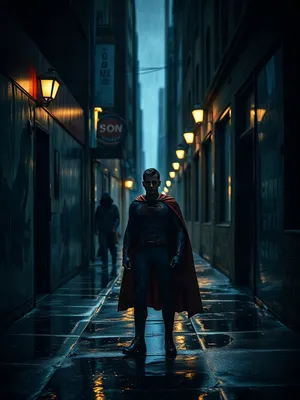
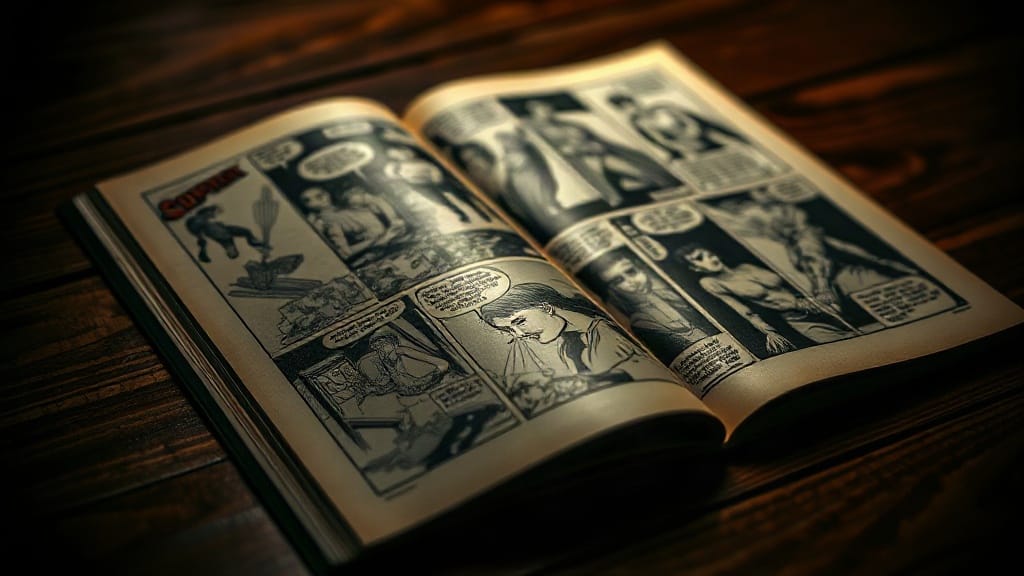
There is a particular kind of institutional confidence behind reprinting a 37-year-old graphic novel in single-issue format. It says: this text matters right now, in ways a casual reader may not have noticed. Emperor Doom #1 — officially on sale November 11, 2026 from Marvel Comics — is not a facsimile edition with period advertisements intact. It is an oversized single issue, 64 pages of Marvel Graphic Novel: Emperor Doom (1987) reformatted for the direct market, dressed in a Peach Momoko Momo-Tone variant and a Skan cover alongside the reprinted original Bob Hall art. The repackaging is clean, deliberate, and timed to the minute.
The context is not subtle. Avengers: Doomsday, directed by Joe and Anthony Russo with Robert Downey Jr. as Victor von Doom, opens in theatres on December 18, 2026 — five weeks after this comic hits shelves. Meanwhile, the comics line spent most of 2025 running One World Under Doom, Ryan North and R.B. Silva's nine-issue event in which Doctor Doom, now wielding the mantle of Sorcerer Supreme, declared himself Emperor of the World and reshaped the Marvel Universe's entire status quo. That series concluded in November 2025 with Doom's empire dismantled and the character apparently dead, sending shockwaves into Dungeons of Doom and further downstream arcs. The reprint of a story literally titled Emperor Doom — released into this exact window — is not coincidence. It is synergy dressed as archival publishing.
What the 1987 Original Actually Does
Written by David Michelinie from a concept developed with Mark Gruenwald and Jim Shooter, with pencils, inks, and colors by Bob Hall, the original graphic novel is Marvel Graphic Novel #27 in the publisher's prestige line that ran from 1982 to 1993. Its premise is stripped to the essential Doom fantasy: Doctor Doom conquers Earth and turns it into a utopia, using the Purple Man as his weapon, with Prince Namor conscripted as an ally and the Avengers — almost all of them — reduced to mental slaves. The one holdout is Wonder Man, Simon Williams, whose unique bio-ionic physiology resists the Purple Man's amplified mind control. The story runs on the tension between Doom's genuine competence as a ruler and the absolute illegitimacy of the method by which he rules.
That philosophical tension is the work's most durable quality. Michelinie never allows the narrative to become a simple "Doom bad, Avengers good" corrective. Doom's reign may have made Earth a better place — that is the actual solicitation language Marvel used for the 2026 reissue, and it reflects the story accurately. The villagers of a conquered world are fed, governed with cold efficiency, and largely unbothered. The horror is structural, not spectacular: free will as the sacrifice, peace as the ransom. It is the most honest version of the Doom-as-benevolent-dictator argument the character ever received in the Bronze Age, and it landed in 1987 — a Reagan-era year acutely aware of what it meant for a singular authority figure to insist he knew best.
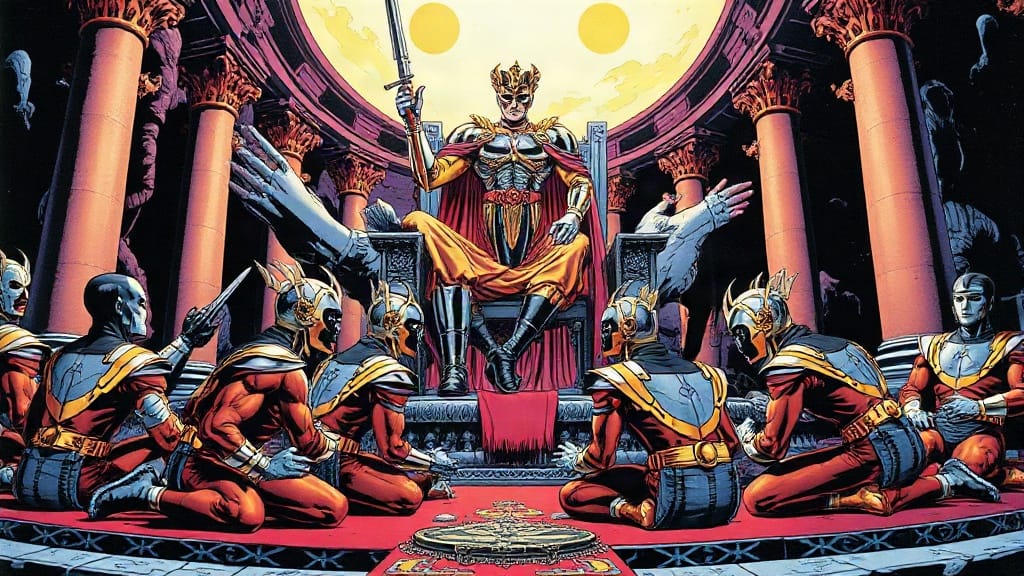
Hall's artwork has never been among Marvel's most celebrated — it is functional, occasionally stiff, built on solid compositional bones rather than visual innovation. What it delivers is clarity. Every power dynamic in a room reads immediately. Doom's physical bearing dominates every panel he occupies. The book moves. For a graphic novel that was always primarily about an idea, that is enough.
The Pattern: Classic Doom, Repackaged on Demand
This is the second time in 2026 alone that Marvel has pulled a classic Doom-centric graphic novel out of the vault and reformatted it for contemporary single-issue retail. In September, Doctor Strange and Doctor Doom: Triumph and Torment #1 arrived on September 2, 2026, reprinting Roger Stern and Mike Mignola's 1989 original — 88 pages at $8.99, with a Peach Momoko cover and a Mignola variant. That story, in which Doom forces Strange to help him free his mother's soul from Mephisto, is widely considered one of the character's definitive texts: a portrait of Doom's humanity existing alongside his ruthlessness. The September reissue sold on the back of the same Doom-mania that now delivers Emperor Doom in November.
The pattern reveals a deliberate strategy. Rather than commissioning new prestige material about Doom for a movie tie-in market, Marvel is using the film window to rehabilitate existing work that the market had largely forgotten or priced out of casual reach. An unslabbed near-mint first printing of the 1987 Emperor Doom was recently selling on eBay for around $40 — not prohibitive, but not impulse-buy territory either. The 2026 single issue, at $7.99 for the standard cover, eliminates that barrier entirely while giving the publisher a Peach Momoko variant to drive modern collectibility alongside the nostalgic content. It is a neat economic two-step: accessibility and scarcity sold simultaneously, in the same week.
Reading Emperor Doom Against One World Under Doom
What makes the timing genuinely interesting, beyond market mechanics, is what happens when you read the two Doom world-conquest narratives side by side. One World Under Doom — which was originally solicited as a five-issue series called The Rise of Emperor Doom before expanding to nine issues — built its version of Doom's conquest on legitimacy rather than coercion. North's Doom had seized the Sorcerer Supreme mantle through Blood Hunt, then convinced the world's leaders through rhetoric, power demonstration, and an appeal to the fundamental absurdity of national borders. The series explicitly avoided the mind-control shortcut. Where Michelinie's Doom cheats — amplifying the Purple Man's power to override free will globally — North's Doom was careful to establish, per the story's internal logic, that he had done nothing nefarious to world leaders to earn their compliance.
That contrast is the most interesting critical note the reprint raises. The 1987 story has aged into a document about what a Doom victory looks like when the author is not prepared to fully commit to Doom as protagonist. Michelinie gives Doom the win, then immediately constructs Wonder Man as the reader's surrogate and plots toward the inevitable reversal. The story cannot sustain its own premise because the premise requires the reader to find Doom's victory genuinely ambiguous, and the Bronze Age Marvel house style was not built for that ambiguity to remain unresolved. The Avengers restore free will. The world goes back. Doom retreats with his dignity.
North's version, running nearly four decades later, tried harder to make the ambiguity stick — and One World Under Doom remains more structurally honest than most of what Marvel's event line has attempted in recent memory. Doom's empire collapses not because the heroes punch it down, but because Doom chooses to dismantle it, sacrificing his empire and his Sorcerer Supreme status to save Valeria Richards. The nobility is real, but so is the self-removal: Doom ends his own conquest rather than having it taken from him, which is both more dignified and more evasive of the story's hardest question. If the world was genuinely better under Doom, the narrative owes readers a reckoning with that. It defers.
That deferral links the 1987 and 2025 texts across the decades. Both stories want Doom's victory to mean something beyond genre catharsis. Neither fully pays the check. What the reprint does, arriving in this precise moment — a month before Robert Downey Jr. steps into the iron mask for cinema audiences who will want context — is make that recurring Marvel hesitation visible. The question of what a Doom victory actually costs has been live since at least 1987. The publisher keeps asking it and packaging the question as event reading. The answer keeps being deferred to the next arc.
There is nothing wrong with that, commercially. And the 1987 book, reformatted or not, remains a clean, thoughtful piece of Bronze Age Marvel — more interested in Doom's psychology than most contemporary event comics manage to be. The repackaging is nakedly opportunistic. The source material earns the attention regardless. Those two things coexist here without canceling each other out, which is about as much as archival synergy publishing usually delivers.
For readers who came to Doom through Zdarsky's current Avengers run or the One World Under Doom collected edition, the 1987 Michelinie/Hall story is worth the cover price as genre history that still functions as genre entertainment. For anyone tracking how Marvel has been managing its retail event strategy around the Doomsday film window, it is also an unusually transparent example of the IP clock ticking loudly behind a publisher's curatorial choices.