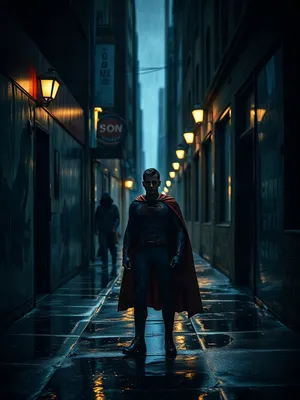
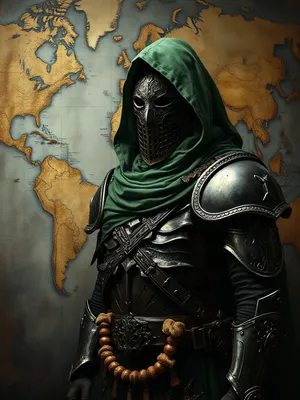
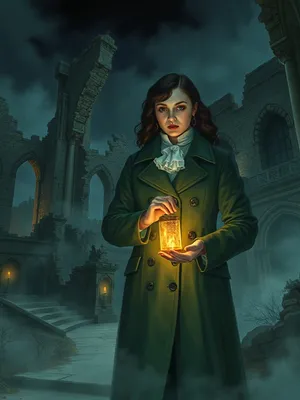
Somewhere in Time: The Graphic Album arrives March 2, 2027, and the announcement deserves more scrutiny than the usual band-branded collectible. Iron Maiden and Z2 Comics have made this kind of move before — their Piece of Mind graphic album demonstrated there was real appetite for the format — but the creative architecture on Somewhere in Time is different in ways that matter. The writer anchoring the book is Kelly Sue DeConnick. That is a signal.
Z2 will produce a new graphic novel marking the 40th anniversary of the Iron Maiden album Somewhere in Time, with eight stories based on the album's eight tracks and a prologue and epilogue by writer Kelly Sue DeConnick, with art by Andy MacDonald. The structural choice — placing DeConnick not inside the anthology as one voice among many, but as the writer who opens and closes the entire volume — is not incidental. It is an editorial thesis.
DeConnick first came to prominence as a comics writer, where she is best known for reinventing Carol Danvers as "Captain Marvel" at Marvel and for the Black Label standard-setting Wonder Woman Historia: The Amazons at DC. Her indie comics Bitch Planet and Pretty Deadly (both from Image Comics) have ranked as New York Times best-sellers and been honored with Eisners, British Fantasy Awards and Hugo nominations. She is not a music-world figure lending credibility by proximity; she is a genre heavyweight whose narrative instincts are rooted in comics form itself.
That matters because the history of rock-band graphic projects is littered with exercises in fan-service illustration — lavish, expensive, frequently beautiful, rarely built to function as storytelling. The music provides the mood; the art follows obediently. What Z2 is constructing here runs on a different logic: hire writers and artists whose primary loyalty is to the page, not to the legend, and let the album's themes become a prompt rather than a constraint.
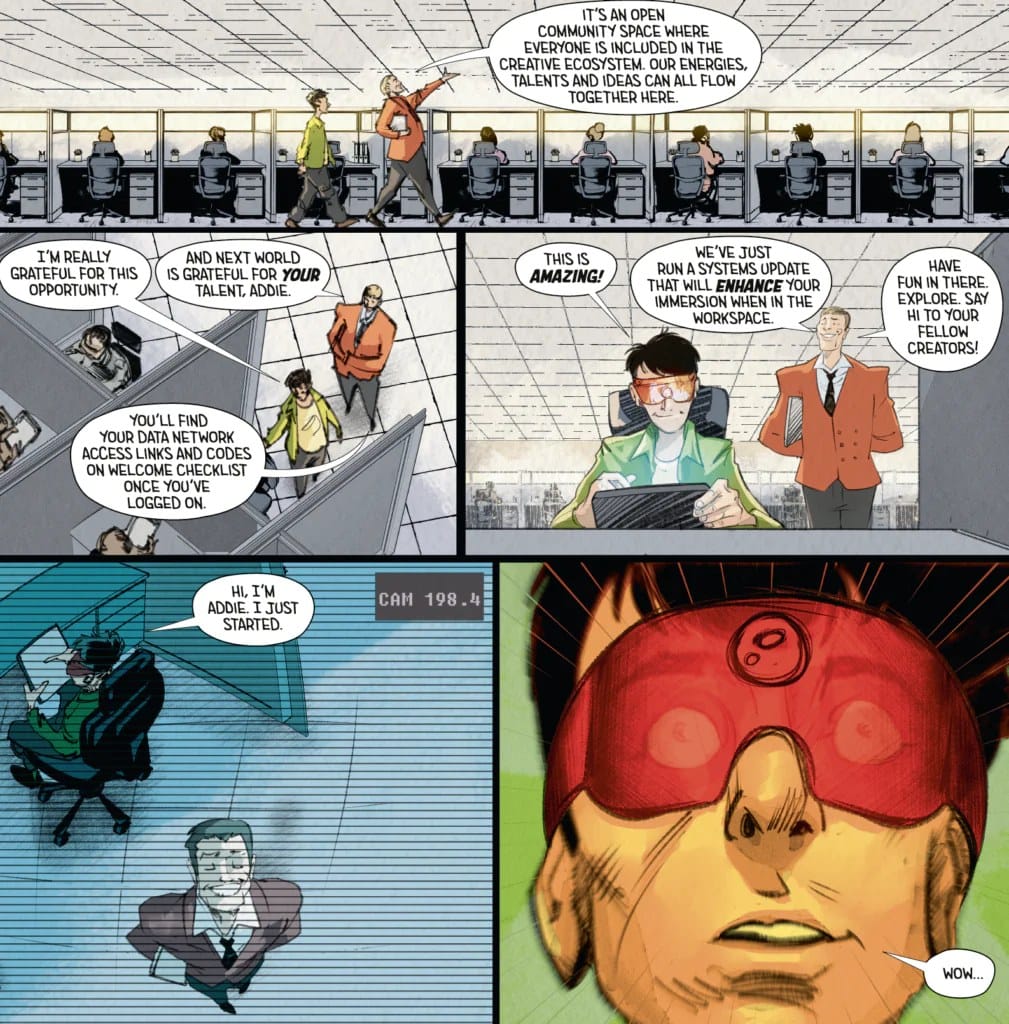
Creators of the eight stories include Steve Niles, Goran Parlov, Benjamin Raab, Deric Hughes, Matt Haley, Dan Hernandez, Adam Markiewicz, David Dastmalchian, Stan Yak, Corin Hardy, Montos, Stefano Cardoselli, John Reppion, Leah Moore, Vincent Locke, Henry Sansom, and Davide Fabbri. Read that list not as a roll call of famous names but as a genre map. Niles built his career on horror comics and co-created 30 Days of Night. Parlov drew Punisher MAX with Garth Ennis — work known for its spare, brutal visual language. Leah Moore and John Reppion have spent years adapting literary science fiction and horror into sequential art. These are people who operate inside a comics-specific creative vocabulary, not borrowed from album liner notes or music-world iconography.
The book also includes an introduction by Bill Sienkiewicz and an interview with Iron Maiden guitarist and songwriter Adrian Smith. Sienkiewicz — whose work on Elektra: Assassin and New Mutants permanently changed what painted comics could do — writing the introduction is its own form of provenance. His presence frames the project as a conversation between two art traditions rather than a commercial extension of one into the territory of the other.
The source material is worth interrogating on its own terms. Somewhere in Time is the sixth studio album by Iron Maiden, released on 29 September 1986. It was their first album to feature guitar synthesisers. Recorded at Compass Point Studios in Nassau and at the Wisseloord studio in Holland, it marked a slight departure for Maiden. Its artwork by Derek Riggs featured Eddie in full-on cyborg mode, in what would become one of the most elaborately detailed album covers in heavy metal history. The album's visual world — a gun-wielding cyborg, a far-future cityscape dense with Easter eggs and hidden references — was already a form of world-building before any writer touched it. The graphic album expands that "Maidenverse" with a collection of stories exploring the far-flung future and the distant past captured within the album's eight seminal tracks.
The science fiction frame is important. Unlike, say, a blues album or a confessional singer-songwriter record, Somewhere in Time arrives with pre-built speculative architecture. The album opener "Caught Somewhere in Time," written by Steve Harris, is narrated from the point of view of a devil — or demon — offering a man the opportunity to travel in time in exchange for his soul. That is already a comics premise. The album's eight tracks are, to varying degrees, invitations to construct narrative around them. The anthology format is not a commercial decision applied to an indifferent source; it is structurally appropriate.
What Z2 is building, with this release and the Piece of Mind graphic album before it, is something that deserves its own category: not a licensed product, not a fan book, but a publisher-led creative initiative that uses a canonical record as its dramatic spine. The official description frames it explicitly as building off the success of the Piece of Mind graphic album, signalling an intentional continuity. This is not a one-off experiment; it is a format with its own logic and its own ambition.
The collector editions are engineered accordingly. The Deluxe and Platinum editions come housed in a metallic Time Machine slipcase with a green acetate targeting lens and art by Blake Armstrong, plus art prints of all four covers. The Platinum edition comes with four exclusive framed "Eddie" Somewhere in Time cards by artist Davide Fabbri and a bookplate signed by Iron Maiden guitarist Adrian Smith. There are retail-exclusive covers by Tony Harris, an EMP cover by Jay Geldhof, and a Rarewaves cover by Dan Mumford. This is premium publishing infrastructure — the kind usually reserved for artists whose work is considered culturally durable.
The question the project raises is broader than Iron Maiden. The rock graphic album, as Z2 has developed it, creates a template for what happens when a publisher takes a canonical piece of music seriously as literary material and commissions genre veterans to do the actual work. It is not quite the same as a licensed tie-in comic, where the brand calls most of the shots. It is not quite a tribute anthology, where reverence tends to flatten creative risk. It sits in its own category: a publisher-led editorial project where the music sets the world and the comics makers are trusted to inhabit it. The DeConnick framing device — a prologue and epilogue that hold the eight stories together — is exactly the kind of structural decision a comics editor makes, not a band's management team. That distinction is where the format's maturity lives.
How individual stories execute within those parameters won't be known until March 2027. But the architecture of the announcement — the creative roster, the structural assignment given to DeConnick, the Sienkiewicz introduction — suggests that Z2 is treating this less like a commemorative product and more like a genuine editorial project. That is a different and more interesting bet. It is also, if the Piece of Mind precedent holds, one that works. For comics readers, the more relevant parallel might be found not in music publishing but in the ongoing expansion of literary anthologies — the kind of format, like the work reviewed in recent ambitious Marvel publishing or Zdarsky's Avengers relaunch, where structure and roster signal intention before a single page is read. The signal here is clear.
Somewhere in Time: The Graphic Album is due March 2, 2027, from Z2 Comics. Pre-orders are open now.