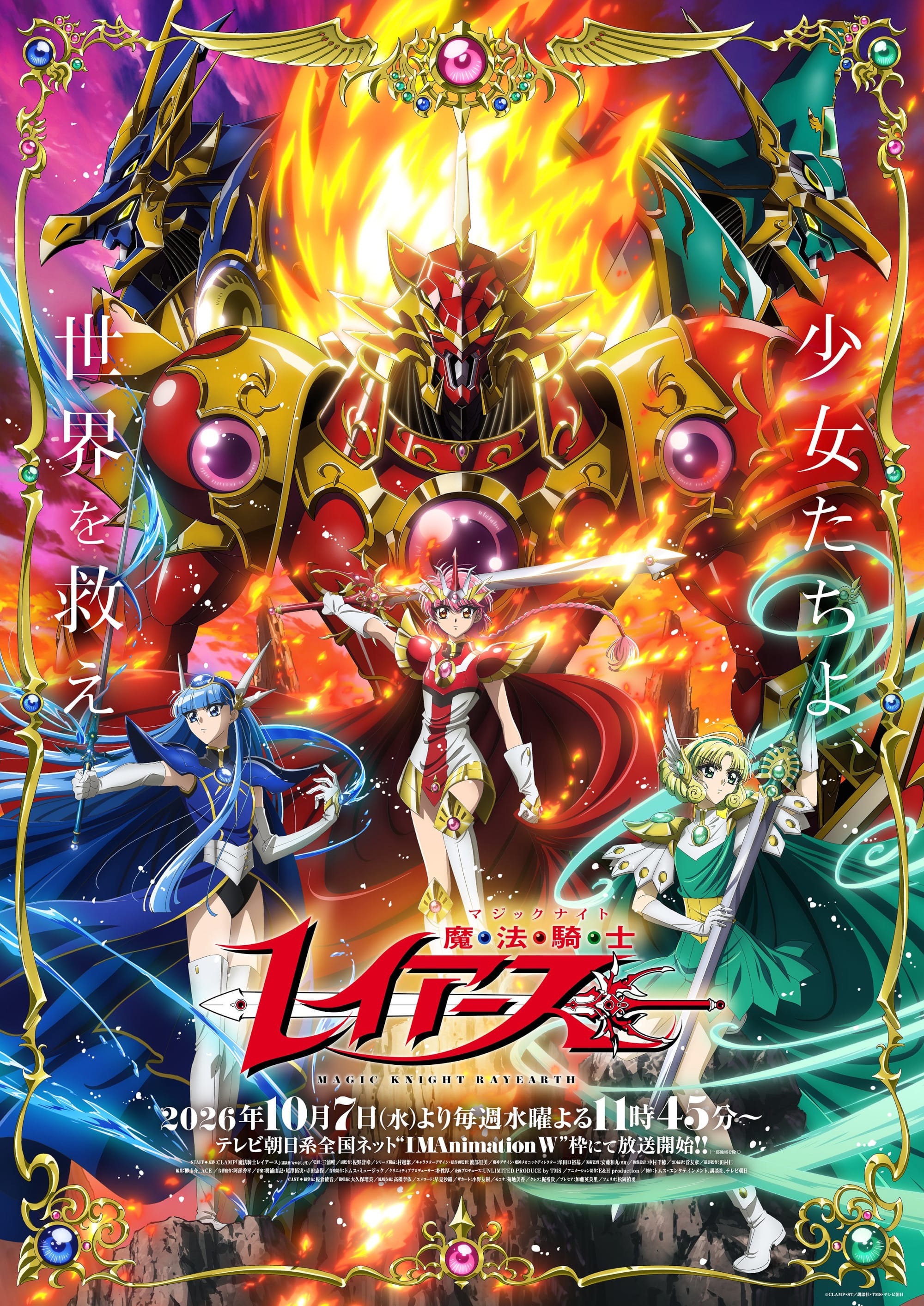
On September 20, 2026, a trailer dropped for the Magic Knight Rayearth (2026) remake, and the most consequential thing in it wasn't a frame of animation. It was the music. The brief reveal of both the opening and ending themes — their tone, their tempo, the decisions embedded in their production — constitutes a kind of public contract between the production and its audience. It tells you what the remake believes it is, and whether that belief is grounded or delusional.
That matters more here than it would for most properties, because Magic Knight Rayearth (1994) is not a casual IP. CLAMP's original manga, and the Tokyo Movie Shinsha anime adaptation that followed it, did something structurally unusual for shojo of its era: it embedded a genuine tragedy inside the grammar of a magical girl adventure. The girls are summoned to Cephiro not to be heroes but to be instruments. The twist at the end of the first arc remains one of the most cleanly devastating reversals in the genre's history. Any remake must contend with that architecture — and the music it chooses to open and close each episode is the earliest signal of whether it intends to.
What Music Does Before the Story Can
Anime opening and ending themes are not decorative. They function as tonal primers — they establish emotional register before a single line of dialogue is spoken, and they accumulate meaning across a cour until the final episode, when their lyrics or melody can land with retroactive weight. The original series understood this. Its 1994 opening, performed by MAKE-UP, was propulsive and earnest, the kind of brass-forward confidence that belonged to an era of anime that hadn't yet learned self-consciousness. It worked precisely because it was sincere.
The challenge facing the remake's music supervisors and composers in 2026 is that sincerity in this context is almost impossible to execute without triggering one of two failure modes: pastiche or overcorrection. Pastiche means the new theme sounds enough like the 1994 material to confirm that the production has nothing original to say. Overcorrection means the music reaches so aggressively for contemporaneity — hyperpop textures, fragmented post-chorus structures, the sonic vocabulary of streaming-era J-pop — that it severs the emotional continuity that makes a remake worth making in the first place.
What the September trailer reveals sits in the more interesting and more dangerous territory between those poles. The opening theme carries momentum without the guileless forward charge of the original. There is orchestral weight in its production, but it is deployed with restraint — strings surface and recede rather than dominate. The vocal performance is precise in a way the 1994 material never needed to be, and that precision reads as intention. This is a production that knows it is being watched, and has composed music accordingly.
The Ending Theme as Diagnostic Tool
Ending themes reveal more than openings. An opening must sell the show. An ending must hold the emotional residue of an episode — it plays when something has just happened, and its job is to either extend that feeling or provide structured release from it. The ending theme for the remake, glimpsed in the trailer's final seconds, does neither with complete confidence, and that ambivalence is its most informative quality.
The arrangement is quieter than the opening, which is conventional enough. But the melodic structure has an unresolved quality — phrases that cycle without the satisfying cadential drop that defines the genre's most iconic ED themes. Whether that is a compositional flaw or a deliberate choice designed to mirror Cephiro's own unresolvable tensions is a question the trailer cannot answer. What it can answer is that the production is not defaulting to comfort. That is notable. Comfortable music is the easiest way to sell a reboot to a nostalgic audience, and the easiest way to hollow it out in the process.
CLAMP's Legacy as Both Shield and Liability
The deeper issue here is not musical. It is structural. CLAMP occupies a position in anime history that is genuinely difficult to navigate in 2026. Their catalog — Cardcaptor Sakura (1998), Chobits (2002), xxxHolic (2006), and Magic Knight Rayearth among them — represents a specific strand of late-Showa and Heisei-era storytelling that was sophisticated about gender, fate, and emotional consequence in ways that were quietly radical at the time and have since become retroactively canonized.
That canonization is the liability. When a property enters a certain kind of cultural reverence, reboots become almost theologically fraught. The audience that grew up with the 1994 anime doesn't simply want to see Magic Knight Rayearth again — they want their memory of what it meant to be confirmed, expanded, or at minimum not contradicted. That is an unreasonable demand, but it is the demand being made, and a production that ignores it entirely will pay for the indifference in discourse and viewership alike.
The trailer's musical choices suggest a production that understands this pressure without being paralyzed by it. The opening theme does not sound like 1994. It does not pretend to. But it does not dismiss 1994 either — there is a structural seriousness in its composition that acknowledges the weight of what it is remaking. That acknowledgment, however subtle, is the correct first move.
The Reboot as Industry Stress Test
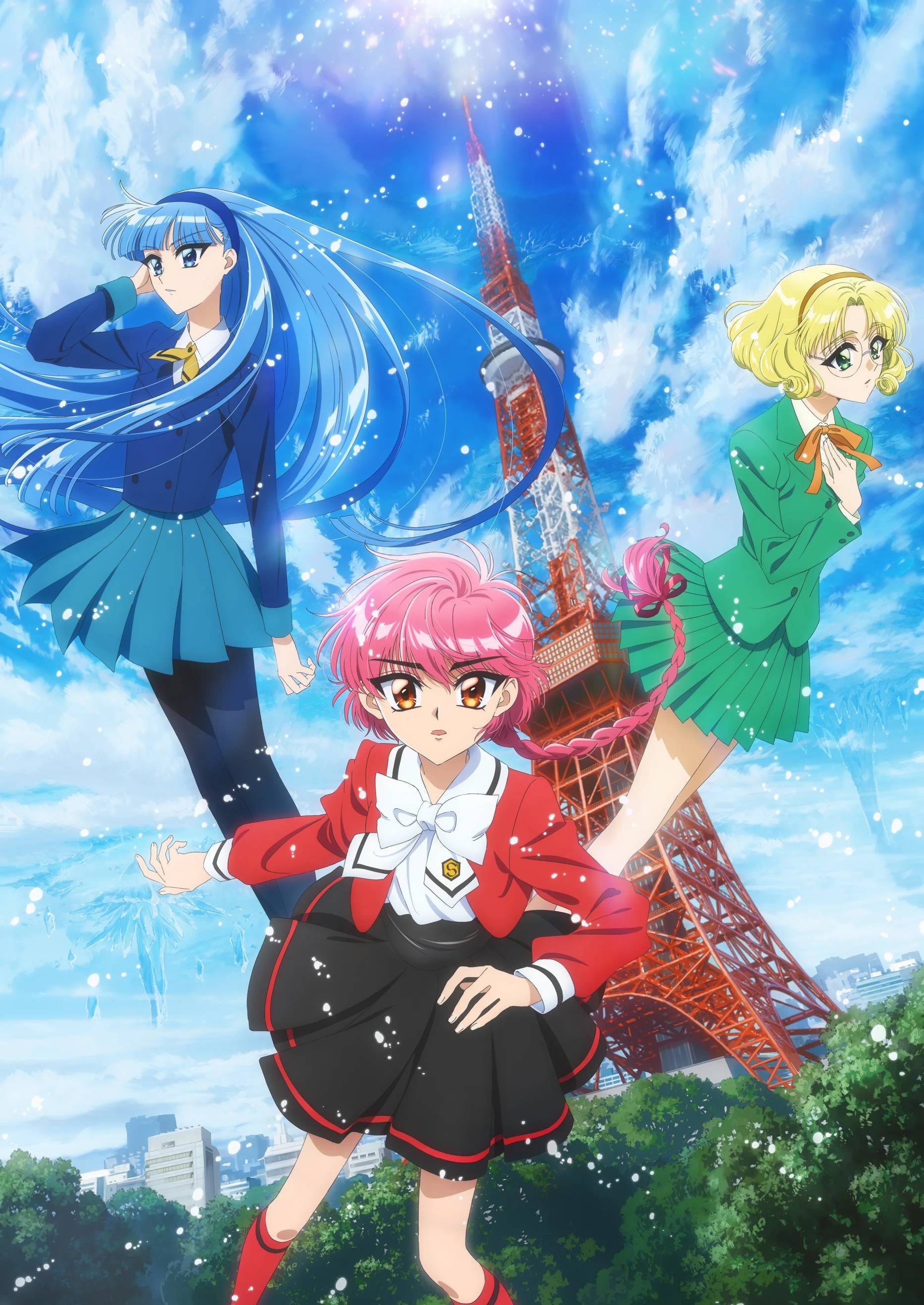
It would be easy to read the Magic Knight Rayearth remake purely as a commercial calculation — nostalgia cycles are well-documented, and CLAMP properties have proven their merchandise and streaming value repeatedly. The Cardcaptor Sakura: Clear Card (2018) continuation demonstrated that the audience for these properties is not only intact but willing to engage critically rather than just consuming out of habit. That precedent both enables and complicates the current remake.
What makes this trailer worth examining seriously is that it doesn't feel like a product announcement. It feels like a declaration of terms. The music is the first language the production has used to communicate with its audience, and the vocabulary it has chosen is neither pandering nor aggressively alienating. It is measured. In a reboot landscape littered with productions that chose one extreme or the other, measured is harder to achieve than it looks.
Whether the series itself — its writing, its animation choices, the decisions made about that first-arc twist — can sustain what the music is promising is entirely unknowable from twenty seconds of trailer audio. But the promise is there, and it is specific enough to be held to. That is more than most remakes manage before their first episode has aired.
The real stress test begins when the first episode drops. Until then, the opening and ending themes are both the only evidence available and the most honest evidence there is: a production's clearest statement, before the noise of episode-by-episode reception sets in, of what it actually believes Magic Knight Rayearth is for.