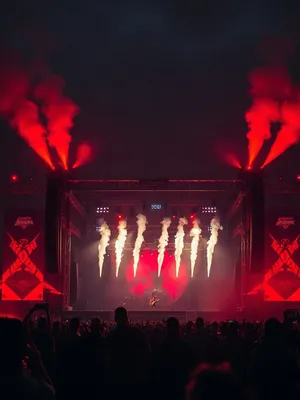
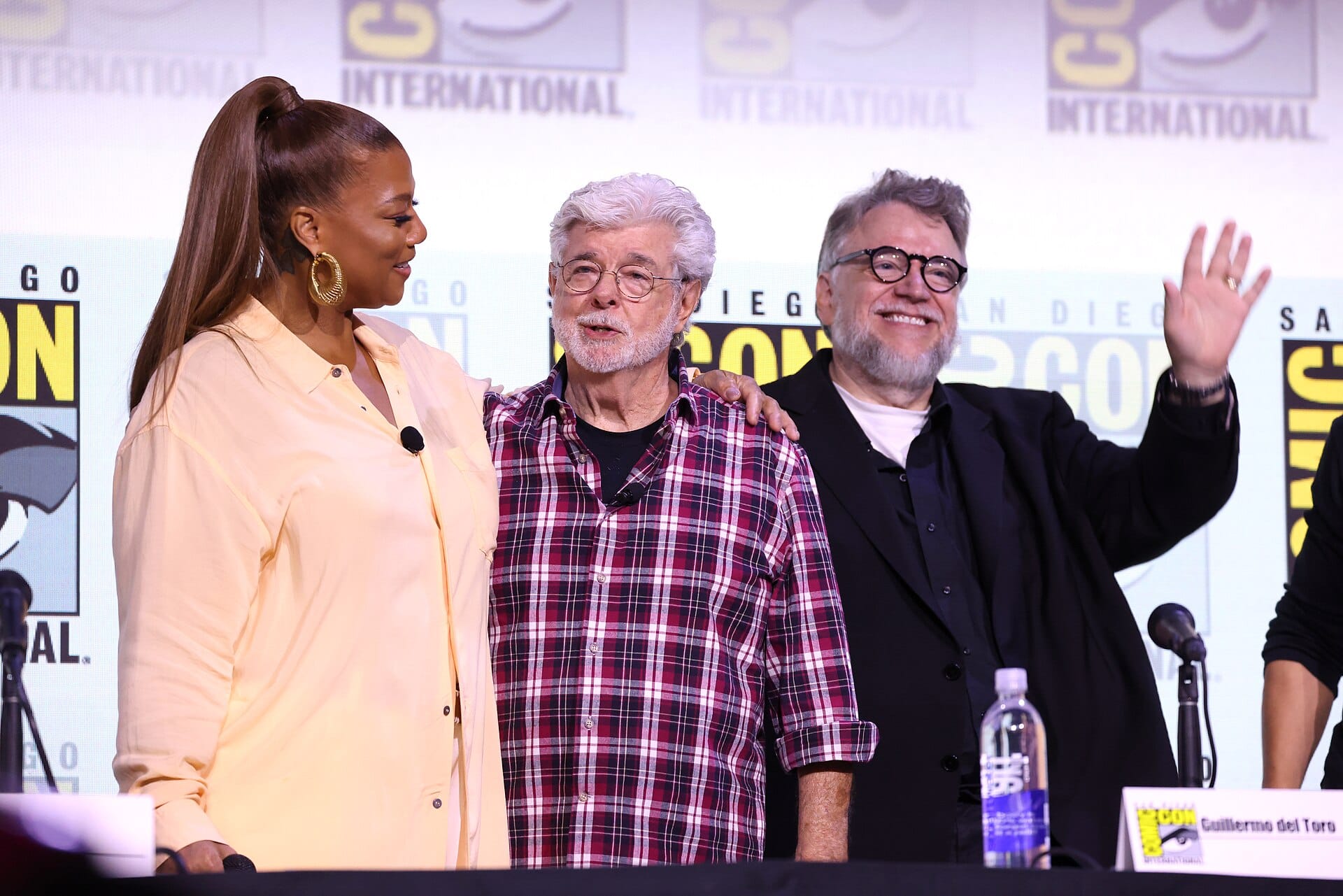
On the evening of 19 September 2026, three days before the public was allowed anywhere near it, the Lucas Museum of Narrative Art held the kind of party that only happens when an industry is trying to tell itself something. Tom Cruise, Leonardo DiCaprio, Harrison Ford, Oprah Winfrey, Al Pacino, Robert De Niro, Francis Ford Coppola, Steven Spielberg, Christopher Nolan, Denis Villeneuve, Spike Lee, Greta Gerwig, Guillermo del Toro, Kim Kardashian, Lewis Hamilton, Emma Watson, Katy Perry and Justin Trudeau all walked the same carpet in Exposition Park. A 27-piece orchestra played the cocktail hour. Jon Batiste performed with the 75-plus voices of Voices of Fire. A drone show narrated by Winfrey and Samuel L. Jackson wrote George Lucas's characters across the sky above the roof. The Black Eyed Peas closed it out.
It read as a celebrity event. It was actually a thesis defence.
The argument the building is making
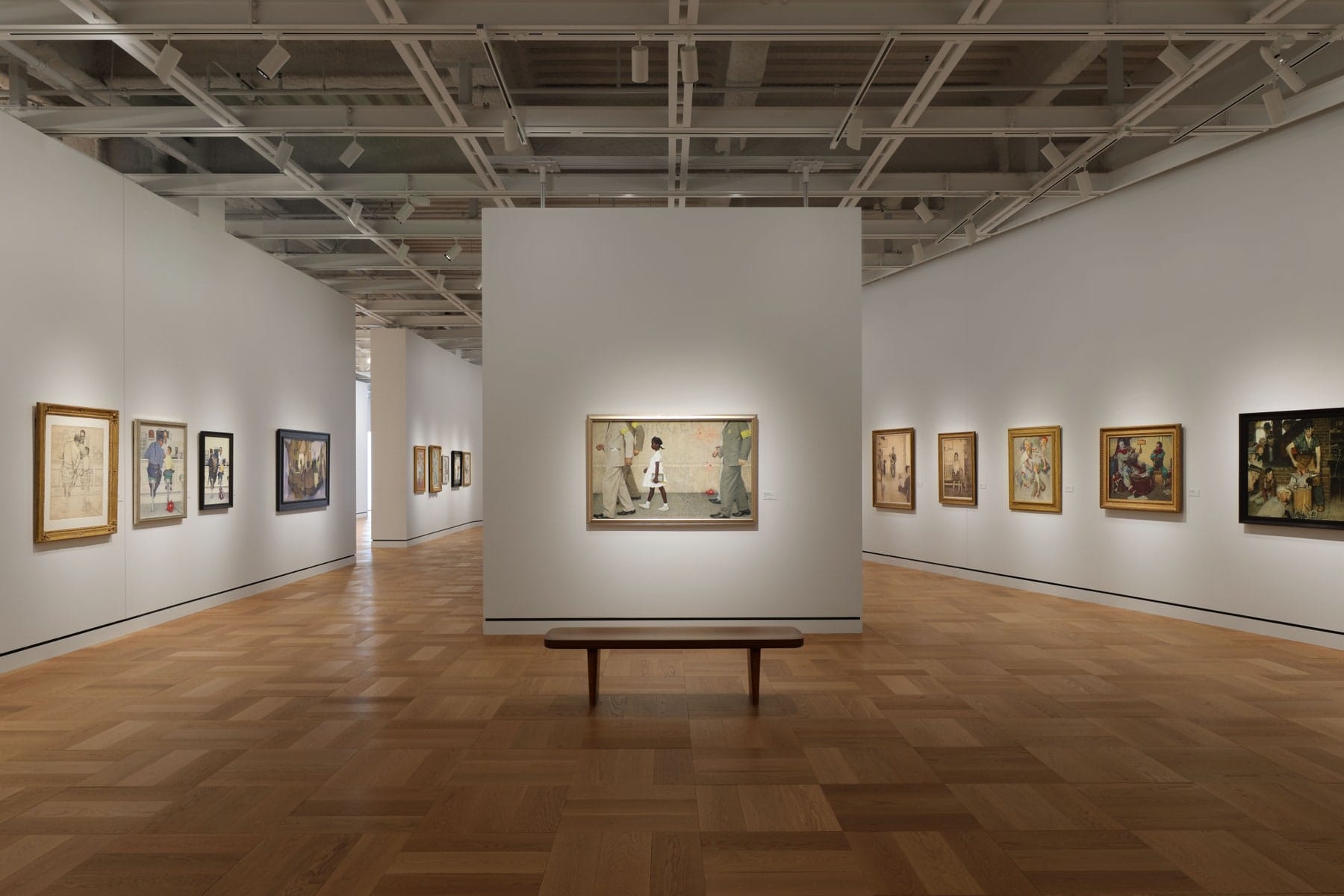
Lucas and his wife, the financier Mellody Hobson, spent roughly $1 billion of their own money and sixteen years on a single proposition: that illustration, comics, murals and cinema are not the lesser cousins of painting and sculpture, but the same continuous human impulse, and that they deserve the same walls, the same lighting, the same institutional seriousness. The museum's inaugural hang argues this literally. Norman Rockwell, N.C. Wyeth, Maxfield Parrish, Jessie Willcox Smith, Frank Frazetta and Thomas Hart Benton each get a gallery of their own — the kind of real estate normally reserved for canonical painters. Artemisia Gentileschi shares the building with Jack Kirby. Frida Kahlo shares it with Robert Crumb. Beatrix Potter shares it with Charles Schulz. Diego Rivera and JR share a fifth-floor mural gallery with never-before-exhibited work acquired directly from Banksy's studio.
Seen that way, the opening-night guest list stops being gossip and becomes evidence. An argument about cultural legitimacy is not won in a catalogue essay; it is won when the people who make the work in question turn up and treat the room as a peer institution. "This to me is the greatest thing he's done since Star Wars," Spielberg said. Coming from the man who spent fifty years making the case that popular cinema is art, that is less a compliment than a verdict.
Three cities, sixteen years, one billion dollars
The route here was not gentle. Lucas first proposed the museum for San Francisco's Presidio, where it was rejected. Chicago's lakefront came next, and that too collapsed under litigation and civic resistance. Los Angeles took it. On opening night, with the building finally standing, Lucas made clear he has not forgotten which city said no — a point the San Francisco Chronicle summarised, in its own coverage of the night, with the words "San Francisco blew it."
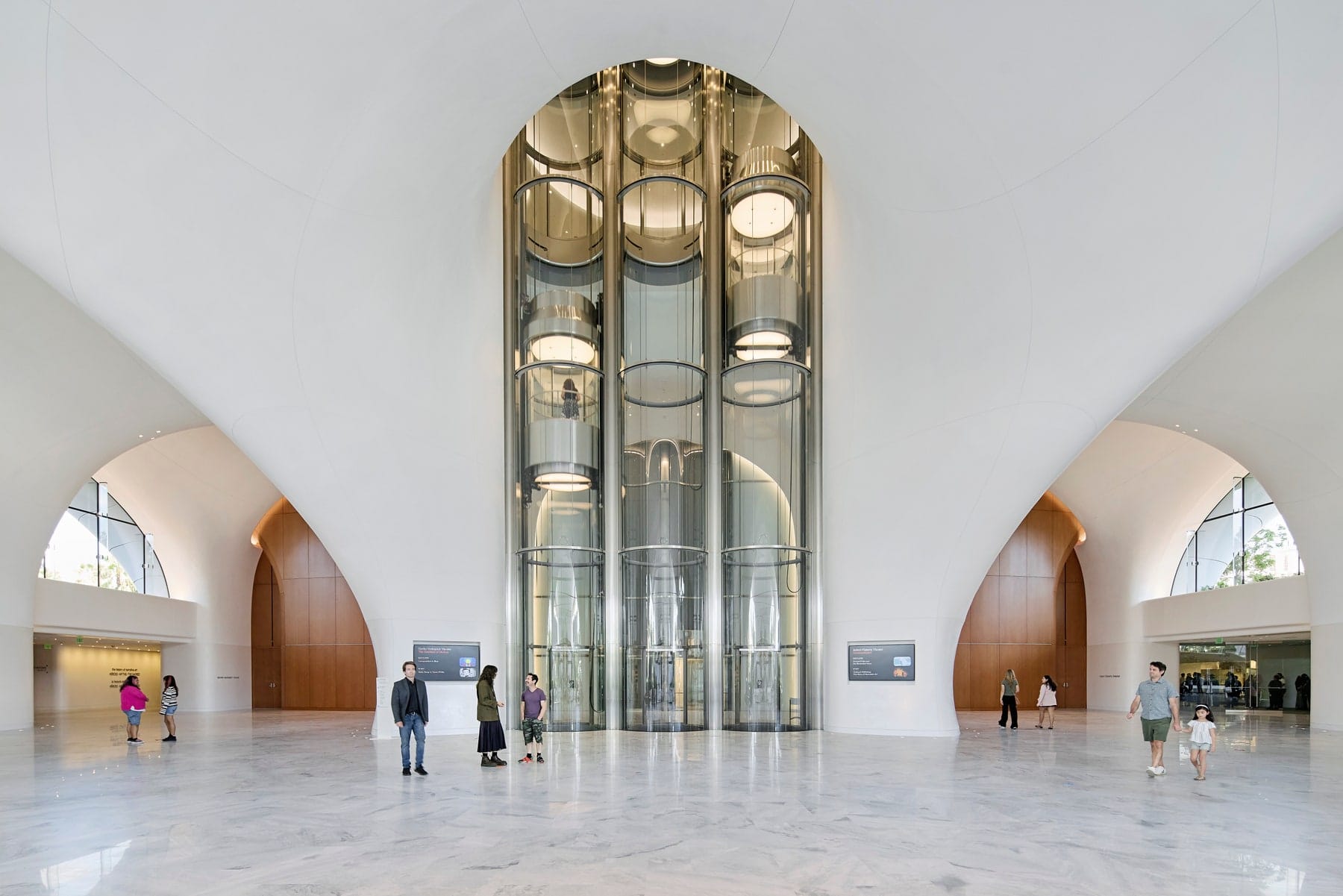
What LA received is 300,000 square feet by Ma Yansong of MAD Architects with Stantec: a five-storey, curving mass clad in more than 1,200 individually shaped fibreglass-reinforced polymer panels, drawn without a single straight line, lifted off the ground so that a 185-foot arch opens a public plaza underneath. Onstage that night, Ma corrected the comparison everyone reaches for first. It is not a spaceship. It is a cloud. The 13-acre campus around it — designed by Mia Lehrer of Studio-MLA on what used to be an asphalt parking lot — carries over 300 new trees, an amphitheatre, a waterfall fountain and ten monumental outdoor sculptures, and it is free to anyone who wants to walk through it.
The seven per cent problem
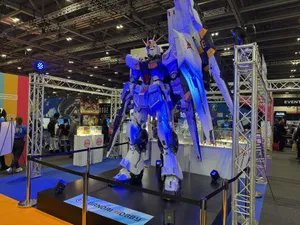
Here is the tension the gala's fireworks could not dissolve. Star Wars occupies roughly seven per cent of the museum. The inaugural cinema gallery, Star Wars in Motion, is devoted to land vehicles from the first six films — Luke's Landspeeder from A New Hope, the first physical build of General Grievous's Wheel Bike from Revenge of the Sith — alongside R2-D2, C-3PO, Darth Vader's suit and the prequel podracers. It is, by design, a fraction of a 1,300-work opening presentation. It is also, by any honest read of the ticket market, the reason a very large share of visitors will book.
Lucas has been blunt about not wanting a shrine. "I kept saying, 'It's not a Star Wars museum, it's a narrative art museum,'" he told CBS News in the only interview he and Hobson gave before opening. The institution's entire bet is that a family who came for a Landspeeder will walk out having stood in front of Gentileschi, and will decide the two belong to the same story. That is a genuinely radical piece of museum design, and it is also an enormous wager on visitor patience. Early critical response has not been uniformly convinced — CNN's preview found the open-plan galleries, with their deliberately undivided sightlines, occasionally struggling for curatorial cohesion.
The counterweight is the scholarship. The free Research Library holds more than 30,000 comic books, the Kitchen Sink Press archive, selections from the Skywalker Ranch Library, roughly 3,000 art books donated by Steve and Ann Martin, and over 2,900 volumes from Joseph Campbell's personal library, many carrying his own annotations. Campbell's monomyth shaped Star Wars; the primary source for that influence now sits, open to the public and free of charge, inside the building it helped pay for. It is hard to think of a neater argument for the museum's own thesis.
What opening day actually settles
Public admission begins on Tuesday, 22 September 2026, at One Lucas Plaza in Exposition Park. Adult admission is $25, $21 for visitors 65 and over, and free for everyone 17 and under, for active-duty military and for members — but every single visitor, including those admitted free, has to reserve a timed-entry ticket in advance. Two theatres, the Robert Flaherty and the Slavko Vorkapich, run continuous drop-in film programmes. Skywalker Grill, on the roof, stays open after the galleries close.
Museums are usually judged on what they collect. This one will be judged on whether its central claim survives contact with an audience — whether "narrative art" reads, to a family on a Tuesday afternoon, as a real category rather than a wealthy man's way of putting his own archive in a temple. Opening night was the industry voting yes in advance. That vote is worth something; the people who make images have every reason to want images taken seriously, and their turnout was not neutral.
But the verdict that counts is delivered at the timed-entry gate, with people who paid $25 and have four hours. If they leave talking about Rockwell and Kahlo rather than only the Landspeeder, Lucas has built something the museum world will be arguing about for decades. If they don't, he has built the most expensive and beautiful franchise annexe in history — and the machinery of fan canonisation will simply have acquired a permanent address.
Either way, the argument now has a building. That was never guaranteed.
Watch: the opening
Related reading on Kynari: Hollywood's synthetic performer problem and the consolidation fight reshaping who owns these stories.