The 70th BFI London Film Festival closed on 18 October 2026 the way a milestone edition ought to — not with spectacle, but with a statement. The jury awarded Best Film to Imperium, Sergei Loznitsa's 175-minute, narration-free documentary constructed entirely from archival footage shot across the Soviet Union between 1970 and 1973. The choice was unambiguous in what it signalled: that documentary rigour, geopolitical gravity, and the painstaking assembly of found images can still command the same room as any prestige drama with a movie star attached.
The jury, chaired by director Sam Pollard, did not hedge its language. "It is an extraordinary feature that explores the Soviet Union in the early 1970s from a rich archive with a wide-ranging perspective," the statement read. "The movie is richly evocative and emotionally engaging on all levels, giving us a visually arresting perspective of life before the Soviet Union was broken apart." That final phrase is doing more than aesthetic work. It is a historical positioning — a reminder that the empire in question is not simply past tense.
What the Film Is, and What It Does
Imperium (2026) is a Germany-Italy-France-Lithuania co-production whose raw material was preserved by Rome's Audiovisual Archive of the Labour and Democratic Movement (AAMOD). A group of Italian filmmakers documented the USSR across those three years, and what they left behind was a trove notable for its contrast with official Soviet productions of the same era. Where Soviet-state cameras framed collective triumph, the Italian footage carried what Loznitsa has described as a respect for individual human personality and an implicit disapproval of propagandistic iconography.
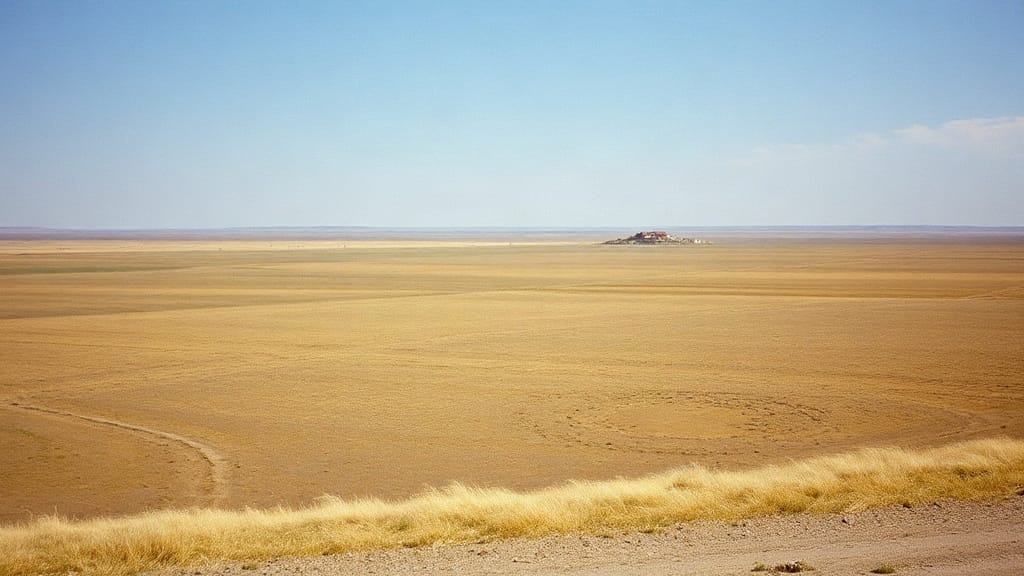
The film opens in Moscow in 1971, at a characteristically bombastic state parade, then migrates outward — through the Carpathian Mountains, Central Asia, nomadic encampments, remote Caucasian villages, and finally toward the Soviet Far East. The journey is geographic and political simultaneously. What it reveals, over its near-three-hour running time, is a mosaic of cultures that the regime systematically sought to homogenise: a colonial interior hidden beneath the vocabulary of brotherhood and solidarity. There is no voiceover to tell the audience what to think. Arguments and themes emerge from the material itself and from Loznitsa's editorial decisions — a method he has refined across multiple archive films.
That method is not new for Loznitsa. State Funeral (2019) used Soviet newsreel footage to dissect the orchestrated national mourning following Stalin's death. The Natural History of Destruction (2022), which premiered at Cannes, used archive material to examine the Allied bombing of Germany in the Second World War. His 2024 film The Invasion was a different kind of archive project — shot in real time across Ukraine for two years following Russia's full-scale invasion in February 2022, edited from Vilnius as the footage arrived. The arc from State Funeral to Imperium traces an obsession with how empires fabricate the image of themselves, and with what survives when that fabrication is set aside.
The Political Weight of the Archive
Loznitsa was born in 1964 in the Byelorussian Soviet Socialist Republic, trained in Kyiv, and has lived in Western Europe for decades. He is Ukrainian by identification and professional formation. The context matters for Imperium in ways that go beyond biography. When a Ukrainian filmmaker titled a film Imperium in 2026, the word arrives carrying the full freight of an ongoing war, a continent still deciding how seriously to treat Russian aggression, and a body of work — Maidan (2014), Donbass (2018), Babi Yar. Context (2021), The Invasion (2024) — that has functioned as one of cinema's most sustained indictments of post-Soviet violence and revisionism.
The BFI's official programme note was precise on this point: the result of Imperium's journey through Soviet territory is, in the BFI's own words, "a compelling indictment of Russia's historical and present-day imperialism." The past tense and the present tense are fused by design. The footage is from the 1970s. The relevance is from today. What Loznitsa has always understood — and what the London jury recognised by awarding him the top prize — is that the archive is never just evidence of what was. In the right hands, it is an argument about what is still happening.
This is the quality that makes the LFF choice significant beyond the ceremony. Major festivals sometimes award political documentaries as a gesture toward seriousness while the serious business of prestige fiction remains elsewhere. Imperium was not handed a consolation prize. It competed in the official competition against all forms and formats, and it won outright. That is a different kind of recognition.
The Rest of the Card
The festival, which ran from 7 to 18 October and closed with the UK premiere of Jesse Eisenberg's The Debut, distributed its remaining prizes with similar coherence of taste. The Sutherland Award for Best First Feature went to Sompot Chidgasornpongse for 9 Temples to Heaven, a Thai drama that the jury — led by actor Amir El-Masry — praised for its "gentle humour and profound humanity" and for "paving his own path in the well-established tradition of filmmaking in the Southeast Asian region."
The Grierson Award for Best Documentary went to Asmahan Bkerat for Concrete Land, a Jordan-Palestine co-production following a displaced Palestinian Bedouin family navigating hostility in Jordan. The documentary jury, led by Sandhya Suri, cited the film's patient observation, its sound design, and the depth of trust between filmmaker and subject. Bkerat's debut feature operates in a register distinct from Loznitsa's — intimate, multi-generational, rooted in the textures of a single family — but it shares the festival's apparent preference for cinema that treats its subjects with ethical seriousness.
The Short Film Award went to Rahul Roye's Aman, a UK-USA-India-France co-production centring on a trans man who discovers he is pregnant on the eve of gender-affirming surgery. The jury praised its "painterly cinematography" and its refusal to provide easy answers. Taken together, the four awards form a coherent programme statement rather than a list of diplomatic compromises.
A 70th Edition That Knew What It Wanted to Be
LFF at 70 opened with Simon Stone's Elsinore, a biographical drama about the Scottish actor Ian Charleson, and closed with Eisenberg's ensemble piece. Neither film took a prize. What took the prize was a Ukrainian filmmaker's exhaustive, wordless excavation of the system that built modern Russia — a film that premiered at Venice, then arrived in London and found a jury willing to say that this is what cinema is for. Whether the award accelerates Imperium's distribution in English-language markets, or whether it remains a festival laureate without the theatrical footprint it deserves, is a separate question. The choice itself is not ambiguous.
The wider industry is engaged in its own conversation about what serious cinema looks like and who funds it — a conversation made sharper by the streaming sector's visible retreat from prestige documentary and arthouse cinema. Loznitsa works outside those systems by necessity and design. His films are financed across European co-production structures, archived in Rome, premiered in Venice and Cannes, and awarded in London. Imperium is not a film that arrived through any algorithm. It arrived because someone spent years in an archive and understood what they had found. At LFF's 70th edition, that was enough to win.
The Audience Award — voted by festivalgoers — remains to be announced. But the jury has already registered its view: in a milestone year for one of Europe's oldest film festivals, the most important film was one that looked at an empire from the inside and found, beneath the propaganda and the parades, the faces of people who were never quite what the state said they were.