There are two kinds of people who walk into a tattoo shop. The first sits down, pulls out their phone, and shows the artist a reference image they found on Pinterest — a minimalist fine-line piece, a tiny crescent moon behind the ear, a single word in a font that does not belong to anyone. The second sits down, says almost nothing, and trusts the artist completely. The difference between them is not taste. It is a worldview.
July 17 is World Tattoo Day — a date that by now carries the pleasant meaninglessness of most awareness days, except that tattooing refuses to be merely symbolic. The mark is permanent. Or close enough to it that the distinction does not matter. And that permanence forces a question that consumer culture has spent decades trying to make optional: What do you actually believe in?
The Economy of Skin
The global tattoo industry is worth roughly $3 billion dollars and growing. It has been absorbed, like everything else, into the machinery of personal branding. Social media turned the tattooed body into a portfolio, and the portfolio into a product. The result is a strange inversion: the art form that once marked outsiders — sailors, criminals, circus performers, indigenous communities practicing ritual inscription — now decorates the arms of marketing executives who book appointments six months in advance and tip exactly twenty percent.
This is not a complaint about mainstreaming. Accessibility is not the enemy of meaning. But the commodification of tattooing has produced a specific aesthetic regime — the micro-tattoo, the matching set, the coordinates of a place that "changed your life" — that prioritizes legibility over depth. These pieces are designed to be photographed. They communicate at the speed of a caption. They are, in the strictest sense, content.
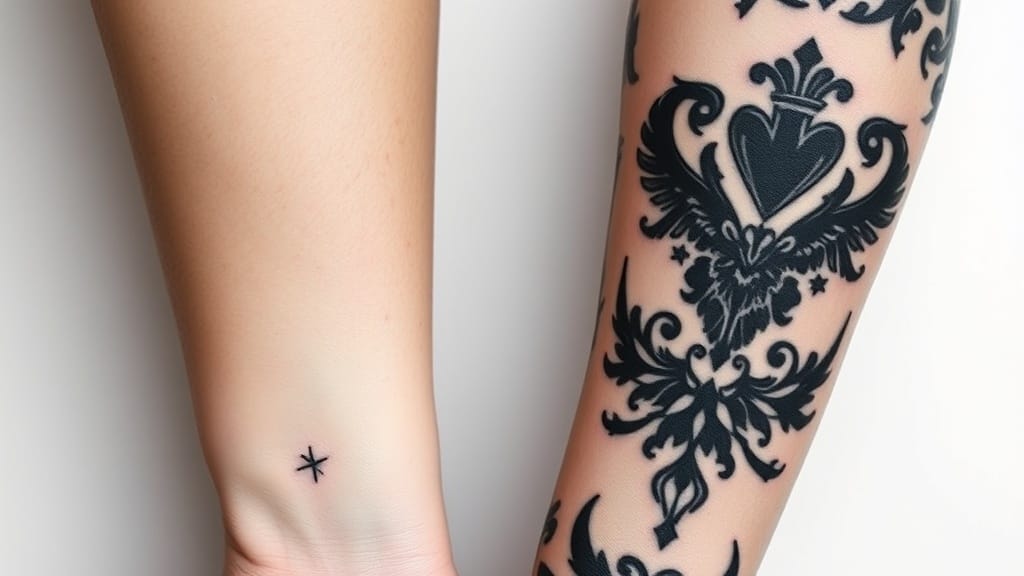
The economics reinforce the aesthetic. A fine-line micro-piece from a sought-after artist in any major city runs anywhere from $200 to $600 for something that fits inside a matchbox. A full back piece from a master of traditional Japanese irezumi can take years of sessions and cost upwards of $20,000 — and the finished work will never photograph well, because it was not made for a screen. It was made for a body in motion, for the way ink interacts with muscle and shadow and time.
The money flows differently depending on which religion you practice.
Scale as Commitment
There is something almost confrontational about a large tattoo. A full sleeve, a chest piece, a back that has been transformed into a landscape — these are declarations of irreversibility. They close doors. They make certain jobs harder to get, certain family dinners more complicated, certain futures structurally improbable. People who wear large traditional tattoos tend to know this. The commitment is partly the point.
Small tattoos offer something different: the feeling of permanence without its full weight. This is not dishonest — permanence comes in degrees, and a delicate line on a wrist is still a decision that will outlast most relationships. But the cultural function of the micro-tattoo is closer to jewelry than to ritual marking. It adorns. It does not transform.
The distinction matters because tattooing, across every culture that has practiced it — Polynesian tā moko, Māori facial tattooing, Thai sak yant, the elaborate bodywork of the Yakuza — has historically been about transformation. The tattooed body is a different body. It has crossed a threshold. The pain, the permanence, the visibility: all of it serves the function of marking an internal change on the surface of the self.
When that ritual logic is stripped away, what remains is decoration. Decoration is fine. But it should not be confused with the other thing.
The Artist in the Middle
The person who absorbs the tension between these two worlds is the tattoo artist. Specifically, the artist who is good enough to do both — the artist who can execute a flawless geometric micro-piece in forty minutes and also spend three years building a traditional bodysuit on a client who has given them complete creative control.
The best tattoo artists working today are among the most technically accomplished image-makers alive. The medium — needles, pigment, living tissue — forgives nothing. There is no undo.
Many of them are quietly resentful of the fine-line boom, not because small tattoos are less valid, but because the demand for them has narrowed the public's imagination of what tattooing can be. When every algorithm-optimized post shows the same style, the same scale, the same aesthetic grammar, it becomes harder to find clients willing to undertake something larger and stranger and more difficult. The economics of virality and the economics of mastery do not align.
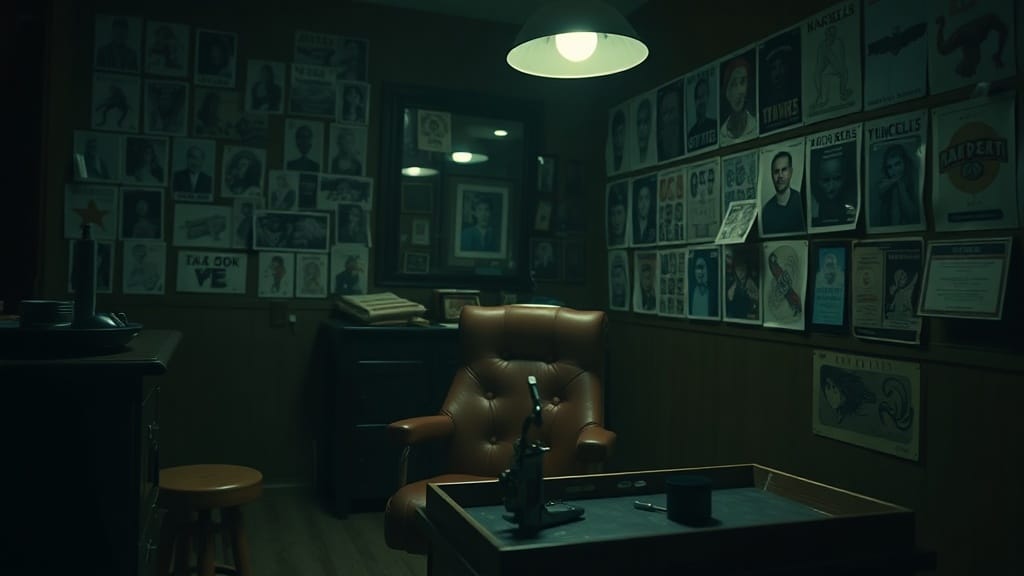
Some artists have responded by raising prices to the point where their books fill only with collectors — people who understand the long game. Others have leaned into the market and made peace with it, executing hundreds of small pieces per year with the mechanical excellence of a craftsperson who has accepted their role. A few have walked away from commercial shops entirely to work by appointment only, communicating mostly through word of mouth, operating at the edge of the industry's attention economy.
All three strategies are survival strategies. The art continues regardless.
What the Skin Knows
There is a version of the tattoo discourse that wants to resolve this tension — to say that all tattoos are equally valid, that scale does not determine meaning, that a semicolon behind the ear carries as much weight as a traditional sleeve. This is generous, and it is also evasive.
Meaning is not distributed equally. It is earned, through commitment, through pain, through the willingness to let something permanent change the way the world reads your body. A tattoo that was designed to be inoffensive will be inoffensive. A tattoo that was designed to last will last in ways its owner did not entirely predict — including into professional contexts, into age, into the body's own transformation over decades.
World Tattoo Day is worth something precisely because it forces this reckoning into a single calendar date. Not to celebrate all tattooing indiscriminately, but to ask what we are actually doing when we decide to mark ourselves. Whether we are buying a piece of culture or entering one. Whether we are decorating a self we have already decided is finished, or signaling that the self is still in progress — unresolved, willing to be changed, serious enough about something to let it show.
The ink dries either way. The question is what it was saying when it did.