On October 11, 2026, Hiroshi Tsuchida's heart stopped. He was 54 years old, still credited in two currently airing anime series, still a working voice in the industry he had served since 1994. His agency, 81 Produce, announced the death on October 20 — nine days later — after a private funeral had already been held with only close family in attendance, in accordance with the family's wishes. The public, including the audiences watching his characters speak in real time, learned last.
 Official trailer
That gap is not a scandal. It is a system. And the death of Hiroshi Tsuchida — a career performer who moved fluidly across tokusatsu, anime, video game dubbing, and foreign-film localization for over three decades — is as good a moment as any to examine what that system costs.
A Career That Never Chose a Lane
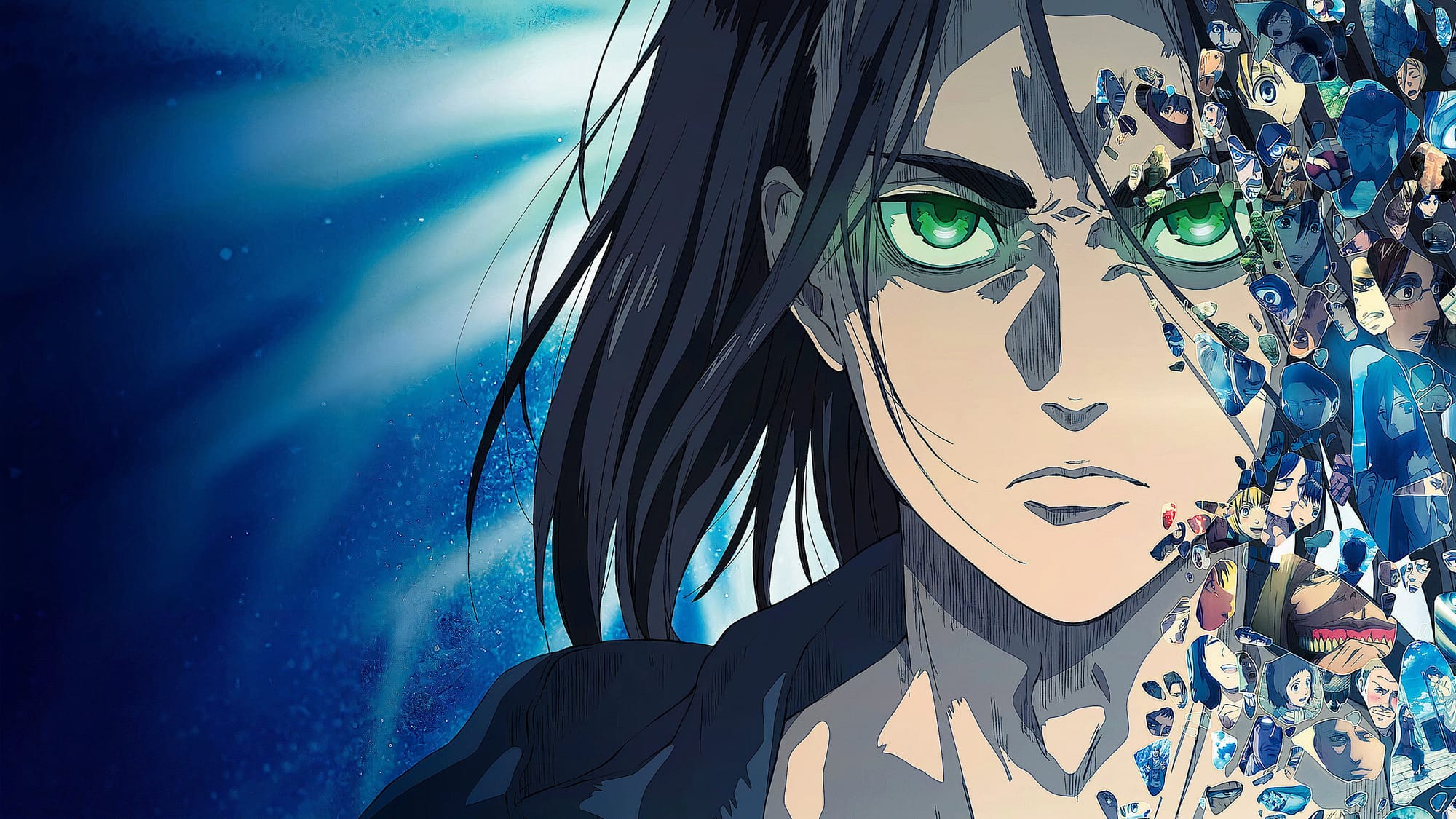
Tsuchida was born in Tokyo on February 8, 1972. He is most widely known for two roles separated by nearly two decades: Saizo/Ninja Blue in Ninja Sentai Kakuranger (1994–1995) and Grisha Jaeger in Attack on Titan (2013–2023). The combination is quietly remarkable. One is a live-action Super Sentai role that launched a career; the other is one of the most psychologically complex supporting characters in the most-watched anime of the past decade. Both demanded a performer capable of inhabiting a character from the outside in — physical presence for Kakuranger's suit-action sequences, and an interior emotional architecture that could carry Attack on Titan's generational tragedy.
Between those poles, Tsuchida built a career that spanned anime, video games, live-action television, international film dubbing, and narration. In anime, he voiced Kōichirō Iketani in the Initial D: Legend film series, Hyūi in the Fist of the North Star: Legend of Yuria OAV, and J.J. Sexton in the four-episode Mobile Suit Gundam Thunderbolt net anime. He voiced supporting characters in acclaimed series including Raido Namiashi in Naruto, Capote in One Piece, and John Titor in Steins;Gate. He also voiced Susumu Yamazaki in Space Battleship Yamato 2199 and its subsequent film series, including Star Blazers: Be Forever Yamato - Rebel 3199.
His work in tokusatsu did not stop with Kakuranger. He voiced the AI unit HANE2 in the 2022 Ultraman Decker show. He reprised the Saizo role in a 2024 special episode marking the series' 30th anniversary. Simultaneously, in video games he provided the Japanese voices for Feng Wei in the Tekken series, Zasalamel in the Soulcalibur series, and Kuroda Nagamasa in Nioh. His most sustained game role was Kazuki in the Yakuza franchise, a character he voiced from the original game through to Yakuza Kiwami 3 & Dark Ties, which launched in February 2026. In foreign-film dubbing, he served as the Japanese voice for Lightning McQueen in the Cars films and Cade Yeager in the Transformers: Age of Extinction and Transformers: The Last Knight live-action films, among others.
That breadth — tokusatsu hero, anime father figure, video game antagonist, Hollywood dub — is not the profile of a specialty performer. It is the profile of a craftsman who made himself indispensable across formats precisely because he did not commit to only one.
Still Recording When He Died
The most jarring detail in the obituary record is not the death. It is the scheduling. Tsuchida most recently voiced Shippo Marimo in Mebius Dust, which premiered on July 9, and he voices King Lionel in The Seven Knights of the Marronnier Kingdom, which premiered on October 3. That second series launched eight days before he died. He also reprised his role as Damnatio Kira in the second season of Black Clover, appearing in the latest — the 173rd — episode, which aired on Saturday, October 18. That is seven days after his death, and two days before his agency disclosed it.
Audiences watching Black Clover's second season on October 18 heard Tsuchida perform a character. They had no means of knowing the performer was already gone. This is not a hypothetical ethical question about disclosure — it actually happened, and it will happen again, because the conditions that produce it are structural, not incidental.
The Nine-Day Pattern
Japan's talent-agency culture around performer deaths has a consistent shape: private funeral first, public announcement after, timing calibrated to family preference and, less explicitly, to the agency's readiness to manage the response. The instinct is not malicious. A private funeral service was held with only close relatives in attendance, in accordance with the family's wishes. The family's privacy is genuinely honored. But privacy for the deceased's family and transparency for the performer's active professional obligations are not the same thing, and the industry rarely distinguishes between them.
The gap is routine. Voice actress Miyu Matsuki passed away on October 27, 2015; her talent agency 81 Produce confirmed the death on November 2 — six days later. Voice actor Eiji Yanagisawa died from a brain stem hemorrhage on November 12, 2024; his death was announced on Production Baobab's website eight days later, after his family held a private funeral. Voice actress Emi Shinohara passed away on the 8th of her announcement month; 81 Produce announced the news on the 10th — two days after. The window varies. The pattern does not. The performer dies; the industry absorbs the information privately; the audience receives it later, often after already encountering the performer's work posthumously.
Just weeks before Tsuchida's announcement, animator Kenichirō Katsura's death followed the same contour: Katsura died on September 30, with the announcement coming from his wife on her social media account on October 5 — five days after his passing. The industry is losing people, often mid-production, and the mechanism for telling the public has not evolved to reflect how continuous and interconnected streaming-era anime production actually is.
What the Audience Is Owed
The argument for delayed disclosure is genuine: families are grieving, agencies need time to notify co-workers and production partners before the press, and the performer deserves the dignity of not becoming a news cycle the day of their death. These are not trivial concerns. The Japanese entertainment industry's treatment of performers' private lives — including illness and death — reflects a cultural framework that places collective decorum above individual transparency, and that framework has real value to the people inside it.
But there is a countervailing interest that this framework consistently under-weights: the audience's relationship to the work. When an active performer dies mid-season, their voice continues broadcasting as though nothing has changed. Fans who form parasocial connections to characters — and the scale of those connections in anime fandom is not trivial — receive no signal that something has changed. They are, in effect, kept in a managed information environment without their knowledge or consent. This is not an emergency, but it is a choice, and the industry makes it reflexively, without apparent deliberation about whether the scale of modern anime distribution warrants a different approach.
Attack on Titan (2013) ran for a decade. Black Clover is on its 173rd episode. Space Battleship Yamato 2199 has spun into a film franchise still releasing entries. Tsuchida was not a peripheral figure in these properties — he was a recurring voice threaded through years of audience investment. His death is not a secret that harms anyone when disclosed promptly. The delay serves the institution, not the performer and not the audience.
The Weight of a Voice Gone Quiet
None of this diminishes what Tsuchida built. He frequently dubbed character voices from English-speaking films into Japanese for the local market — a demanding, technically precise discipline that requires a performer to subordinate their own instincts to a pre-existing performance while still making the result feel native. He did it for Hollywood blockbusters and prestige animation simultaneously. He played a Super Sentai hero in physical costume and a traumatized physician father in a post-apocalyptic anime. He voiced a recurring villain in a shonen series through 173 episodes of its run, then died before the episode aired.
Tsuchida's performance in a 1995 episode of Kakuranger, where Saizo is surprised by an assassin, became a popular internet meme in the early 2020s. Fans noted that, beyond his anime and tokusatsu roles, many people knew him through that meme — and that he seemed happy to learn he was part of it. There is something characteristically unassuming about that detail. A performer whose voice tracked across four decades of Japanese pop culture, whose credits span franchises that defined multiple generations of fandom, made his broadest internet footprint through a single moment of surprise in a 1995 suit-action show — and was glad about it.
Hiroshi Tsuchida was 54. He was still working. The industry he served will continue producing anime, casting new voices, and losing performers mid-production. The nine-day silence will happen again. Whether the audience is owed something different from that silence is a question the industry has not yet been pressed to answer seriously. Tsuchida's death — with two ongoing credits and a third episode airing posthumously — makes it harder to defer.