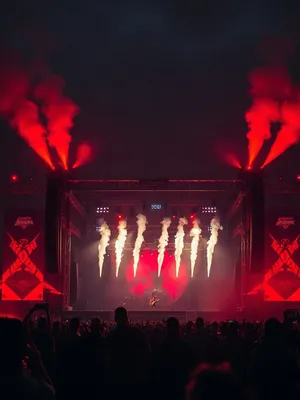
Every October, the Regent's Park tent goes up and the numbers come down: footfall, booth fees, auction estimates, column inches. Frieze London has always been as much financial theatre as cultural event, and the 2026 edition did nothing to disturb that equilibrium. Record attendance figures were announced before the carpet was dry. Blue-chip galleries reported quiet, decisive sales before noon on the preview day. The machinery ran exactly as designed. And somewhere inside that machinery, tucked between a booth selling process-based abstraction and another moving secondary-market Basquiat, the centenary of Roy Lichtenstein was being absorbed into the fair's ambient hum — proof, if any were needed, that the art world has perfected the transformation of critical occasion into product cycle.
Lichtenstein was born on October 27, 1923. The Whitney Museum of American Art's retrospective, which opened this autumn in direct dialogue with the Frieze calendar, chose not to treat that fact as mere scheduling convenience. The show's curatorial logic is more interesting than the standard survey: rather than marching chronologically from the early comic-strip appropriations through Brushstrokes and Mirrors to the late Interiors, the Whitney organized the retrospective around the concept of self-repetition — the way Lichtenstein returned, across decades, to the same motifs, the same formal problems, the same act of quoting himself quoting someone else. It is a genuinely revisionary frame, and it produces a genuinely different Lichtenstein: less the pop ironist who arrived fully formed in 1961 and more a painter obsessed, perhaps anxiously, with the question of what it means to do the same thing again.
That is the reading the show earns. The question the centenary context forces is whether the institution would have arrived at it without the hundred-year hook to justify the budget and the wall space.
The Arithmetic of Legitimacy
Centenary culture is not new, but it has intensified. The logic is straightforward: round numbers confer authority by appearing inevitable. A fiftieth anniversary feels like an industry decision; a hundredth feels like history making its own argument. Museums, fairs, publishers, and auction houses have learned to synchronize their programming around these fixed points not because the calendar produces critical insight but because it produces consensus — a shared reason for every stakeholder to spend money and generate attention simultaneously. The centenary is the art world's equivalent of a franchise reboot: it resets the conversation without requiring anyone to admit the previous conversation had stalled.
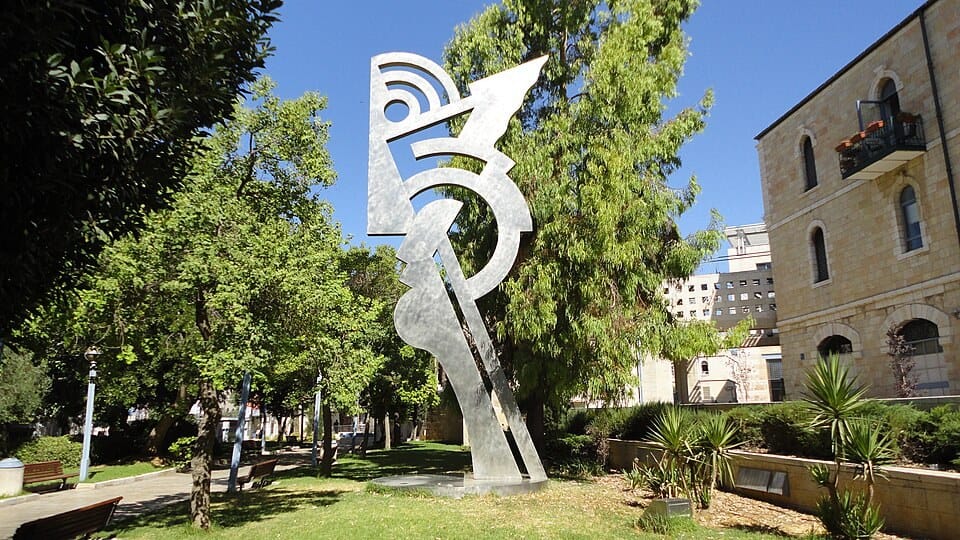
Lichtenstein is a particularly instructive case because his legacy had, in fact, stalled. The critical consensus that hardened around him through the 1990s and 2000s was comfortable to the point of inertia: he was the Pop Art strategist, the straight-faced appropriator who turned advertising's visual language against itself, the canonical counterpoint to Warhol's glamour. That reading was not wrong, but it had stopped generating friction. The centenary doesn't automatically correct that — most anniversary shows don't — but the Whitney's decision to organize around repetition rather than range at least introduces productive discomfort. It asks whether the return to familiar motifs represents formal mastery, compulsion, commercial calculation, or something that cannot be cleanly separated from all three.
Frieze, arriving in the same week, is less interested in the question. The fair cited the centenary in programming notes and panel discussions, but its primary relationship to Lichtenstein is the one it has always had to canonical modernism: as a value benchmark, a ceiling against which everything else in the tent is implicitly measured. When a Lichtenstein print appears in a booth — and in 2026, several did — it is not functioning as an argument about art history. It is functioning as a currency peg.
What Self-Repetition Actually Reveals
The Whitney's thesis deserves to be taken seriously on its own terms before asking what institutional pressures shaped it. Lichtenstein did repeat himself, conspicuously and persistently. The Brushstroke motif, introduced in 1965, returned in paintings, sculpture, murals, and prints across three subsequent decades. The Mirror series, which he began in 1969, kept reappearing in altered scales and configurations. His late nudes quoted his early figures. His Interiors of the 1990s quoted his own earlier quotations of commercial illustration. If you follow the repetitions, you find an artist who was either uncommonly self-aware about the recursive nature of his project or uncommonly dependent on it — possibly both.
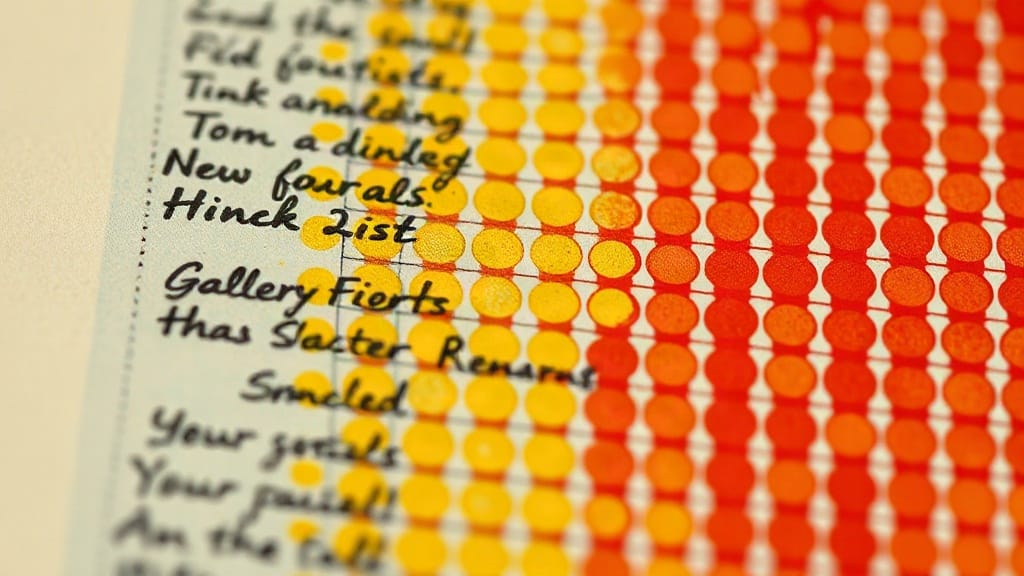
The productive implication of the Whitney's frame is that repetition in Lichtenstein is not failure of imagination but subject matter. He was painting what it feels like to be an image in a culture that reproduces images endlessly — and the most honest way to do that was to reproduce his own. The Benday dot and the thick black outline are not just stylistic signatures; they are a built-in admission that the work is already a copy, that originality is the wrong category. Read this way, the self-repetition is not a liability the centenary show has to manage around. It is the argument.
That argument was available in 1993, when the Guggenheim held its last major Lichtenstein retrospective. It was available in 2012, when the Art Institute of Chicago organized a survey that received respectful but largely unsurprised reviews. The centenary did not unlock the insight — it created the institutional pressure to actually commit to it. Which is, depending on your disposition, either a defense of milestone culture or a fairly devastating critique of it.
The Fair as Mirror
Frieze London 2026 was, by most accounts, a strong edition commercially and an uneven one critically. The stronger galleries — Hauser & Wirth, David Zwirner, Sadie Coles — showed work that didn't need the fair's energy to make its case, and got credit for it. Several younger galleries in the Frame and Focus sections made genuine arguments about where painting and installation are moving. But the fair's dominant register remained what it has always been: confidence as aesthetics, the conviction that if something is here, at this price, in this context, its value is self-evident.
That confidence is Lichtenstein's actual legacy in 2026, and it is more ambivalent than either the Whitney's catalogue or Frieze's press materials will acknowledge. Pop Art succeeded partly by making the mechanisms of commercial culture visible inside the gallery. Fifty years later, the gallery is the commercial culture, the fair is the delivery system, and the centenary is the release date. The critique has become the infrastructure.
None of this diminishes what Lichtenstein made. The best of the Whitney show — the Brushstroke canvases in a room together, the Mirror works hanging at intervals that force you to see your own reflection alongside the painted one — makes a genuinely unsettling case for an artist still worth arguing about. But unsettling cases are not what centenary culture is designed to produce. It is designed to produce consensus, celebration, and sales. That it occasionally produces critical renewal as a byproduct is not a vindication of the system. It is evidence of how much critical renewal the system otherwise prevents.
A hundred years is a long time to wait for a good reading of a painting. The question Frieze London 2026 and the Whitney retrospective leave open, without quite meaning to, is whether the art world can produce that reading without the calendar forcing its hand — and whether, if it can't, the problem is the calendar or the art world.