The Amazing Spider-Man (2025) #1003, written by Joe Kelly with art by Simone Di Meo, hits shelves and digital platforms on November 11, 2026. That date matters less than its position in the run's internal chronology: it arrives two issues after the 104-page milestone that Marvel spent the better part of a year building toward, and it does so with a new artist, a new threat, and a city teetering on institutional collapse. For the first time since the run launched in April 2025, Kelly has to hold the room without a landmark number doing half the work for him.
The Weight of the Milestone
Amazing Spider-Man #1000 — officially Amazing Spider-Man (2025) #36 in volume numbering, legacy #1000 — arrived on September 30, 2026, after demand forced a two-week delay from its original September 16 street date. The issue was, by any publishing-industry standard, an event: 104 pages, more than twenty variant covers, and a creator list spanning Joe Kelly and Pepe Larraz's main story alongside anniversary contributions from Frank Miller, Dan Slott, Brian Michael Bendis, Noah Hawley, J.M. DeMatteis, and Larry Lieber. More than 400,000 copies were ordered ahead of publication, triggering a second printing before the issue was even on sale. That is not a standard Wednesday comic. That is a retail event wearing a comic's clothing.
Kelly's main story — titled "Ravaged" — anchored the milestone by introducing Ravage, a new villain whose identity as Cormac Crane, the long-lost son of Uncle Ben and Aunt May, turned a superhero confrontation into something closer to a family reckoning. Rather than reach for spectacle, Kelly opened on Aunt May in a hospital, stripped the issue of easy triumphalism, and used Ravage's memory-manipulation powers to run Peter Parker through his own past like a wound. The smartest thing "Ravaged" does is understand that issue #1000 doesn't need Spider-Man fighting his biggest villain — the real story is Peter looking back over his life through Aunt May's eyes. The approach was correct, even if the execution left some critics noting that the actual Ravage showdown remained deliberately unresolved, its cliffhanger engineered to hook readers into what came next.
Issues #1001 and #1002: Carrying the Load
What came next was the first real test of Kelly's run, and by most accounts it passed. Amazing Spider-Man #1001, still drawn by Pepe Larraz, stepped directly into the milestone's aftermath without pausing for breath. Kelly expertly wove Peter's personal struggles into the mystery surrounding Ravage, with Peter's desperation to reverse Aunt May's memory loss creating stakes that couldn't be resolved with a web-line or a quip. Larraz's art remained the visual spine of the issue — Kelly hits Peter where it hurts, and Larraz and colorist Federico Blee make every page look expensive — while the run's deeper thematic logic, identity under pressure and the inescapability of family, continued to cohere.
Amazing Spider-Man #1002 brought the Ravage confrontation to a head. Kelly and Larraz staged the second round of Spider-Man's fight with Cormac Crane outside his estate, using Ravage's memory-insertion powers both as psychological manipulation and as a physical combat variable. Ravage's memory manipulation adds a psychological edge to the action, while Larraz delivers some of the most impressive Spider-Man artwork on the stands. The issue was broadly praised — but not without reservation. The resolution struck several critics as convenient, a tidy close to the Ravage arc that prioritized setup over payoff. The Ravage storyline finale before Spider-Man gets whisked away to other events is how Comics Beat framed it — which is precisely the tension that makes #1003 structurally interesting. The scaffolding has come down. What's left standing?
What #1003 Is Actually Doing
The official synopsis for Amazing Spider-Man #1003 describes Spider-Man racing to stop a deadly assassin while a former enemy turned ally returns to old habits. Tensions are high in the aftermath of ARMAGEDDON as Mayor Cage's office and Spidey's new favorite buds, Damage Control, try to keep a lid on an NYC ready to boil over. The solicit titling the issue "ARMAGEDDON'S BACKLASH" signals that this is not a standalone done-in-one but a consequence issue — the kind of comic that deals with the wreckage rather than the spectacle. That is a harder sell than a fight, and also a more honest one.
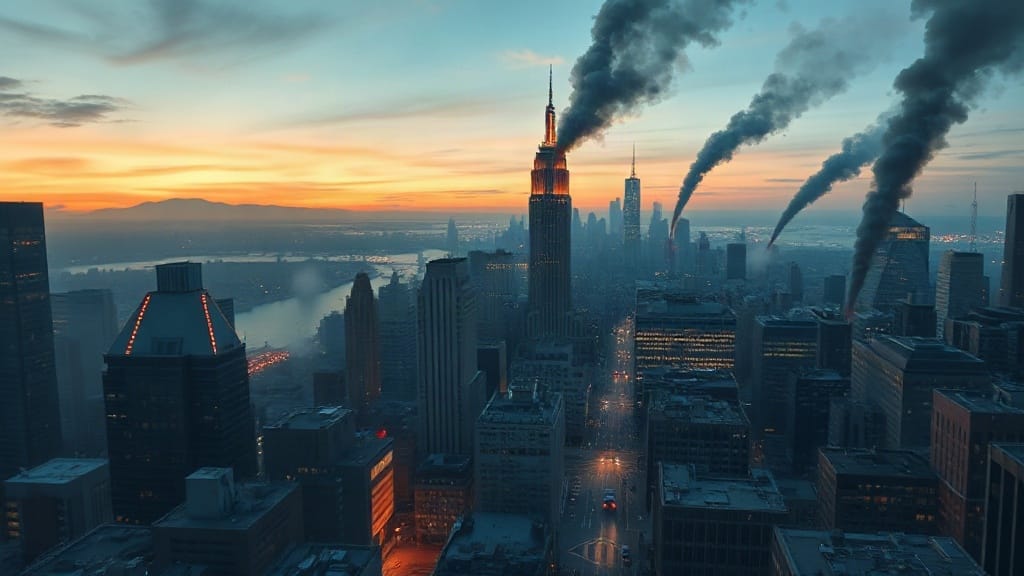
What the solicit is describing is essentially a city as antagonist. Post-Armageddon New York — tense, surveilled, under the institutional thumb of Mayor Luke Cage's office and an increasingly emboldened Damage Control — is the pressure system through which the smaller narrative moves. The assassination plot is a symptom; the boiling city is the disease. Kelly has been building toward this kind of systemic storytelling since the run's launch, when he opened by grounding Peter Parker in personal fear and domestic anxiety before expanding outward. The Kelly-penned run has consistently dug into Parker's psyche, leaning heavily into fear, memory, and emotional fallout, with external conflict used to reflect internal instability. A city ready to collapse is the macro version of the same logic.
Simone Di Meo and the Artist Question
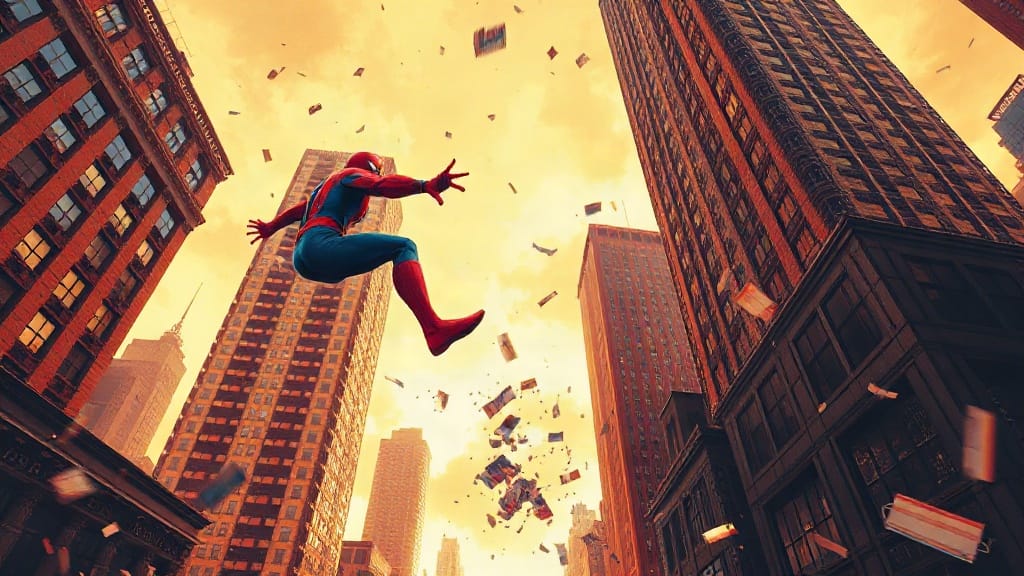
Pepe Larraz has been the visual architect of this run since its first issue on April 9, 2025. His departure — even if temporary — is not a minor footnote. The pairing of Kelly's emotionally dense, memory-layered scripts with Larraz's kinetic, compositionally ambitious pages produced some of the most discussed Spider-Man artwork in recent memory. Issue #1002 alone generated significant praise for Larraz's handling of the Ravage fight sequence. What Simone Di Meo brings is a different vocabulary entirely.
Di Meo is an Italian comic book artist known for his work on multiple DC series and We Only Find Them When They're Dead published by BOOM! Studios, and his style — high-energy, painterly, fractured panel structures — has tended to thrive on issues that foreground chaos and motion over quiet emotional beats. How that translates to a Kelly script explicitly about institutional aftermath and simmering civil tension is the visual question #1003 has to answer. The colorist credit goes to Edgar Delgado, whose palette choices will do significant work in anchoring Di Meo's energy to the story's tonal register. This is worth watching not just aesthetically but structurally: runs live or die partly on whether fill-in artists can sustain the visual argument the lead artist established. If Di Meo can hold the temperature, the transition becomes a demonstration of range. If not, it underlines how artist-dependent this run has been.
Kelly's Run at a Crossroads
The honest assessment, two months after #1000, is that Joe Kelly has built something with more internal coherence than Marvel's flagship Spider-Man title has managed in years. Kelly is less interested in testing Spider-Man's physical endurance than he is in examining how the character responds when stripped of emotional stability. That commitment to psychological rather than physical stakes has distinguished the run from the blockbuster rhythms that dominate the market.
But #1000, whatever its merits, was also a prop. The anniversary industrial complex — the variant covers, the guest creators, the sales records — created an artificial gravity that pulled readers in regardless of whether the ongoing story had earned them. A mountain of doubt about the current editorial and creative teams behind Spider-Man has left readers anxious about whether this milestone issue could live up to those that came before and inspire a strong future for the title. Those readers who showed up for the milestone and stayed through #1001 and #1002 did so because Kelly delivered on the promise of the arc. Whether they stay for a consequence issue — an assassin, a tense city, a new artist — is a different question, one that is entirely structural. This is exactly the kind of comic that determines whether a run is building something durable or simply executing set pieces between landmarks.
Amazing Spider-Man #1003 ships Wednesday, November 11, 2026, priced at $4.99. For another Marvel anniversary title navigating similar post-event structural questions, Kynari's coverage of Chip Zdarsky's Avengers #1 relaunch maps the pressures facing flagship titles when the reset issue itself becomes the event. And for a comparison point in how Marvel has handled the retail and structural mechanics of milestone publishing, see the analysis of Marvel's Hulk #1 giveaway day and what it argues about how anniversary events should function in a direct-market context.