A year is a long time to spend adjusting performance. When Elden Ring (2022) was announced for Switch 2, the response split neatly along predictable lines: skeptics pointed at the hardware ceiling, optimists pointed at the ambition of the port team. Now that the release is finally imminent, both camps have been waiting long enough that the argument has quietly evolved. The real question is no longer whether the Switch 2 can run Elden Ring. It clearly can. The question is whether what runs is still Elden Ring.
What "Performance Adjustments" Actually Means
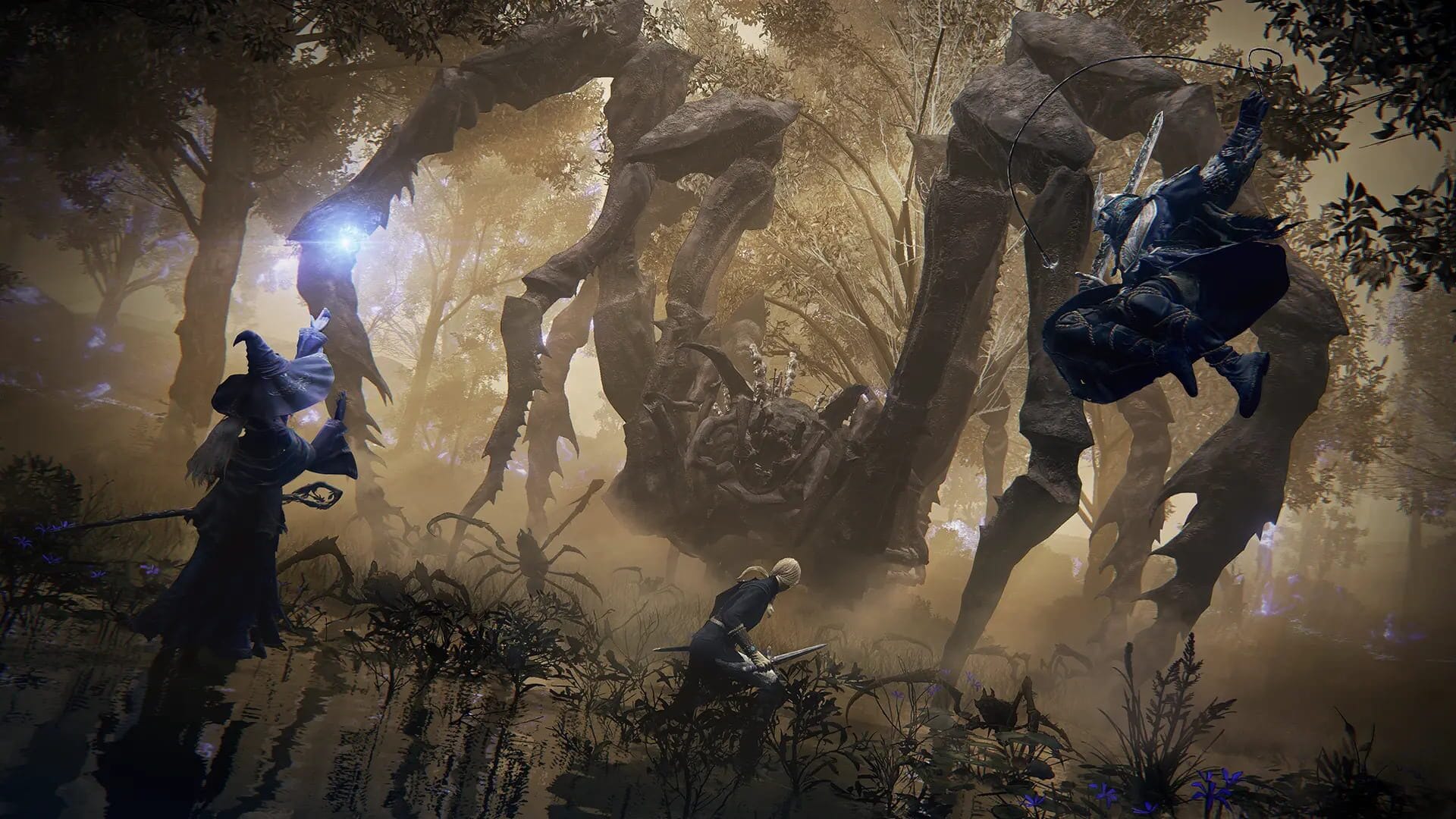
FromSoftware's language around the delay was surgical in its vagueness. "Performance adjustments" is a phrase designed to satisfy press cycles without committing to anything. In practice, porting a title of Elden Ring's scale to mobile silicon means a cascade of compromises that go well beyond resolution drops and draw distance. Shadow rendering, particle density, the subtle fog that layers the Lands Between at dusk — these are not decorative. They are atmospheric architecture. They shape the sense that the world exceeds your comprehension of it, which is precisely the psychological foundation on which FromSoftware builds dread.
The year-long delay suggests the studio understood this. It also suggests the gap between "technically functional" and "experientially intact" was wider than the initial port schedule assumed.
Hardware as Authorial Intent
There is a tendency in game culture to treat ports as neutral translations — the same text in a different language. That framing is wrong, and Elden Ring makes it obviously wrong. This is a game that was designed, from engine architecture to art direction, to run on hardware capable of sustaining a specific kind of visual density. The stillness of Stormveil Castle's courtyards, the oppressive scale of Leyndell, the way Malenia's arena catches light — none of these are incidental to the experience. They are the experience.
When a game is ported to hardware with a fundamentally different performance profile, the developer is not merely translating. They are re-editing. Cuts get made. Some are invisible. Some are not. And unlike a director's cut, a port's cuts are rarely catalogued or acknowledged. Players on Switch 2 will not receive a list of what was trimmed. They will simply encounter a version of the game and take it as given.
The Precedent Problem
This matters beyond Elden Ring specifically. The Switch 2 is positioned as a platform capable of hosting the full breadth of contemporary game releases — not a scaled-down alternative library, but the same library. That positioning puts every major port under a kind of stress test. If Elden Ring lands well, it validates the premise. If it lands as a diminished experience that new players accept as the real thing, it sets a quiet, corrosive precedent: that "close enough" is good enough, and that the hardware gap between platforms can be papered over by consumer unfamiliarity with what they're missing.
The risk is not that Switch 2 players will suffer. Most will not. The risk is that the version they encounter becomes, for them, the canonical one — and that the distance between what FromSoftware originally authored and what they experienced goes unmeasured and unnamed.
A Year Well Spent, or a Year of Managed Expectations?
To be clear: a year of additional development time is not nothing. The teams responsible for technically demanding Switch ports — M2, Panic Button, Iron Galaxy — have demonstrated repeatedly that skilled engineers can do extraordinary things within tight constraints. There is genuine reason to believe this port has been handled with care. The delay itself is evidence of some standard being held.
But "better than it would have been" is not the same as "what it was meant to be." And FromSoftware, of all studios, built its reputation on the insistence that nothing about its games is negotiable — that every obscure detail, every punishing encounter, every frame of environmental storytelling is precisely where it was put for a reason.
Elden Ring on Switch 2 arrives this month. It will almost certainly be worth playing. Whether it is worth calling the same game is a question the port, by its nature, cannot answer for you.