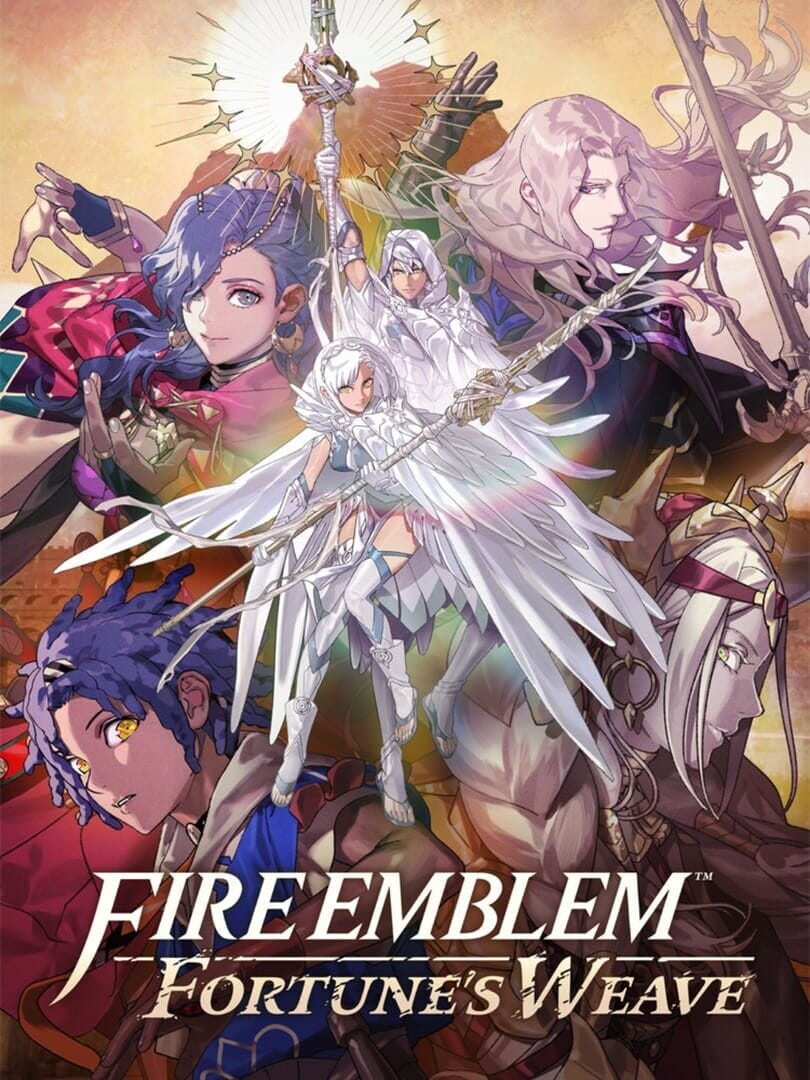
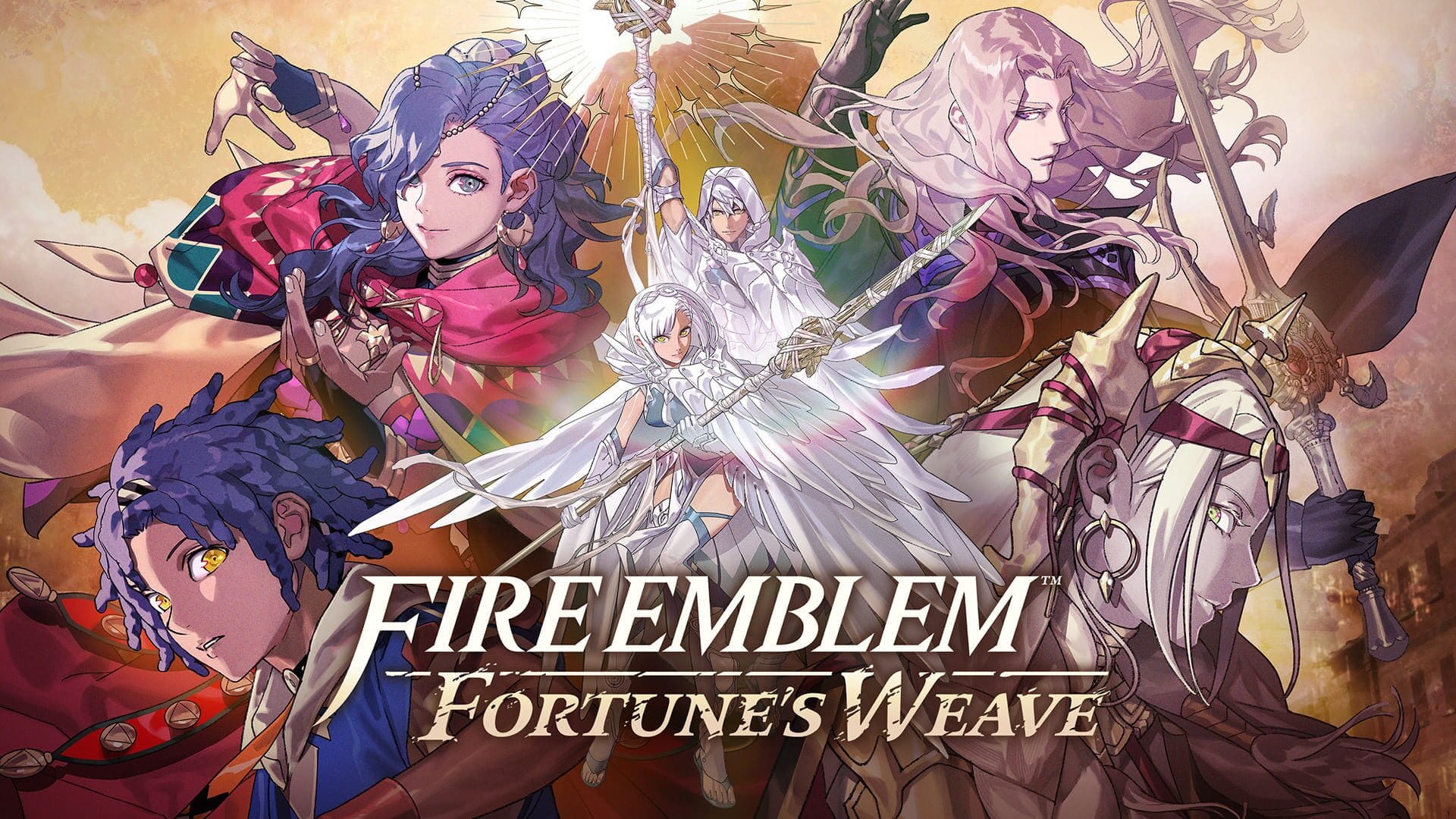
On September 17, Fire Emblem: Fortune's Weave (2025) arrives as the Switch 2's most conspicuous exclusive — a title designed, from its four-route structure down to its returning creative staff, to be the definitive statement of where this franchise lives now. Pre-launch previews have been almost uniform in their praise, calling it the most ambitious entry in the series' thirty-five-year history. That ambition is not in question. What is worth interrogating, two days before launch, is what exactly the game is being ambitious about — and whether the direction it commits to will define Fire Emblem productively or box it into a corner it cannot exit gracefully.
The honest answer requires going back to Fire Emblem: Three Houses (2019), because almost every meaningful conversation about the franchise's identity now begins and ends there. Three Houses was a commercial and critical rupture. It sold over four million copies in its first year, numbers the series had never approached, and it did so by radically redistributing the game's weight — pulling narrative and character investment to the foreground and letting the tactical combat, long the franchise's structural spine, recede into something closer to a delivery mechanism. The monastery sequences, the support conversations, the meal systems and choir practices and greenhouse gardening: these were not supplementary. For many players, they were the game. The battles were what you did to unlock more of what you actually wanted.
That shift was not accidental, and it was not unwelcome. The writing in Three Houses was sharp enough to justify the architecture. The four lords — Edelgard, Dimitri, Claude, and Byleth themselves — were drawn with enough psychological density that routing through the same war from four ideological perspectives felt genuinely illuminating rather than repetitive. The game understood that its core dramatic tension, a continental war with no clean moral axis, was better explored through the eyes of people who believed in what they were fighting for than through the abstraction of hex grids and unit matchups. Intelligent Systems made a deliberate trade, and for six years, the conversation has been about whether that trade holds.
Fortune's Weave is the answer — or rather, the doubling down. Its four-route structure directly inherits the Three Houses blueprint, and the involvement of returning staff signals institutional confidence in that blueprint rather than a course correction. The previews describe a game with expanded monastery-equivalent sequences, deeper support systems, and a political narrative that reportedly branches more aggressively than its predecessor's, with choices in one route explicitly recontextualising events in others. On paper, this is everything the Three Houses formula promised to become. It is also, structurally, a further step away from what Fire Emblem was for the first two decades of its existence.
What the Series Was
It is worth being precise about what is being displaced, because "war game" undersells it. The early Fire Emblem titles — Shadow Dragon and the Blade of Light (1990) through to Path of Radiance (2005) and Radiant Dawn (2007) — were games in which war was not a backdrop but an active, mechanical pressure. Permadeath was not a difficulty option; it was the language the game used to make loss legible. When a unit died, the army contracted. Relationships built over chapters simply ended. The emotional register of those games was inseparable from that pressure. You cared about Titania or Oscar or Soren because the game reminded you, with every careless move, that they were mortal and replaceable and yours to protect.
Three Houses softened permadeath to the point of near-irrelevance, and Fortune's Weave appears to maintain that softening. This is not inherently a design failure — mechanical lethality and narrative investment are not the same thing, and a game can be emotionally serious without threatening to delete your favourite character. But it does represent a philosophical reorientation. When death is reversible and the monastery is safe, the war becomes a series of dramatic set pieces rather than a sustained condition. The player's relationship to the conflict changes from participant to witness. That is a legitimate artistic choice. It is not, however, the choice that defined Fire Emblem for most of its history, and the series has not yet fully reckoned with what it loses in making it.
The Ensemble Drama Problem
There is a structural tension at the heart of ensemble-drama Fire Emblem that Fortune's Weave will need to resolve, or at least manage. The more the game invests in its cast — the more hours it devotes to support conversations, personal storylines, and the texture of everyday life between battles — the more it resembles prestige television in interactive form. That is not a pejorative. Prestige television built entire aesthetic movements on ensemble character work. But television does not also ask you to navigate a tactical combat system, and the increasing sophistication of Fire Emblem's social simulation creates a gap between what the game wants to be and what its genre demands it remain.
The four-route structure sharpens this problem. If each route contains its own full complement of support conversations, monastery sequences, and character arcs, the game is asking players to invest not once in its ensemble but four times — and to find the variation across those repetitions meaningful rather than exhausting. Three Houses managed this through the ideological contrast between its lords, giving each route a genuinely different moral vocabulary. Whether Fortune's Weave can sustain that differentiation across four full playthroughs is the single most important question the pre-launch period has not been able to answer. Previews have praised the writing quality; they have been less specific about whether the structural logic holds across the full breadth of the experience.
The Long-Term Design Question
Two days before launch, the question that matters most is not whether Fortune's Weave will be good — the evidence suggests it will be, probably very good — but what it signals about the decade ahead. If this game succeeds commercially on the scale that Three Houses did, the franchise's direction becomes effectively locked. Intelligent Systems will have confirmed, through market validation, that ensemble drama with softened tactical stakes is what Fire Emblem is now. Future entries will iterate on that template, and the original tactical identity will continue to recede — present in the mechanical furniture, absent from the game's emotional centre of gravity.
That outcome is not a catastrophe. Fortune's Weave, by all available accounts, is a serious and carefully constructed work. But it is worth naming clearly that a franchise can evolve into something excellent and still lose something real in the process. The Fire Emblem that made Marth and Sigurd and Micaiah matter did so through a grammar of risk and consequence that the current design philosophy has deliberately retired. Whether a new grammar has grown up to replace it — whether support conversations and multi-route political drama can carry the same weight that permadeath once did — is a question Fortune's Weave will not answer by existing. It will answer it by being played, argued over, and measured against the weight of what came before.
September 17 is two days away. The conversation starts then.