Solicitation documents are never just logistics. They are the closest thing a publisher releases to an unguarded strategic memo — a ranked, sequenced, priced declaration of what it believes its readership wants, what it needs to protect, and what it is quietly repositioning. DC's December 2026 solicitations deserve to be read that way, because one entry is conspicuously, loudly missing: Absolute Batman.
That absence is the most significant thing in the entire document.
The Weight of What Isn't There
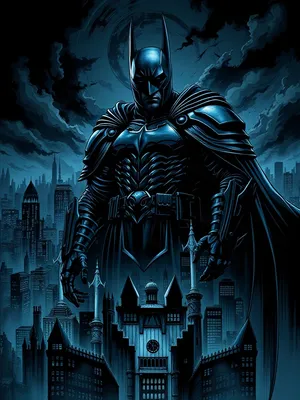
Scott Snyder and Nick Dragotta's Absolute Batman has been the commercial engine of DC's Absolute Universe initiative since the line launched. It moved numbers that mainstream superhero publishing rarely sees anymore, generated legitimate discourse outside the direct market, and gave DC a genuine event book that didn't require a line-wide crossover to justify the attention. In short, it was the kind of title a publisher schedules first and builds the surrounding month around.
It is not in December 2026. Not as a main issue. Not as a special. Not even as a collected edition landmark.
The reflexive explanation is production: Snyder and Dragotta are working on an oversized arc, the book ships on a considered cadence, and December simply falls between cycles. That may be partially true. But publishing schedules are managed instruments. Gaps of this kind — for a title this visible — are either planned breathing room or a symptom of something more complicated behind the scenes. Neither interpretation is neutral. Planned gaps signal that DC is confident enough in Absolute Batman's accumulated momentum to let it sit dark for a month while other titles carry the weight. A production complication signals that the Absolute Universe's flagship is harder to sustain at the pace the market's appetite demands. Both readings are worth holding simultaneously, because the rest of the December slate suggests DC is doing exactly that kind of load-balancing.
Legacy as Load-Bearing Wall
Into the space that Absolute Batman would normally occupy, DC has placed two titles that could not be more deliberately chosen: a Hitman revival by Garth Ennis and John McCrea, and Poison Ivy #50.
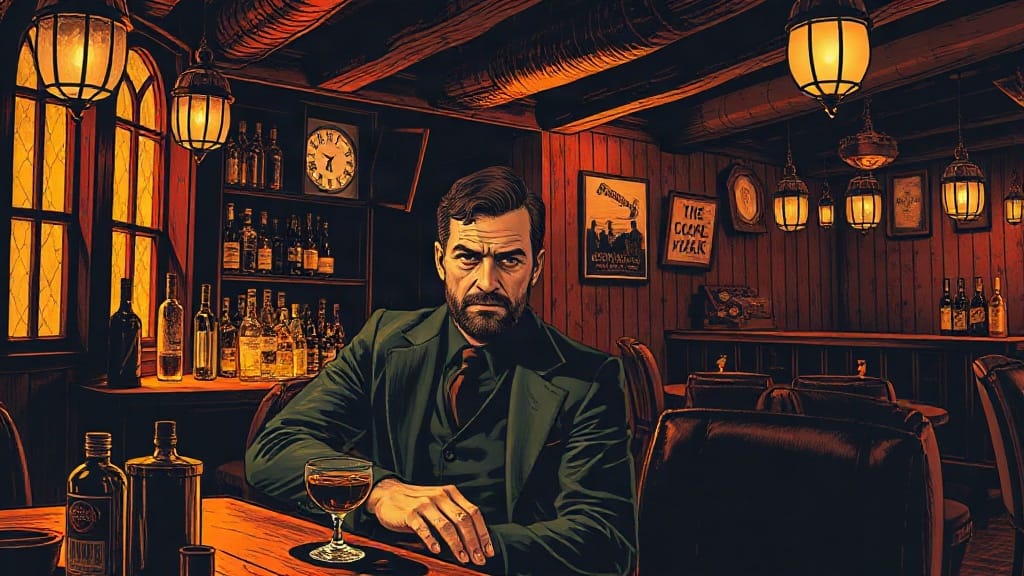
The return of Ennis and McCrea to Tommy Monaghan is not a nostalgia play dressed up as one. Hitman (1993–2001) was one of the most genuinely idiosyncratic books DC published in the late Vertigo-adjacent era — a working-class Gotham story that treated the superhero genre as backdrop rather than subject, populated by characters who drank too much, grieved badly, and died without resurrection clauses. Ennis has spent the intervening decades at other publishers proving he has no interest in revisiting material out of sentiment alone. The fact that he and McCrea are back means DC made an offer that aligned with something Ennis actually wanted to say. That is significant. It means this is not a reunion special engineered by a licensing department. It is, or should be, a creative document with its own internal logic.
What it signals about DC's line is subtler than "nostalgia sells." The return of Hitman positions DC as a publisher willing to let its legacy function as genuine creative infrastructure rather than just IP to be rebooted and continuity-smoothed into the current universe. Ennis's Tommy Monaghan exists in a Gotham that is morally unambiguous in its grimness — a register that the Absolute Universe, for all its darkness, hasn't fully occupied. Bringing Hitman back gives DC a prestige-adjacent title that doesn't need to justify itself through connections to Batman or the Justice League. It stands alone. In a December without Absolute Batman, that matters more than it otherwise would.
Poison Ivy at Fifty
Poison Ivy reaching issue #50 is a different kind of statement. G. Willow Wilson's run turned a character long used as an environmental-villain shorthand into one of DC's most psychologically coherent ongoing protagonists — a book preoccupied with complicity, ecological grief, and the question of whether transformation is possible without destruction. The fact that it has reached fifty issues in the current market is not a given. Most new ongoing series don't survive to twenty. That Poison Ivy is milestone-celebrating in December tells you DC has decided it is a line anchor, not a prestige experiment.
Issue milestones in solicitations are deliberately theatrical. They say: this book has history now, this character belongs in the conversation about what DC publishes at its best. Placing Poison Ivy #50 in the same month that Absolute Batman goes dark is, whether intentional or not, an argument that DC's identity doesn't begin and end with the Absolute Universe. The publisher has other load-bearing titles. It is reminding its readership — and its retail partners — of that fact.

What the Slate Argues, Collectively
Read together, the December 2026 solicitations describe a publisher managing a transition with more self-awareness than it usually gets credit for. The Absolute Universe has been DC's most prominent public story for the past year, and Absolute Batman has been its most visible proof of concept. But a line built around a single flagship is structurally fragile. The December slate — consciously or not — demonstrates that DC understands this.
The Hitman revival reaches for a readership that may have lapsed but retains genuine affection for what DC can do when it lets writers work without editorial interference. Poison Ivy #50 consolidates a newer readership that came to DC through character-driven, auteur-inflected storytelling. Both books occupy the same publishing month, and both represent investments in a version of DC that isn't wholly dependent on the Absolute Universe's continued commercial success.
That is a hedge. It is a smart one. Publishers that stake their entire identity on a single initiative tend to suffer disproportionately when that initiative hits turbulence. DC appears to be diversifying its identity within the same month it lets its biggest book rest — which is either confident scheduling or quietly anxious scheduling, depending on what the next few months of Absolute Batman's production actually look like.
Reading the Silence
The most instructive thing about DC's December 2026 solicitations is that they force this kind of reading at all. A routine month — Absolute Batman in its expected slot, the surrounding Absolute Universe titles in formation behind it — would have been self-explanatory. This month is not self-explanatory. It requires interpretation. And documents that require interpretation are always the more honest ones.
DC is not in crisis. Nothing in the December slate suggests panic. But the combination of a flagship absence, a legacy revival with genuine creative credibility, and a milestone issue for one of its most consistent ongoing series describes a publisher actively negotiating between what made it commercially dominant in 2025 and what it wants to be trusted for in 2027. That negotiation is the real story December is telling. The solicitation document is just where it happens to be visible.