A Gotham event lives or dies by the quality of its contradiction. Not its conflict — contradiction. The best Batman crossovers have never really been about a villain's plan or a city's destruction; they've been about the impossibility of holding Gotham together under a single interpretive framework. Batman: Bad Seeds understands this with unusual precision, and it earns that understanding through a structural choice that is, by DC's recent standards, genuinely audacious: two writers, two protagonists, two moral systems — and no reconciliation on offer.
Matt Fraction takes Bruce Wayne. G. Willow Wilson takes Pamela Isley. That division is not cosmetic. It is the event's entire argument.
Two Architects, One City
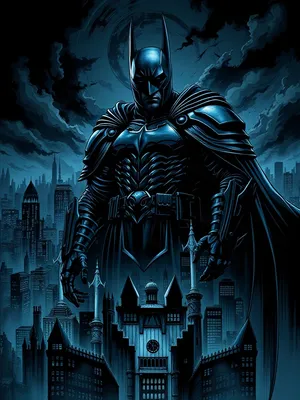
Fraction's Gotham is the city as institution — a machine of law, legacy, and controlled force that Batman perpetuates even when he doubts it. His Bruce moves through Bad Seeds as a man who has internalized Gotham's logic so deeply that he can no longer fully see it. That is precisely what makes Fraction the right choice for this half of the story. His work has always been drawn to protagonists whose competence is indistinguishable from their blindness — characters who are exactly as good at their job as their job allows them to be, and no further. Bruce, in Fraction's hands, is not diminished. He is clarified.
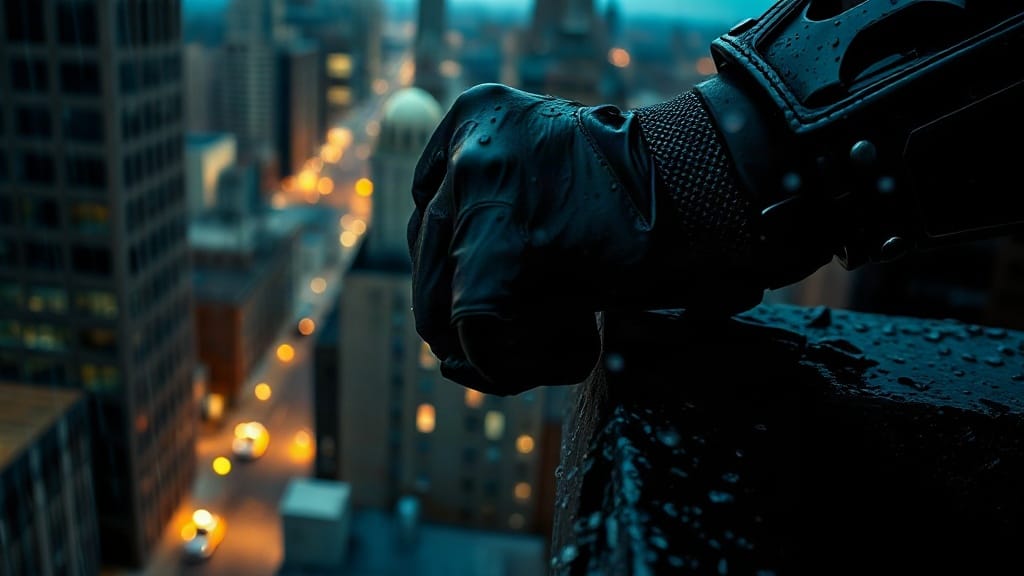
Wilson's Ivy operates from a grammar that Gotham was never designed to accommodate. Where Bruce enforces the city's boundaries, Ivy interrogates whether those boundaries have any legitimate claim on the living systems — human and botanical — that Gotham consumes. Wilson is one of contemporary comics' most precise writers of ideological interiority, and she deploys that precision here to make Ivy's perspective not sympathetic in the soft, hedging sense, but coherent. Ivy is not redeemed. She is legible. That is more unsettling.
The Structural Experiment
What Bad Seeds is actually testing is whether a shared narrative geography — the same streets, the same crisis, the same catastrophic event unfolding in real time — can be genuinely inhabited by two moral systems that do not merely disagree but cannot translate into each other. This is a harder problem than it sounds. Most crossover events resolve the tension by having one framework absorb the other, usually through a climactic team-up that implies a deeper compatibility. The hero and the antihero find common ground. The city is saved by the logic that was right all along.
Bad Seeds refuses that resolution — structurally, not just thematically. The dual-lens architecture means readers must do the translation work themselves. Fraction's chapters do not footnote Wilson's, and Wilson's do not apologize for Fraction's. Gotham exists in the gap between them, which is exactly where Gotham has always actually existed.
What Crossovers Get Wrong
The default DC crossover treats its city as a stage — a backdrop that characters move across, threatened by a plot that must be stopped. The city's function is to be at risk, and its salvation is the story's moral payoff. Bad Seeds treats Gotham as something closer to an argument — an ongoing, unresolved contest between systems of order and systems of growth, between the city as human construction and the city as ecological fact. When Ivy talks about what Gotham takes from the living world, she is not delivering a villain's monologue. She is advancing a position that Fraction's chapters cannot address, because Bruce's language does not contain the vocabulary to answer it.
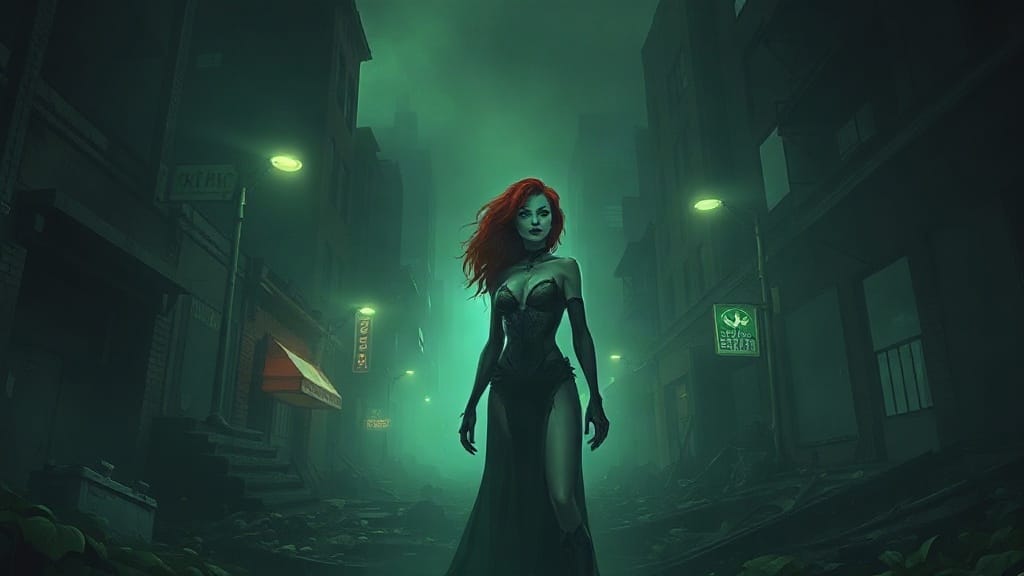
That asymmetry is the event's most sophisticated move. It means Bad Seeds does not build toward a thematic synthesis. It builds toward a demonstration that some contradictions in a city this old, this damaged, and this mythologized are genuinely load-bearing. Remove them and the structure collapses.
The Fall's Biggest Bet
DC has taken a real risk with this architecture. Readers conditioned by decades of crossover grammar will arrive expecting convergence and find instead a controlled divergence — two writers using the same event to make incompatible cases about what Gotham is for. Some will experience this as a flaw. It is not. It is the first Batman event in years that treats the character's central tension — order versus wildness, control versus life — as genuinely unresolvable rather than as a problem to be solved by page 22 of the final issue.
Fraction and Wilson are not running the same story through different characters. They are running different stories through the same city, and trusting that city to hold both. Whether Gotham can — whether it ever could — is the question Bad Seeds is actually asking. It picks up directly from the sales momentum Kynari traced in Batman #12.