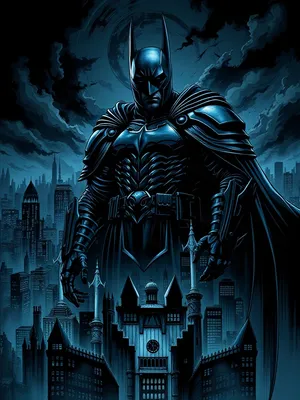
The Eisner Award for Best Limited Series doesn't go to experiments. It goes to work that has already survived the argument. When Absolute Martian Manhunter (2024) took the prize this year, it didn't just validate a single book — it closed the debate about whether DC's Absolute Universe was a sustainable editorial direction or an expensive creative detour. The answer is now on record.
What the Absolute Universe Actually Is
DC launched its Absolute line not as a reboot but as a parallel reconstruction — a strand of the multiverse where iconic characters are rebuilt from structural foundations rather than continuity patches. Absolute Martian Manhunter, written by Jeremy Holt with art by Thomas Nachlik, stripped J'onn J'onzz of every familiar crutch and asked what remains when you remove the Justice League context, the Silver Age nostalgia, and the convenient telepathy that usually resolves plots. What remained was one of the most formally disciplined superhero comics of the decade.
The Eisner committee doesn't reward ambition. It rewards execution. That distinction matters enormously here, because DC has a documented history of announcing ambitious restructurings that collapse under the weight of their own mythology. The Absolute line was supposed to be different. Now it has proof.
This is no longer an experiment. It's a template.

The Crossovers Return — But Not for the Reasons You Think
Simultaneously, and not coincidentally, DC and Marvel have returned DC/Marvel crossover material to physical shelves for the first time in over two decades. Collected editions of JLA/Avengers (2003), Batman/Deadpool — published under the DC Versus Marvel (1996) umbrella — and the classic Superman vs. The Amazing Spider-Man (1976) have been made available again after years of licensing paralysis.
The timing is deliberate. These aren't archive releases dropped to satisfy completionists. They arrive in the most commercially competitive year mainstream comics has seen since the speculator boom: record-breaking variant cover programs, back-to-back line-wide events from both publishers, and a direct market that is simultaneously more fragile and more profitable than it has been in years. Putting crossover product on shelves right now is a statement about ownership of cultural memory.
JLA/Avengers by Kurt Busiek and George Pérez remains one of the most technically complex crossovers ever published — a book that required both universes' internal logic to function simultaneously without either collapsing. Its return signals that both publishers are willing to remind readers that their characters exist in a shared cultural space that neither company fully owns. That is a rare act of institutional humility disguised as commercial strategy.
Two Moves, One Argument
Read separately, the Eisner win and the crossover reissues look like unrelated events — awards season noise and licensing paperwork. Read together, they describe a coherent editorial posture from DC entering 2025.
The Absolute Universe win says: we can build something new inside our own mythology and have it recognized as literature. The crossover reissues say: we are confident enough in our current identity to revisit the moments when our identity was most publicly contested. Both moves require institutional self-assurance that DC has not consistently demonstrated in the post-Flashpoint era.

Marvel, for its part, is not a passive participant. Agreeing to reprint this material — particularly JLA/Avengers, a book that was famously locked away after a years-long dispute between the publishers — suggests that the competitive calculus has shifted. When two rivals agree to distribute proof that their universes are more interesting together, it usually means both are strong enough not to fear the comparison.
The Margins Are Now the Center
DC spent the better part of a decade building from the edges: Black Label prestige books, the DC Horror imprint, and now the Absolute line. Critics framed each initiative as a hedge against continuity fatigue. The Eisner reframes all of it as forward motion.
The industry has a habit of rewarding boldness only after the risk has been fully absorbed. Absolute Martian Manhunter winning Best Limited Series is the moment the industry absorbed the risk and issued a verdict. The crossovers coming back the same year is the market confirming that there is appetite for superhero publishing that treats its own history as material rather than obligation.
DC is no longer rebuilding. It's building. The difference is not semantic — it determines everything about what gets greenlit next, which creators get called, and how many of those calls get answered.
Read next on Kynari