The numbers don't lie, but they do tell two very different stories. In July 2026, the direct market is being pulled in opposite directions simultaneously: Marvel is riding a cinema release to speculative back-issue fever, while DC has quietly rebuilt its market share from the ground up. Both strategies are working. That tension is worth examining.
The Cinema Effect, Quantified
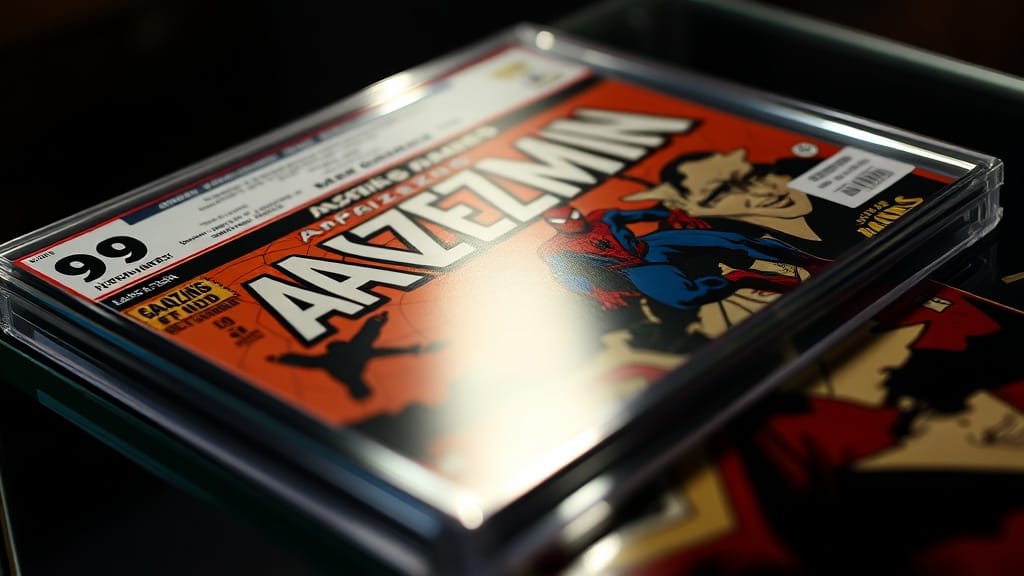
The release of Spider-Man: Brand New Day (2026) in wide theatrical distribution this month has done exactly what every retailer knew it would — and what no retailer can fully plan for. Certified pre-graded copies of The Amazing Spider-Man #545, the issue that closes the original "One More Day" arc and opens the Brand New Day era, have seen CGC 9.8 copies jump from a stable $180 to auction ceilings above $420 in a six-week window. Amazing Fantasy #15 facsimiles — already perennial — are moving again. The film does not need to be great to trigger this. It needs only to exist and open wide.
This is the cinema lever in its purest form: the movie does not create new readers. It creates new collectors, or more precisely, it reactivates dormant ones. The distinction matters commercially. A new reader buys a trade paperback at $20. A reactivated collector buys a raw copy of The Amazing Spider-Man #546 for $60, has it pressed, submits it to CGC, and waits. Marvel's back catalog becomes an asset class, and the publisher benefits from none of that secondary market directly — but benefits enormously in brand visibility, in new ongoing sales, and in the trade dress recognition that makes Brand New Day omnibus editions sell through in days.
Marvel's strategy here is essentially passive leverage. The studio does the heavy lifting. The comics market responds. The publisher collects the attention dividend.
DC's Absolute Architecture
DC's path to its current 40-plus percent market share is structurally unrelated to any film release. The Absolute Universe — launched in late 2024 with Absolute Batman, Absolute Superman, and Absolute Wonder Woman — is a line built on a single editorial premise: take the most recognizable characters in the medium and strip them of every assumption. No Wayne fortune. No Krypton as origin. These are not Elseworlds. They are ongoing, canonical-within-their-line monthly titles, and they have held sales momentum across eight months in a market where titles typically crater after issue three.
The Absolute line's retail performance reveals something the industry had half-forgotten: if the creative execution is strong enough, readers will buy a number one issue of Batman again. They have bought dozens of them. What they will not buy is a number one issue that feels like a repackaged number one. Scott Snyder and the architects of the Absolute line understood that reinvention has to be structural, not cosmetic. The market rewarded that judgment with pull-list commitment rather than one-issue curiosity.
Nostalgia vs. Architecture
The surface reading of July 2026 is that Marvel and DC are simply doing what they always do — Marvel leaning on Hollywood, DC leaning on publishing craft. The more precise reading is that the industry is running two simultaneous experiments in how to monetize emotional connection to intellectual property.
Marvel's experiment asks: how much is the audience's existing relationship with Peter Parker worth when activated by a theatrical event? The answer, measured in back-issue premiums and opening-weekend merchandise sell-through, is: quite a lot, and reliably so. The risk is dependency. If the film underperforms critically or culturally, the speculative bubble deflates fast, and the ongoing titles that benefited from the halo effect lose that tailwind just as quickly.
DC's experiment asks something harder: can a publisher manufacture genuine reader investment in characters everyone already knows, using only the quality and boldness of the comics themselves? The Absolute Universe's sustained market share says yes — provisionally, contingently, for as long as the creative teams hold the line.
Two strategies, one market. Marvel is borrowing heat from a screen. DC is generating it on the page. Both are winning in July 2026, which means the industry still has more than one way to matter.
What the Simultaneity Reveals
The genuinely interesting thing about this particular moment is not that either strategy is working — it is that both are working at the same time, in the same market, for different audiences with overlapping wallets. The collector who is hunting a CGC 9.8 of Amazing Spider-Man #547 this month is not necessarily the same reader pulling Absolute Batman every month. But in many cases, they are. The mainstream comics audience in 2026 is segmented enough to sustain both models without one cannibalizing the other.
That is a more optimistic structural picture than the industry has been able to claim in years. It does not mean the problems — distribution fragility, aging readership demographics, the relentless pressure of digital alternatives — have been solved. It means that for one month, the ceiling on what mainstream comics can achieve commercially is higher than it looked twelve months ago, and it got there by two completely different routes.
That is worth noting. The medium is not a monolith. Neither is its audience. July 2026 is the clearest proof of both.