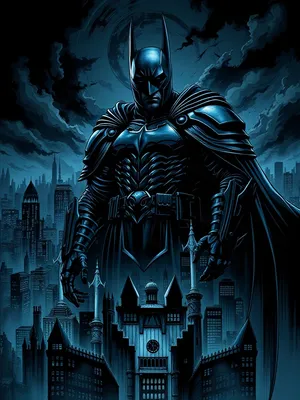
The Absolute Universe was never supposed to be the safest bet DC had made in years. It was pitched as a creative risk — stripped-down origins, reimagined mythologies, a line that owed nothing to continuity. Six months in, it has become something far more consequential: the most reliable commercial engine in the direct market, and one that is now generating internal competition DC's editorial team almost certainly did not plan for.
June 2026 sales data confirms it. Absolute Catwoman (2025) outsold Absolute Batman (2025) in monthly units — a result that would have seemed implausible when the line launched. Batman is DC's gravitational center, the title that anchors any initiative and absorbs any doubt. That a book built around Selina Kyle has overtaken it is not a footnote. It is a structural signal about where reader appetite is actually pointing.
What the Numbers Are Really Saying
The Absolute line's dominance of the collector market is no longer surprising — it is the baseline. What June's data adds is a layer of differentiation within the line itself. Absolute Batman #11 still secured the number-one spot for its release week, which means the flagship title retains its event-level pull on a per-issue basis. But across the full month, Absolute Catwoman moved more copies. That distinction matters because it separates two different buying behaviors: the week-one collector spike versus the sustained, reorder-driven readership that actually sustains a title commercially.

Absolute Catwoman is winning the second category. That points to word-of-mouth traction, consistent reorders from retailers hedging their bets late, and — critically — a reader base that is not primarily composed of completionists chasing a Batman event. It has cultivated its own audience.
The Architecture of the Line's Success
DC built the Absolute Universe on a specific editorial logic: give marquee creators genuine latitude on characters whose mainstream versions have calcified under decades of continuity. The result is a line where each book operates with the visual and narrative confidence of a prestige original graphic novel, released in periodical form. Retailers responded by allocating shelf space and display priority they had previously reserved for Marvel's top-tier launches. Collectors responded by treating the line as the primary object of speculation and preservation in the current market.
What the Absolute Catwoman overtake reveals is that this logic scales beyond Batman. The line is not a Batman delivery mechanism with supporting titles attached. It is a genuine ensemble, and its second lead has just demonstrated the commercial weight to prove it.
The Risk DC Now Has to Manage
Internal competition within a line is a double-edged outcome. It validates the publishing strategy and proves the model is not dependent on a single title. But it also creates a hierarchy problem. If Absolute Catwoman continues to outperform Absolute Batman in sustained monthly sales, editorial decisions about creative teams, release cadence, and event priority will become significantly more complicated. Batman has always been the argument DC uses to justify any initiative's existence. The moment that argument requires a footnote — "Batman is number one week-to-week, but Catwoman is leading monthly" — the internal politics shift.
There is also a market dependency risk embedded in the line's dominance. The collector market is structurally volatile. The same speculator behavior that is inflating Absolute's numbers can reverse with a single disappointing arc, a delayed issue, or a competitor's well-timed launch. DC is riding a wave it did not fully engineer and cannot fully control.
What Comes Next
The Absolute Universe has moved past the phase where its success required explanation or defense. The question now is whether DC can manage what it has created — a line that is outgrowing its own internal rankings, generating a new tier of icons, and redefining what the collector market will pay attention to on a monthly basis. Absolute Catwoman outselling Absolute Batman is the clearest evidence yet that the answer to that question is not guaranteed, and that the most interesting competition in comics right now is not DC versus Marvel. It is DC versus itself.