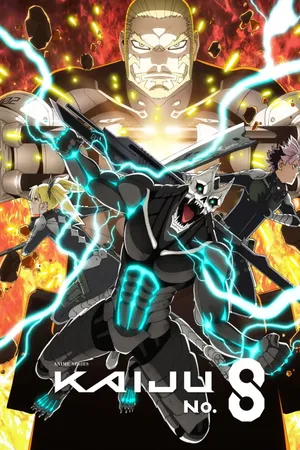
The credits had not finished rolling on Daemons of the Shadow Realm (2023) Season 1 when the announcement appeared. Not the next morning. Not at a convention panel timed for maximum press coverage. The moment the final frame of the finale hit broadcast, the Season 2 confirmation was live — a post-credits card, a simultaneous social media drop, a teaser clip already rendered and queued. The machine had been running the whole time. The audience just couldn't see it yet.
That choreography is worth examining without the congratulatory noise that surrounded it. Bones Film and its distribution partners did not announce Season 2 because Season 1 performed beyond expectations in some organic, unpredictable way. They announced it at that exact moment because the finale is now, structurally, a marketing event — and the window between a viewer's emotional peak and their next behavioral decision is measured in seconds, not days.
The Finale as Funnel
There is a concept in conversion-rate optimization called the "hot state" — the brief interval after an emotional experience during which a person is maximally receptive to a follow-on commitment. Subscribe. Pre-order. Follow. The post-streaming anime industry has quietly built its renewal calendar around this principle. A same-broadcast announcement does not give fans something to celebrate so much as it catches them before they cool down.
Season 1 of Daemons of the Shadow Realm earned that hot state honestly. The series built genuine narrative momentum across its run, threading a dense mythology of bound spirits and inter-realm politics through action sequences that Bones Film rendered with the kinetic precision the studio has made its signature across decades of production. The final episode delivered on enough of that investment to produce exactly the emotional discharge that makes a viewer lean forward rather than back. The announcement landing in that window is not coincidence. It is product placement inside an emotional moment.
This is distinct from how renewals worked even ten years ago. A second season announcement used to follow weeks or months of sales tracking — physical media numbers in Japan, licensing revenue from overseas markets, merchandise sell-through. The gap between finale and renewal was, structurally, a period of uncertainty that the audience shared with the production. That shared uncertainty was part of the cultural texture of following an anime. Fan campaigns, ranking petitions, the particular anxiety of a series that mattered to you existing in an undecided state — all of that belonged to the experience of being a viewer.

Streaming data collapsed that gap. Platforms now have completion rates, rewatch figures, and drop-off timestamps for every episode within 48 hours of release. By the time a finale airs, the business decision is almost always already made. The announcement is not the decision. It is the reveal of a decision that has been locked for weeks, deployed at the algorithmically optimal moment.
What Bones Film Is Actually Selling
Bones Film is a serious studio. Its track record — from Fullmetal Alchemist: Brotherhood (2009) through My Hero Academia (2016) and beyond — reflects a production culture that takes craft seriously even within commercial constraints. Nothing about the same-broadcast renewal announcement suggests the studio is cynical about the work itself. But the studio operates inside an industry infrastructure whose incentives have fundamentally shifted, and the mechanics of that infrastructure are visible in moments like this one regardless of anyone's creative intentions.
What the announcement actually sells is not Season 2. Season 2 is at minimum a year away, likely more. What it sells is continued platform subscription, continued social engagement, and the psychological status of being a fan of a going concern rather than a concluded one. A series with a confirmed future is a different product than a series that might be finished. Viewers who might otherwise churn from a streaming service after a season ends are given a structural reason to stay. The announcement is retention infrastructure dressed as a celebration.
That framing is not meant to diminish what Daemons of the Shadow Realm achieved in its first season. The quality of the work and the mechanics of its monetization are separate questions. But conflating them — treating the renewal announcement as validation of the series' artistic merit — misreads what is actually being communicated and by whom.
The Disappearing Conclusion
There is a cost to this model that tends to go undiscussed in the coverage that follows renewal announcements: the structural erosion of the ending as a meaningful narrative unit. When a finale is designed with the knowledge that a same-broadcast renewal announcement will immediately reframe it as a midpoint, the creative pressure on that episode shifts. Resolution becomes optional. Catharsis can be deferred. The emotional payload of the finale is split between delivering something satisfying and leaving enough open that the announcement of more feels necessary rather than generous.

Season 1 of Daemons of the Shadow Realm threads this needle with more skill than most. Its finale closes genuine arcs while opening new ones — the mark of a writing room that understands the difference between a cliffhanger and a horizon. But the broader pattern across the contemporary anime landscape is less disciplined. Series increasingly treat their finales as chapter breaks rather than conclusions, banking on the announcement that follows to paper over the absence of resolution. The viewer is left not with an ending but with a pause button, and the pause button is owned by the platform.
This is the post-streaming anime condition in miniature: the audience's relationship with a story is now mediated at every inflection point by the commercial logic of whoever controls distribution. The finale is not yours. It is a scheduled event in someone else's retention calendar.
What Comes Next
Season 2 of Daemons of the Shadow Realm will almost certainly be good. Bones Film's production standards do not evaporate because the business model around them has changed, and the creative foundation established in Season 1 is genuinely strong. The characters carry weight. The world has internal logic. The animation has the kind of physical grammar — the way bodies occupy space, the way impact reads on screen — that distinguishes a studio with institutional knowledge from one assembling episodes on a production-line schedule.
But watching what comes next with clear eyes means understanding the context in which it arrives. The announcement was not a reward for the audience. It was a signal to the market. The series continues because it performs the functions a continuing series needs to perform in the current distribution economy, and it was confirmed to continue at the precise moment when that confirmation would do the most commercial work.
None of that makes Daemons of the Shadow Realm less worth watching. It makes the watching more honest — which, in an industry increasingly fluent in the language of fan celebration as business strategy, is the only posture that keeps the criticism useful.
 Official trailer