The announcement that Cyberpunk: Edgerunners 2 (Cyberpunk: Edgerunners, 2025) will feature music by The Cure isn't a curiosity. It's a thesis statement about what the global anime industry has decided it wants to be.
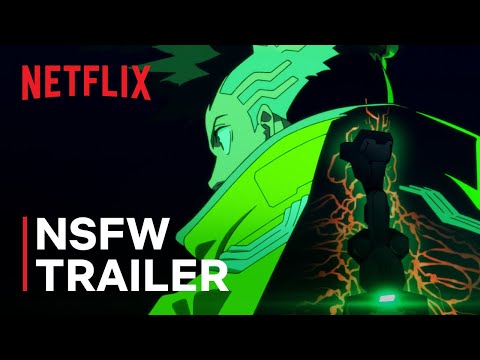 Official trailer
Studio Trigger and Netflix didn't pull Robert Smith's band from a nostalgia drawer. The Cure occupies a very specific cultural frequency: dissonance dressed as beauty, melancholy engineered to feel cinematic, outsider aesthetics that somehow conquered the mainstream without ever apologizing for the contradiction. That's not a random soundtrack pick. That's a blueprint.
The Precedent the First Season Set
Edgerunners season one used Gazelle Twin's "My Head Is Alive (But My Body Is an Error)" and, most consequentially, Refused's "Night City"—a Swedish punk band repackaged as the anthem of a fictional megacity built by a Japanese-American studio for a Polish video game. The intercultural wiring was already deliberate. The show wasn't borrowing Western sounds to feel edgy; it was constructing a sonic vocabulary that matched the narrative's core argument: identity in Night City is always a collage, always a violence, always borrowed from somewhere else.
The Cure extends that argument and sharpens it. "Disintegration," "Bloodflowers," "Pornography"—these are records about the self coming apart under pressure it didn't choose. That's not incidental to the Edgerunners universe. That is the Edgerunners universe. Chrome and flesh, humanity as obsolescence, love as the one variable that breaks the optimization. Robert Smith has been writing about cyberpsychosis since 1982; he just called it something else.
Global Anime and the Architecture of Cool
The strategic logic here is harder to romanticize, and more interesting for it. Netflix's anime vertical has a documented pattern of anchoring prestige productions to Western cultural touchstones that carry pre-built emotional authority with a 25-to-40 demographic. The Cure isn't just music; it's a signal to a specific audience that this show understands their interior life. It's genre-targeted empathy at scale.
What makes the Edgerunners case different from, say, a Marvel film licensing "Paranoid" to signal rebellion-by-committee, is that Trigger's visual grammar actually earns the reference. The studio's hyper-kinetic sakuga, its willingness to let characters dissolve physically and psychologically in the same frame, its refusal of clean emotional resolution—these aren't decorative. They're structurally compatible with The Cure's aesthetic DNA. The discomfort is load-bearing.
That compatibility also reveals something about how anime's identity is being constructed in the streaming era. The medium is no longer positioning itself as a niche import that Western audiences must learn to read. It is actively writing itself into Western cultural genealogies—claiming The Cure, claiming punk, claiming gothic romanticism—not as appropriation but as legitimate inheritance. Edgerunners is arguing that Night City was always already a Japanese city, a British city, a Polish city. Belonging is the wrong frame. Convergence is the right one.
What Gets Lost in the Merger
The risk in this strategy is real. When a production this calculated reaches for emotional authenticity, the seams can show. The Cure's power derives partly from its resistance to exactly the kind of corporate curation that a Netflix-Trigger-CD Projekt Red pipeline represents. Robert Smith built his career on refusal; streaming platforms are architectures of frictionless consumption. That tension doesn't invalidate the choice, but it should stay visible.
There's also the question of whether this model of global identity construction leaves room for the stranger, less legible choices—the ones that don't arrive pre-validated by three decades of Western critical consensus. Season one's greatest sonic risk was "I Really Want to Stay at Your House" by Rosa Walton, a song almost no one knew before the show and almost no one forgot after. The Cure is the opposite of that bet. It's confidence, not discovery.
Both modes are valid. The industry needs to know the difference between them.
The Signal Worth Reading
What Cyberpunk: Edgerunners 2's soundtrack choice actually documents is the moment anime stopped asking for permission to be a world cinema. The Cure isn't a cultural loan. It's a merger. Studio Trigger isn't translating Japanese aesthetics into Western legibility; it's asserting that the categories were always more porous than the distribution infrastructure wanted us to believe.
Whether the show delivers on that assertion is a question for when it airs. But the choice of soundtrack already tells us what kind of question it intends to answer—and that it intends to answer it loud, in minor key, with Robert Smith's eyeliner fully intact.