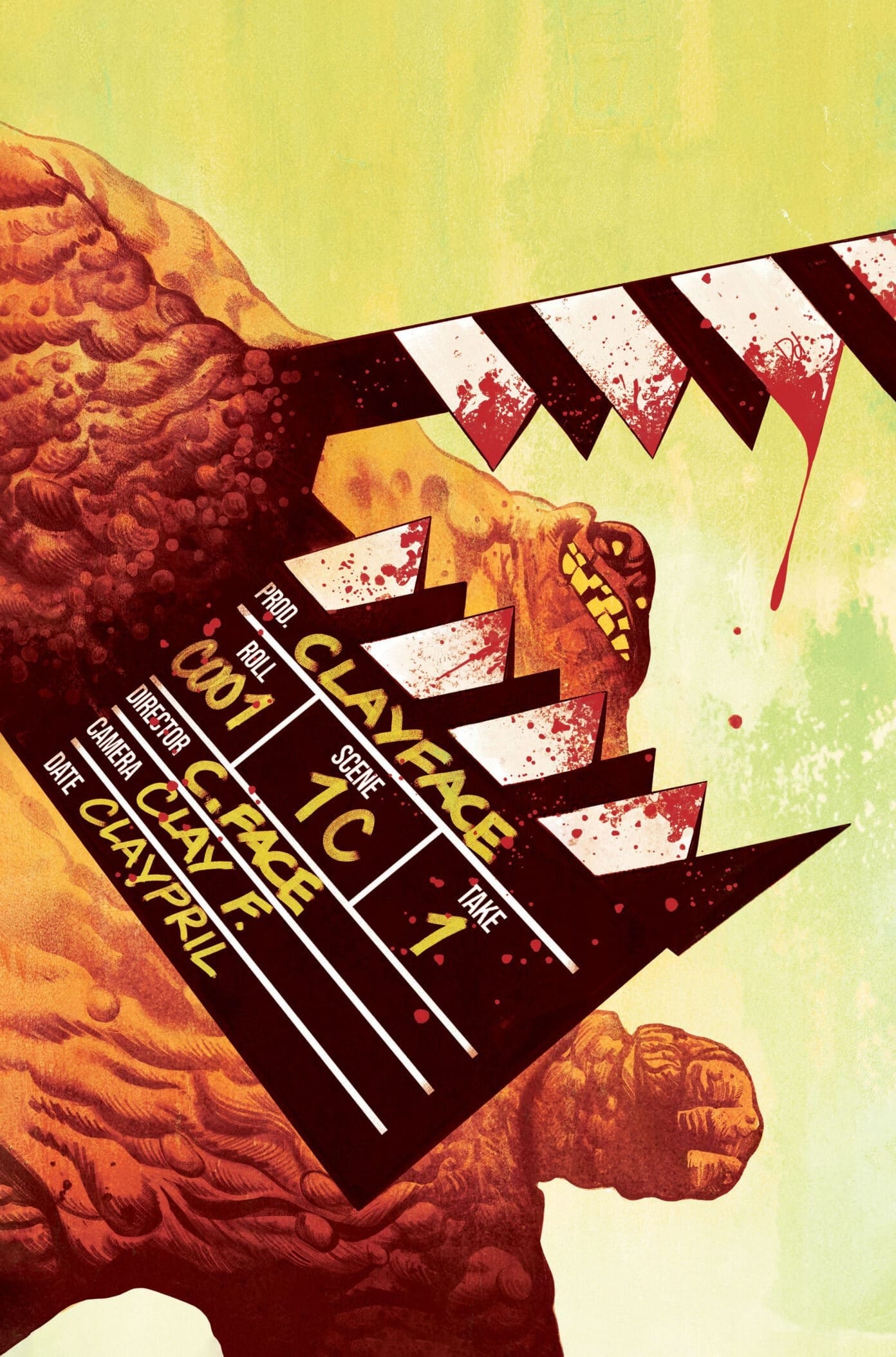
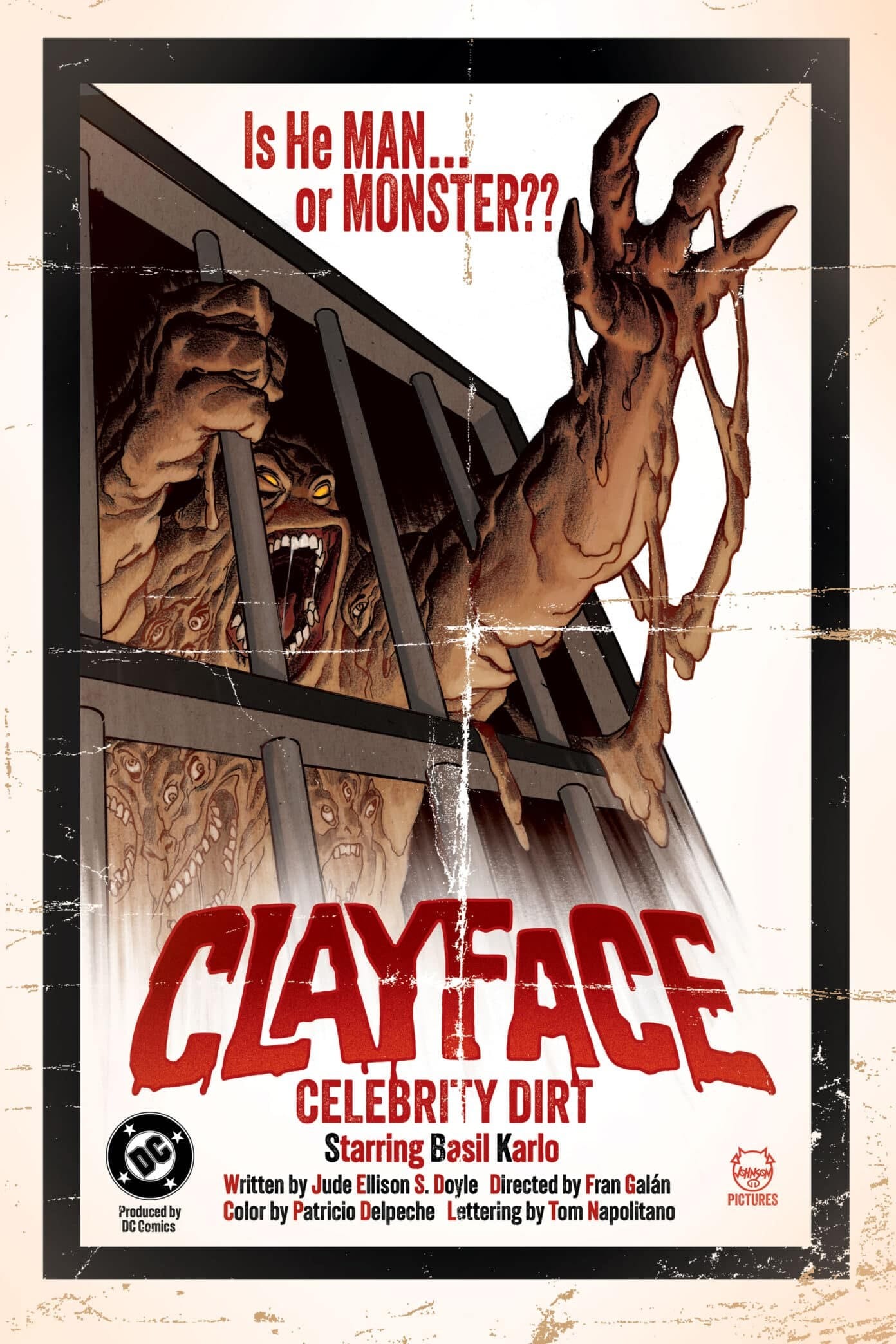
Nine days. That is the gap between the release of Clayface #1 (DC, October 14, 2026) and the theatrical opening of the film it is designed to precede. The number is not accidental. It is calibrated — close enough to feel like momentum, distant enough to allow a news cycle to breathe. DC did not commission this comic because the character demanded a new chapter. DC commissioned it because a film opens on October 23rd, and someone in a strategy meeting understood that the Wednesday rack could function as a pre-release surface if you timed the drop correctly.
That is the mechanism. Understanding it clearly matters before evaluating anything else about the book, because the mechanism shapes every editorial decision inside it — the tone, the entry point, the density of continuity, the visual language, the length. A comic released nine days before a film is not operating under the same conditions as a comic released into an ongoing narrative with no external premiere date attached. It is, structurally, a different object. Calling it fan service misses the precision of what is actually happening.
The Wednesday Rack as Hype Infrastructure
Comic shops have always occupied a peculiar position in popular culture's promotional ecosystem. They are physical spaces that self-select for the committed — people who show up weekly, who track release schedules, who argue about canon. They are not mass-market storefronts in the way a multiplex lobby is. And yet DC is treating them, in this instance, as the first domino in a theatrical hype sequence. The logic is not unreasonable. A reader who picks up Clayface #1 on October 14th, reads it over the weekend, and walks into a theater on October 23rd is a primed audience member. They arrive with character context, with visual vocabulary already established, with an emotional orientation toward the material. They are easier to satisfy and more likely to evangelize.
What this reveals is that DC is testing whether the direct market — historically insular, historically resistant to being instrumentalized by Hollywood's calendar — can be reframed as an on-ramp. Not a companion piece. Not a tie-in released alongside a film after the fact. An on-ramp. The distinction is meaningful. Companion pieces acknowledge an existing audience. On-ramps are designed to convert one.
The experiment has precedent, but it has rarely been deployed with this degree of intentionality. Studios have commissioned prequel comics for decades, from The Matrix to the Marvel Cinematic Universe's various one-shots and tie-in miniseries. Most of those efforts were afterthoughts — licensing exercises handed to capable but uninspired creative teams, distributed through channels that the studio neither understood nor particularly valued. What DC appears to be doing with Clayface #1 is different in kind: a single high-profile issue, positioned as a special edition, timed to a specific nine-day window. It is less a tie-in than a controlled detonation.
What the Comic Is Being Asked to Carry
The burden this places on the creative team is considerable, and largely invisible in any official promotional framing. A comic that functions as theatrical infrastructure must simultaneously satisfy two audiences with incompatible demands. The first audience is the existing readership — people who know Clayface's publication history, who have opinions about which iteration of the character is definitive, who will notice if the issue contradicts established continuity or softens the character's more genuinely unsettling qualities to align with a PG-13 marketing brief. The second audience is the prospective filmgoer who has never purchased a Wednesday book in their life and is picking this up in a Barnes & Noble or a promotional display because they saw a trailer and wanted more.
These two audiences do not read the same way. The first reads for density and coherence. The second reads for access and sensation. Writing a single issue that serves both without condescending to either is a genuinely difficult craft problem — more difficult, arguably, than writing either a pure continuity issue or a pure entry-level one-shot, because those at least have a clear hierarchical contract with the reader. A comic engineered to operate as pre-release hype has no such clarity. It is optimized for function rather than form, and function, in this case, is a promotional goal external to the story itself.
This is where integrity becomes the operative word. Not moral integrity — the creators involved are not compromised people for accepting the assignment. Structural integrity. The question is whether a comic shaped by a theatrical release date can sustain its own internal logic, its own reason for existing as a comic rather than as an extended advertisement in sequential-art form. The history of film tie-in comics suggests the odds are poor. Most of them read exactly like what they are.
Clayface as a Test Case, Not a Victim
It would be easy, and somewhat lazy, to frame this as a story of corporate exploitation — Hollywood eating the Wednesday rack, IP machinery grinding up a character with genuine creative potential. That framing is emotionally satisfying and analytically incomplete. Clayface is, by any honest assessment, a character whose comic-book presence in recent decades has been intermittent and uneven. The character has enormous dramatic potential — a shapeshifter whose fundamental condition is the loss of stable identity is rich material — but that potential has been inconsistently realized. A high-profile special edition timed to a theatrical release is not obviously worse for the character's visibility than continued mid-list obscurity.
The more interesting question is what DC learns from the experiment. If Clayface #1 moves units in significant numbers — if it drives foot traffic to comic shops from people who came specifically because they saw the film's marketing and wanted to hold something physical — that is data. It validates the on-ramp theory and virtually guarantees that the model gets replicated for the next DC theatrical release, and the one after that. The Wednesday rack becomes, gradually, a pre-release surface as routine as a digital trailer drop. That transformation is not inherently catastrophic, but it is a structural shift in what the direct market is for, and it deserves to be named rather than absorbed quietly under the cover of excitement about a film opening.
If the issue underperforms — if the crossover audience fails to materialize, if existing readers feel the book's priorities are misaligned with their expectations — DC will draw different conclusions, probably about execution rather than strategy, and try again with a tighter brief.
The Object and Its Moment
There is something worth sitting with in the physical fact of a comic book released nine days before a film. It is a document of a particular industrial calculation, and those documents have their own kind of interest. Future readers returning to Clayface #1 years from now — if they return at all — will encounter a comic that is inseparable from its promotional context in ways that most single issues are not. The release date is part of the text. The nine-day window is an editorial choice as meaningful as any panel composition.
Whether the comic transcends that context — whether it becomes something a reader wants to return to because it is good rather than because it is historically curious — depends entirely on whether the creative team was given, or fought for, the room to make something with its own center of gravity. Promotional infrastructure and genuine storytelling are not mutually exclusive. But they require someone in the room insisting on the distinction, loudly, against commercial logic that has no particular reason to care.
Nine days is a very specific number. It tells you exactly what DC thinks this comic is for. The question the book has to answer is whether it knows what it's for too.