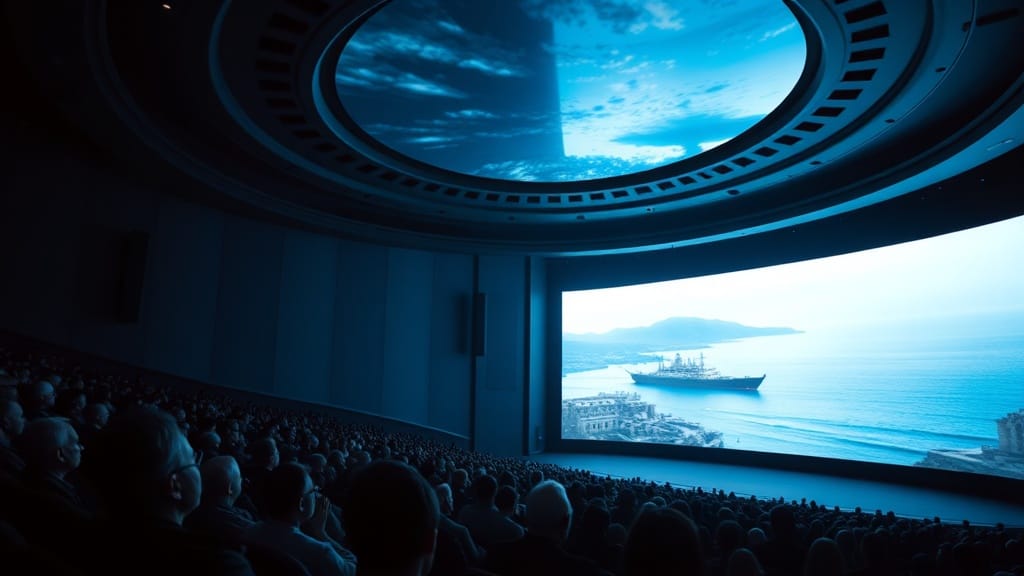
There are no safe bets in cinema, only expensive ones. Christopher Nolan's The Odyssey (2026) opens globally today, July 17, with IMAX sessions sold out across three continents — and the uncomfortable question it raises has nothing to do with box office projections. It has to do with whether a myth that has survived thirty centuries of retelling can survive the one thing it was never designed for: the event-movie apparatus.
Homer's Odyssey is not a story about a hero's journey. It is a story about the cost of returning — the way a man can win every battle and still arrive home unrecognizable. That friction, the grinding, unglamorous toll of survival, is precisely what blockbuster grammar tends to sand away. Nolan has spent the better part of two decades arguing, by practice rather than by statement, that the grammar can be rewritten. Memento (2000), El caballero oscuro (The Dark Knight, 2008), Interstellar (2014), Dunkerque (Dunkirk, 2017), Oppenheimer (2023) — each film used industrial scale as a pressure chamber, not a cushion. The question is whether that method holds when the source material is already mythological, already larger than any production budget.
The structural challenge is considerable. The Odyssey is episodic by design: a sequence of islands, temptations, and punishments that resist the three-act compression Hollywood reflexively applies to epics. Nolan has previously shown an appetite for nonlinear architecture — but fragmentation in service of subjectivity is not the same as the lateral, wandering logic of Homeric narrative. The sirens, the Cyclops, Circe, the land of the dead: these are not plot points building toward a climax. They are a taxonomy of what happens to a man who refuses to stop moving. Adapting that into a film that also needs to justify its IMAX footprint is not a creative contradiction — it is a genuine formal problem, and formal problems are where Nolan is most alert.
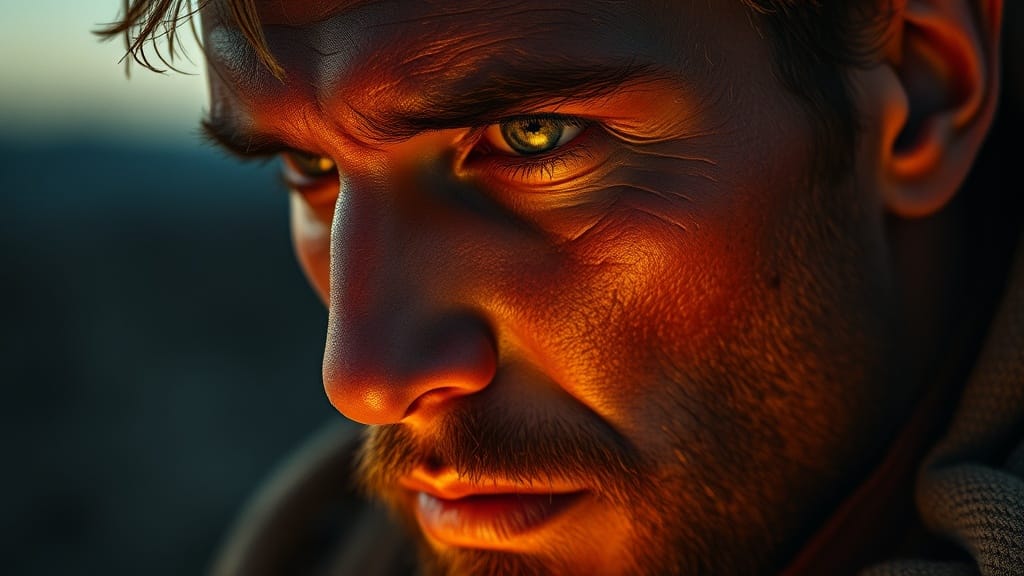
What the sold-out screenings confirm, before a single review has settled the critical conversation, is that audiences have extended Nolan a form of trust that functions more like authorial faith than genre loyalty. They are not arriving because of Odysseus. They are arriving because of Nolan. That dynamic is worth examining without celebration: when the director becomes the brand, the myth risks becoming the vehicle. The danger is not that Nolan will make a bad film. The danger is that the film will be spectacular in ways that make its darkness legible, digestible, safe — that the Cyclops will be terrifying in the way a well-designed villain is terrifying, rather than in the way an indifferent universe is terrifying.
The sirens, the Cyclops, Circe, the land of the dead: these are not plot points building toward a climax. They are a taxonomy of what happens to a man who refuses to stop moving.
Nolan's best films earn their scale by refusing comfort at the exact moment the audience expects it. The ending of Dunkerque is rescue that feels like defeat. The ending of Oppenheimer is triumph that reads as indictment. If The Odyssey follows that logic — if Ithaca, when it finally arrives, feels less like homecoming and more like the recognition that the man who left no longer exists — then the IMAX frame will have been put to legitimate use. The spectacle will have been in service of the wound.
If not, the film will still be extraordinary to look at, and the debate will continue in exactly the terms it has always continued: whether cinema at this scale can hold genuine ambiguity, or whether the economics of global distribution require a resolution that myth, by nature, refuses to provide.
Homer left Odysseus alive and back in his hall, surrounded by the bodies of men who had eaten his food. That is not a happy ending. It is an honest one. Today, in darkened theaters from Tokyo to Mexico City, we find out whether Nolan agrees.
 Official trailer