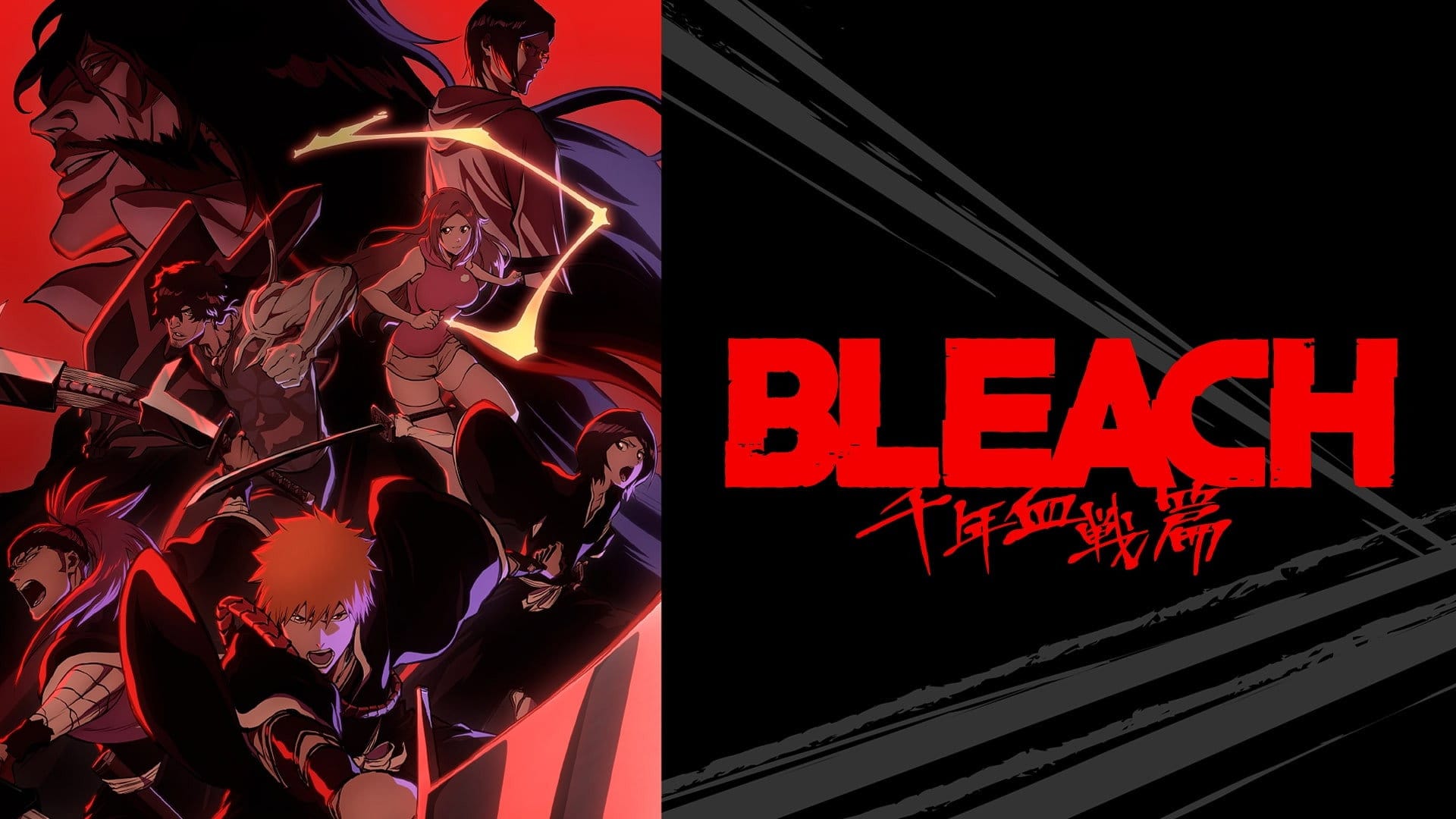
The announcement was brief, direct, and — by the standards of the anime industry — unusually candid. The final two episodes of BLEACH: Thousand-Year Blood War (2022), the long-awaited adaptation of Tite Kubo's closing arc, would not air on their scheduled dates. Pierrot and TV Tokyo pushed the conclusion back four weeks, citing the need for additional time to meet the quality standard that a series of this magnitude demands. No vague restructuring. No pandemic clause. No algorithm-driven platform reshuffle quietly buried in a press release. Just a studio saying, plainly, that the work was not ready.
That admission deserves to be read carefully, because what it reveals is more complicated than either the optimists or the cynics want it to be.
The Weight of the Finale
To understand why this delay registers differently from routine production hiccups, you need to understand what BLEACH: Thousand-Year Blood War has meant to its audience — and to the industry — since it premiered. The original BLEACH anime, which ran from 2004 to 2012, ended before Kubo completed his manga, leaving the Thousand-Year Blood War arc unaired for a decade. When Pierrot announced the adaptation in 2021, it was framed not merely as the conclusion of a franchise but as a corrective act, a promise to finally do justice to a story that had been left in suspension.
The production backed that promise with visible investment. The animation quality in the series' first cour was genuinely exceptional by broadcast television standards — fluid combat choreography, restrained but effective use of color grading, direction that understood the theatrical weight of Kubo's compositions. Studio Colorido alumnus Tomohisa Taguchi helmed the project with a sensibility closer to theatrical OVA production than weekly broadcast. That ambition created expectations, and expectations create pressure.
Delaying the final two episodes, then, is not a neutral logistical event. It is the moment where the gap between aspiration and industrial capacity becomes visible to everyone watching. Pierrot did not hide that gap. They surfaced it. The question worth asking is what that surfacing actually means.

Transparency as Symptom
The anime industry's relationship with production transparency has shifted dramatically over the past five years. Where studios once maintained a careful silence around crunch conditions, scheduling collapses, and the human cost of weekly broadcast schedules, social media has dismantled that silence from the inside. Key animators post about overwork. Schedules slip in plain sight. Episodes occasionally air at reduced quality — soft lines, recycled cuts, missing detail — and the internet documents each instance with forensic precision.
In this environment, the explicit quality-based delay announcement reads as a more controlled version of the same phenomenon. Pierrot is not being transparent out of cultural enlightenment; they are being transparent because opacity is no longer fully available to them. The alternative — silently delivering a compromised finale to millions of invested viewers — carries reputational and financial risks that a four-week delay does not. The honesty is real, but its motivations are structural rather than ideological.
This matters because it changes how we should assess what the announcement actually signals. It is tempting to frame the delay as evidence of a healthier production culture, a studio choosing craft over calendar. That reading is not entirely wrong. There is genuine value in an industry acknowledging publicly that time has value, that animation is labor-intensive in ways that cannot always be compressed without cost. But celebrating the announcement as a sign of maturity risks confusing symptom management with systemic reform.
The Schedule Was Always the Problem
The deeper structural reality is that the conditions requiring a last-minute delay on a project of this profile — a major franchise finale with significant streaming infrastructure built around it, a production timeline spanning multiple years — should not exist in the first place. A four-week extension in the final stretch is not a sign of a studio taking quality seriously from the beginning; it is a sign that the planning and resource allocation leading up to that point were insufficient to deliver the conclusion on schedule without compromising the work.
This is the pattern the anime industry has been unable to break for decades. The weekly broadcast model, inherited from a different era of television economics, imposes a cadence that was never designed to accommodate the scale of ambition that contemporary productions — particularly those adapted from long-running, culturally significant manga — now carry. Pierrot is not uniquely culpable here. The same structural tension has produced identical crises across the industry, from the production chaos that plagued certain seasons of Shingeki no Kyojin (2013) to the burnout documented among animators on high-profile theatrical and streaming productions.
What makes the BLEACH: Thousand-Year Blood War case distinctive is the visibility of the franchise and the directness of the explanation. When a studio delays the final episodes of a property with the cultural weight of BLEACH and says openly that quality was the reason, it becomes a kind of accidental white paper on the gap between what the industry promises and what its infrastructure can reliably deliver.
Streaming's Ambiguous Role
The streaming dimension compounds this in ways that are still being worked out in real time. Disney+ has been the primary international distribution partner for BLEACH: Thousand-Year Blood War, which places the series in a context where platform expectations, global release windows, and subtitle and dubbing pipelines all generate additional coordination demands. Streaming deals can provide the funding that elevates production quality — and the visual ambition of this adaptation is, in part, a product of that investment — but they also create scheduling obligations that sit awkwardly alongside the organic, often chaotic reality of animation production.
The four-week delay is, among other things, a negotiation with that infrastructure. It suggests that even with premium resources attached, the final stage of delivering a major anime property remains subject to the same human limitations that govern every production at every budget level. Money and platform visibility can raise the ceiling of what is achievable. They cannot fully insulate a production from the consequences of an industry that structurally underestimates how long ambitious animation takes to complete.
What Comes After the Pause
None of this is an argument against the delay. Four weeks is a reasonable exchange for a finale that honors a decade of deferred expectation. Viewers who have followed BLEACH: Thousand-Year Blood War through its run have been watching a production that takes its own ambitions seriously, and the decision to extend rather than compromise is consistent with the quality register the series has maintained. The pause is the right call.
But the right call emerging from a structurally broken system is still an outcome of that system. Pierrot's candor deserves acknowledgment. It does not deserve to be mistaken for transformation. The anime industry's new transparency around production conditions is a meaningful development — it creates accountability, surfaces labor realities, and forces the conversation that a more opaque system could avoid. What it is not, yet, is evidence that the conditions producing these crises have changed.
When the final episodes of BLEACH: Thousand-Year Blood War air, they will almost certainly be worth the wait. The more uncomfortable question — the one the industry's increasing openness keeps raising without fully answering — is why the wait was ever necessary.