Bleach: Thousand-Year Blood War – The Calamity (Bleach: Sennen Kessen-hen – Ketsubetsu-tan, 2026) doesn't open with a recap. It doesn't ease you in. The fourth and final cour of Pierrot's landmark revival drops into the wreckage of the Seireitei like a blade through paper, and that decision — to treat the audience as already committed — says everything about where this production has placed its bet.
The summer 2026 season is crowded. It always is. But no title in the current lineup has generated the same concentrated weight of expectation that The Calamity carries into its premiere window. That pressure is structural, not sentimental. When Thousand-Year Blood War launched in October 2022, it reframed what a shōnen revival could be: dense choreography, an uncompromising color palette, Shiro Sagisu's score operating closer to Hideaki Anno than to conventional battle-anime convention. Three cours of escalating craft built a standard. The fourth cour now has to meet it while closing a story that Tite Kubo's original manga famously stumbled across the finish line under editorial duress.
The Weight of a Corrected Ending
That editorial history is the structural fault line beneath everything The Calamity attempts. The manga's final arc — serialized between 2012 and 2016 — was compressed in its closing chapters, leaving character resolutions underdeveloped and certain power escalations unexplained. Kubo has been publicly involved in the anime's production since the beginning, using the adaptation as a formal opportunity to restore what was cut. The first three cours demonstrated this in controlled doses: extended Quincy lore, reinstated Soul Reaper backstory, Yhwach's ideology given the philosophical runway it was originally denied.
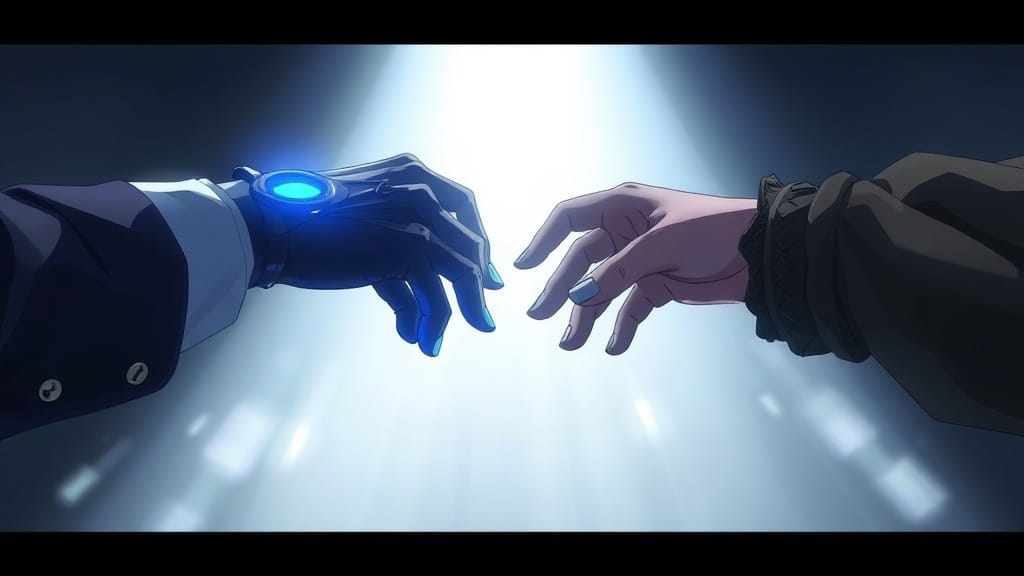
The Calamity carries the heaviest cargo. The confrontations that remain — Ichigo versus a Yhwach operating at full Almighty capacity, the fates of Orihime, Uryu, and Chad as characters rather than plot mechanisms — are precisely the ones the manga resolved most perfunctorily. If Kubo's reconstruction has been building toward anything, it has to land here, in the final episodes of a run that will define how this story is remembered.
Animation as Argument
What the revival has argued, consistently, is that visual language can carry thematic weight that dialogue alone cannot. The Yhwach sequences in prior cours used color desaturation and frame-rate manipulation to render his Almighty ability as something genuinely disorienting — not a power to be described, but a phenomenon to be experienced. The Calamity inherits that visual vocabulary and is expected to push it further, into territory where conventional action-anime grammar breaks down by design.
Pierrot's decision to staff key episodes with directors drawn from outside the traditional shōnen pipeline — a pattern established in earlier cours — signals that the production is not coasting. The episodes confirmed for the finale block carry the same elevated production tier that made the Ichigo-versus-Yhwach skirmishes in The Separation (cour three) among the most discussed action sequences of recent anime memory. The question is whether that technical ambition can sustain itself through resolution rather than escalation — a fundamentally different and harder creative problem.
What a Classic Owes Its Ending
The conversation around The Calamity at the start of this summer season is not nostalgia dressed up as criticism. It is a genuine inquiry into whether the architecture of a classic shōnen — built on power hierarchies, rival ideologies, and the protagonist's capacity to absorb and overcome — can close with the same authority it claims at its peak. Dragon Ball, Naruto, and One Piece each answer that question differently, and none of the answers are clean. Bleach, arriving late to its own conclusion, has the advantage of distance and the disadvantage of a bar it raised itself.
The most honest reading of what Thousand-Year Blood War has accomplished across three cours is this: it proved that the source material contained more than the original broadcast suggested. The Calamity now has to prove that the source material — even revised — is enough. That is a different kind of proof, and it will determine whether this revival ends as restoration or as apology.
Summer 2026 is watching. So is the franchise's entire legacy.