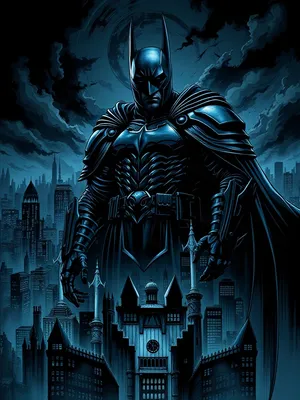
Batman is the only superhero who has been continuously reinterpreted on screen for sixty years without anyone agreeing on what the definitive version looks like. Superman has a default. Spider-Man has a default. Batman has a rotation. Every eight to twelve years the cowl is handed to a new actor and a new director who solve one specific problem the previous version left open — and quietly abandon something the previous version had gotten right.
That rotation is usually narrated as a straight line from camp to seriousness, as if each Batman were an improvement on the last. It isn't. It's a series of trades. And on Batman Day 2026, with the character selling better on the page than at any point in his eighty-seven-year history, the more interesting question isn't which screen Batman won. It's how much of the comic-book Batman has never made it to a camera at all.
1966: The Batman Who Belonged to Daylight
Adam West's Batman is filed under camp, which undersells what he was actually doing. The joke in the 1966 ABC series never came from West. He played the character with absolute sincerity inside an absurd frame — the deadpan was the performance, and it only works because he refuses to wink. Everyone else is in on it. He isn't.
What that era gave Batman is something no adaptation since has wanted: civic legitimacy. West's Batman is a deputized public servant. He is welcome in the commissioner's office. He lectures Robin about seat belts. He has no unresolved trauma, no moral crisis, no ambiguity about whether Gotham should want him. For nearly twenty years, that was Batman to the general public, and its real inheritance is tonal permission — proof that the character survives total reinvention without breaking.
Solved: Batman as a figure of public joy. Abandoned: interiority, entirely.
1989: The Silhouette
Tim Burton's Batman (1989) arrived against a wall of fan hostility — Michael Keaton's casting generated a protest campaign that reads, in retrospect, like a rehearsal for every superhero casting cycle since. Keaton answered it by withholding. His Bruce Wayne is distracted, socially odd, almost absent; his Batman barely moves. The threat lives in the suit and the stillness, not in the physicality.
Burton's real contribution was formal: Batman as design object. Anton Furst's Gotham is an expressionist city with no interest in plausibility, and Danny Elfman's march does the character's entire psychology in eight bars — gothic, operatic, mournful and triumphant at once. It remains the most efficient piece of Batman characterisation ever produced in any medium.
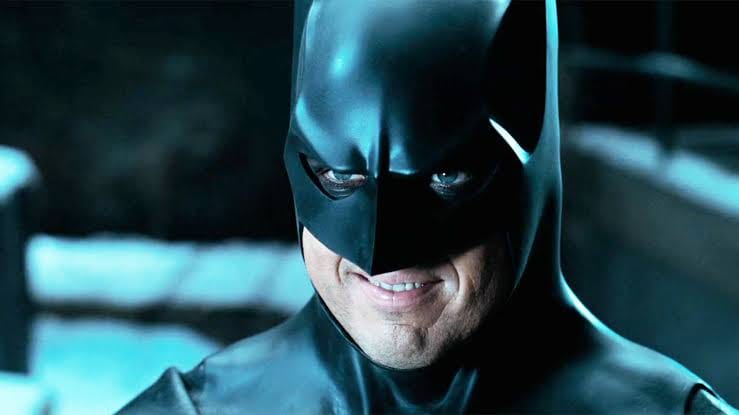
Solved: the icon, the silhouette, the sound. Abandoned: the case. Burton was never interested in a plot Batman had to solve.
1995–1997: Neon and Merchandise
Joel Schumacher's two films are treated as the franchise's collapse, and commercially they were — Batman & Robin (1997) killed the series for eight years. But the era is also the most honest anyone has ever been about what Batman is alongside being a myth: a product. Design decisions followed toy lines. Gotham turned into a neon theme park. The tonal register was closer to West than to Burton, without West's discipline.
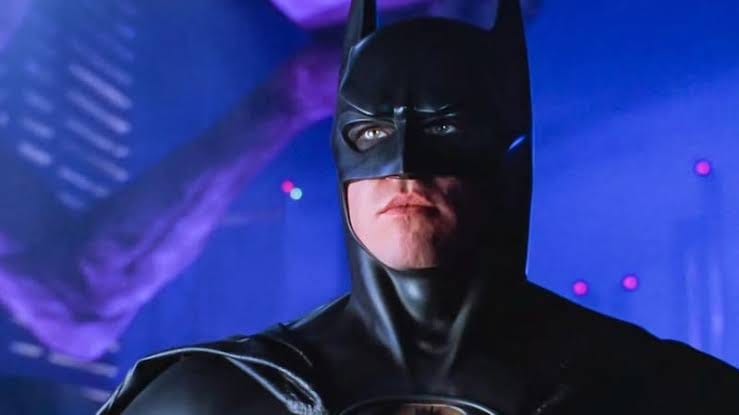
And yet it did one thing the "serious" eras have refused to do ever since: it put a family on screen. Robin, Batgirl, a cave with more than one person in it. The problem was never the idea — it was that the films understood the Bat-Family as a merchandising expansion rather than as the moral engine it is on the page. Thirty years later, no live-action Batman film has tried again.
Solved: the Bat-Family exists. Abandoned: any reason to take it seriously.
2005–2012: The Argument
Christopher Nolan's trilogy is the only screen Batman built as a thesis. Batman Begins (2005) treats the origin as a training problem; The Dark Knight (2008) is an argument about escalation, surveillance and the limits of institutional legitimacy; The Dark Knight Rises (2012) insists — uniquely — on an ending. Christian Bale gave the most complete Bruce Wayne yet filmed, running three distinct registers: the public playboy, the private man, and the voice.
What Nolan introduced was consequence. Choices cost something across films. Gotham degrades. Batman ages. No previous version had a timeline that mattered.
What it removed was strangeness. Nolan's Gotham is Chicago with better lighting, his rogues are ideologies rather than mythology, and his Batman is structurally alone — no Oracle, no Robin worth the name, no sense that this operation could ever outlive the man running it.
2016–2023: The Body
Ben Affleck's Batman is the most physically accurate version ever put on film. The warehouse sequence in Batman v Superman (2016) is the closest live-action has come to how Batman actually moves in a comic panel — weight, brutality, spatial control. Frank Miller's The Dark Knight Returns is the visual source, and it shows in the silhouette and the cruelty.
It is also the most compromised run: a Batman who kills, dropped into a shared universe that rewrote its own intentions three times mid-flight. Affleck's performance was rarely the problem. The scaffolding around it was.
2022: The Detective
Matt Reeves's The Batman (2022) is the first film in the character's screen history that treats detection as method rather than as a transition between fights. Pattinson plays a second-year Batman with no origin sequence, a journal, a recorder, and a visible deficit of social function — a man who is not yet good at this. The film's Gotham is procedural, wet, institutional, and the case genuinely structures the runtime.
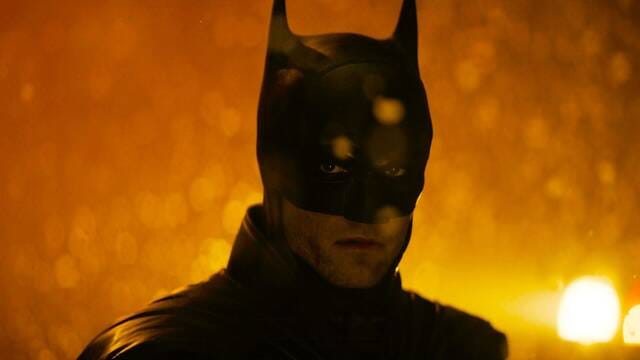
Its extension into television with The Penguin proved something the films had never tested: that Gotham works better as an ecosystem than as a backdrop. The sequel, meanwhile, has become the franchise's longest delay — pushed from 2025 to 2026 to 2027 and now to February 2028, filed under the DC Elseworlds label and deliberately walled off from James Gunn's main continuity.
That main continuity has its own Batman waiting: The Brave and the Bold, with Andy Muschietti directing and Christina Hodson writing, built around Damian Wayne and adapted from Grant Morrison's run. Gunn has publicly denied that the project is on hold, but it still has no release date, no cast, and no realistic path to theatres before the Reeves sequel clears the calendar.
What the Page Still Has That the Screen Has Never Attempted
Here is the actual gap. Not villains — most of the rogues have been filmed. Structures.
The family as an argument. On screen, Robin is a cameo or a punchline. On the page, the Bat-Family is the central moral problem of the character: whether Batman's method can be transmitted to another person, and what it does to that person when it is. Dick Grayson's independence, Jason Todd's death and return, Tim Drake's deductive competence, Cassandra Cain's body-reading, Damian Wayne's inherited violence — that's sixty years of the mythos asking whether Bruce is a mentor or a recruiter. No film has ever asked it.
Oracle. After The Killing Joke, Barbara Gordon was rewritten as the informational infrastructure of the entire DC universe — arguably its most competent operator, and one of mainstream comics' most important disabled characters. Live-action has never used her. The completed 2022 Batgirl film was shelved before release.
Detection as genre. Even Reeves's film resolves through confession and proximity rather than deduction. The comics have run locked-room mysteries, forensic procedurals and long-form conspiracies — Hush, The Long Halloween, Gotham Central — where the reader can solve alongside Batman. Cinema keeps promising the World's Greatest Detective and delivering a very good stalker.
Scale. Morrison's Batman Incorporated turned the cowl into a franchise model: Batmen in Tokyo, Paris, Buenos Aires, funded openly by Wayne. It's the single most cinematic idea in modern Batman comics and no film has come within a mile of it.
Strangeness. The Batman of Zur-En-Arrh began in 1958 as an alien on another planet and was rewired decades later into a backup personality Bruce constructed in advance, in case someone broke his mind. The page lets Batman be metaphysical, science-fictional, absurd. Film has spent forty years terrified of exactly that register.
The Court of Owls. Scott Snyder and Greg Capullo's 2011 arc — the revelation that Gotham was never Bruce's city to know — has reached animation, television and games, but never a feature film, despite being the best structural Batman story of the last twenty-five years.
Succession. Knightfall broke him. Battle for the Cowl replaced him. Batman Beyond outlived him. The page allows Bruce Wayne to lose, to be superseded, to grow old and be wrong about it. Film always resets to the alley, the pearls, the bat through the window.
The Most Successful Batman Right Now Owns Nothing
The commercial case makes the point better than the critical one. Scott Snyder and Nick Dragotta's Absolute Batman — a Bruce Wayne with no fortune, no manor, no cave, working as a civil engineer — sold over 500,000 copies of a single issue in 2026, tying Matt Fraction and Jorge Jiménez's Batman #1 (2025) as the best-selling Batman comic ever published. The line had moved millions of copies by the end of its first year.
The most successful Batman of the decade, in other words, is the one who cannot buy his way out of anything — a reinvention far more radical than any casting change, executed on the page while the films spent six years relitigating release dates.
Two Worlds, One Cowl
Batman Day 2026 is built around Batman of Two Worlds, a single one-shot pairing a mainline Batman story by Fraction and Javi Fernández with an Absolute Batman story by Snyder and Nick Derington — two incompatible versions of the same man, printed side by side, with no attempt to reconcile them.
That is precisely the move cinema cannot make. A film has to choose: this is Batman, this is the Batman, for the next eight years. The page never chose. West's deputized civil servant, Keaton's silhouette, Bale's thesis, Pattinson's insomniac investigator and Snyder's broke engineer are all true at the same time, in the same shop, on the same shelf.
Sixty years of actors have been arguing about which Batman is the real one. The comics answered that question in 1958 and have never bothered to revisit it: all of them, simultaneously, forever.
Batman, the Bat-emblem and all related characters and elements are trademarks of and © DC Comics. Film stills © Warner Bros. Pictures. All imagery is reproduced here for the purposes of criticism and review.
Further reading: DC's official Batman Day 2026 hub · Batman #12 becoming the best-selling comic in America and the Bad Seeds Gotham event are covered in more depth on Kynari.
Batman News · AIPT Comics on Batman of Two Worlds · Screen Rant on Absolute Batman's sales record · DC Database: Bruce Wayne