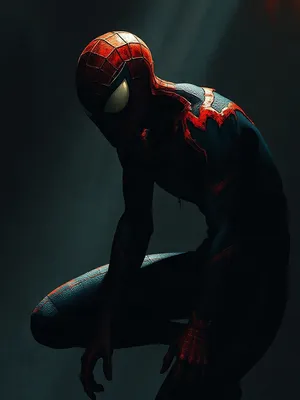
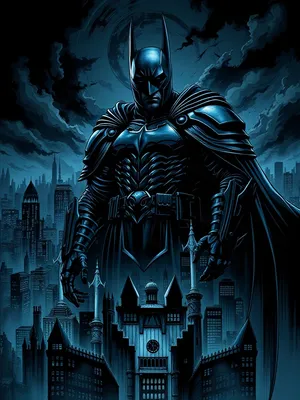
When Batman #12 topped the August 2026 direct market sales chart — outselling every Absolute title, every issue of Amazing Spider-Man, and every event comic currently shipping — the discourse treated it as a surprise. It wasn't. It was the logical conclusion of a calculated risk that DC made roughly a year ago, when it handed its most commercially essential character to a writer who had never written him before and an artist who had spent years proving he could carry the weight of a cape-and-cowl book on pure visual authority alone. The number one spot isn't the story. The story is what got them there.
The Auteur Bet
DC's decision to install Matt Fraction on Batman was not a conventional one. Fraction is a writer whose best work — Hawkeye, Sex Criminals, Immortal Iron Fist — operates through oblique angles, through rhythm and negative space, through a studied refusal to deliver genre satisfaction on schedule. He is not a writer who gives you what Batman usually gives you: escalating threat, ideological confrontation with a mirrored villain, a city saved by competence and will. He is a writer who makes you feel the cost of being a person before he lets you feel the thrill of being a hero. Handing him the character was, in institutional terms, a provocation.
Jorge Jimenez was the steadying variable. His work on Batman during the Tom King and then Joshua Williamson eras had already established him as the definitive visual interpreter of Gotham's current grammar — the impossibly tall skyline, the noir chiaroscuro rendered in ink that breathes, the fight choreography that reads as both balletic and brutal. He was the continuity. Fraction was the disruption. Together, they created something the direct market rarely produces: a flagship book that feels authored rather than assembled.
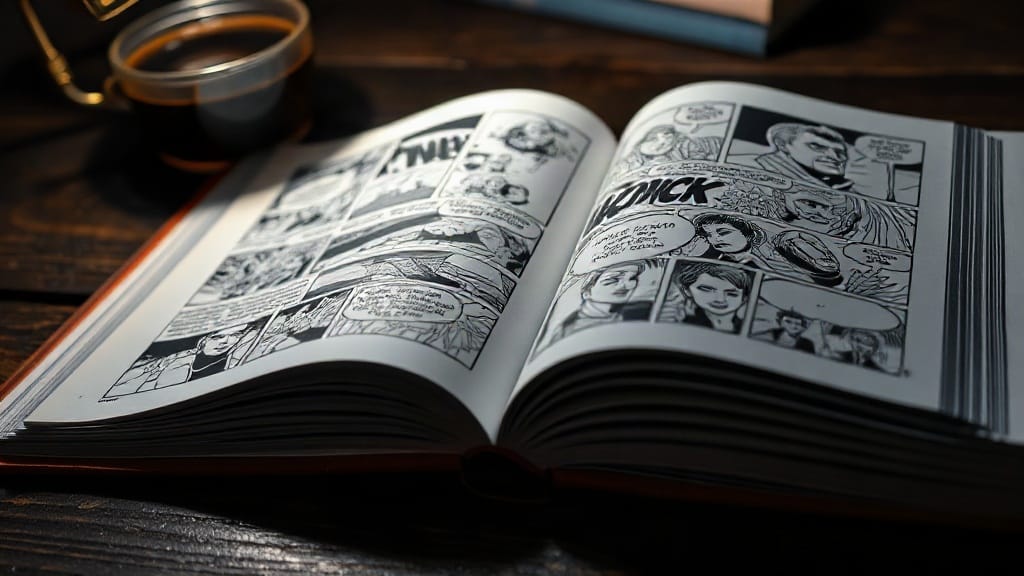
What the Run Has Quietly Become
Twelve issues in, the Fraction-Jimenez Batman has accumulated a thematic coherence that reads almost like a novel in installments. The Bruce Wayne of this run is not primarily a detective or a warrior. He is a man engaged in a slow, losing argument with his own mythology — aware that Gotham projects onto him, aware that the projection has become load-bearing infrastructure for a city that cannot afford to believe in its own institutions. Fraction has found a Bruce Wayne who understands, with real exhaustion, that he is a symbol operating past its warranty.
That is not a new idea for Batman comics. What is new is the register in which Fraction sustains it. There is no ironic distance, no deconstruction-for-its-own-sake. The book is genuinely tender about the character even as it refuses him the consolations the character usually receives. When Jimenez draws Bruce alone — and this run gives him unusual amounts of alone — the pages carry a weight that has nothing to do with action. The draftsmanship is doing emotional work that the script trusts it to do without underlining.
What the Sales Chart Actually Means
August 2026's numbers are significant not simply because Batman #12 won its month — Batman wins most months — but because of the margin and the context. The Absolute line, DC's own prestige-tier relaunch strategy, has been performing respectably. Marvel's Amazing Spider-Man, under a writer change that generated considerable attention, had momentum. There are two active crossover events shipping from both publishers. Batman #12 beat all of it, comfortably, on the strength of a single-issue story that functioned as a bottle episode — one location, one conversation, no guest stars, no cliffhanger engineered to drive next-issue orders.
That last detail is the one worth holding. The direct market's commercial logic runs on anticipation — on variant covers, on death-and-return plotting, on the engineered compulsion of decompressed serialization. A bottle episode that outsells event comics is not playing by those rules. It is suggesting, uncomfortably for the industry's received wisdom, that readers will show up in volume for craft alone when they have been given consistent reasons to trust a creative team.
The Larger Implication
DC's gamble was not simply on Fraction or on Jimenez. It was on the proposition that an auteur-driven approach to a flagship title — the kind of approach that defines the best runs in comics history, from Frank Miller's Daredevil to Grant Morrison's Batman to Tom King's own tenure — is not a niche proposition but a commercial one. August 2026's chart is DC's evidence that the bet is paying off.
The harder question is what happens next. Auteur runs end. Creative teams move on, or burn out, or are pulled by editorial necessity. What the Fraction-Jimenez run is building — in reader trust, in critical attention, in the demonstration that Batman can sustain literary ambition without sacrificing commercial primacy — is an argument that will outlast the run itself. Whether DC internalizes that argument, or treats the sales spike as a happy accident, will determine whether this moment reshapes how the Big Two handle their flagship titles or simply becomes a data point they cite when it's convenient.
Right now, Batman #12 is the best-selling comic in America. More importantly, it deserves to be — and Kynari's look at the Bad Seeds Gotham event traces where Fraction takes that momentum next.