No announcement. No trailer. No Nintendo Direct. Just a hashtag, a flood of squid memes, and a corner of the internet completely overtaken by ink. #AsaltoSplatoon — loosely translating to "Splatoon Raid" — became the most sustained trending topic of the week, proving once again that the franchise Nintendo built around teenage cephalopods operates on a cultural frequency entirely its own.
A Raid With No General
What makes #AsaltoSplatoon structurally interesting is the absence of a single origin point. Unlike most coordinated internet events — which trace back to a streamer, a Reddit thread, or a corporate stunt — this one emerged from the distributed chaos of fan communities across Twitter, TikTok, and Discord simultaneously. Players began flooding social feeds with Splatoon 3 (Splatoon 3, 2022) fan art, match clips, Splatfest nostalgia, and increasingly unhinged Inkling memes. The volume didn't spike — it accumulated, hour after hour, like tide coming in.
That consistency is rare. Viral moments typically burn fast. #AsaltoSplatoon didn't explode; it persisted, which is a fundamentally different and more difficult thing to do in an attention economy built to destroy sustained focus.
Why Splatoon Carries This Weight
The franchise has always occupied an unusual position in Nintendo's ecosystem. It launched in 2015 with a Wii U player base that was, by definition, a cult — small, devoted, disproportionately online. That cult transferred intact to the Switch era and compounded. By the time Splatoon 3 broke Japanese sales records in its launch week, the community had spent years developing its own visual language, its own in-jokes, its own relationship with Nintendo's notoriously opaque competitive infrastructure.
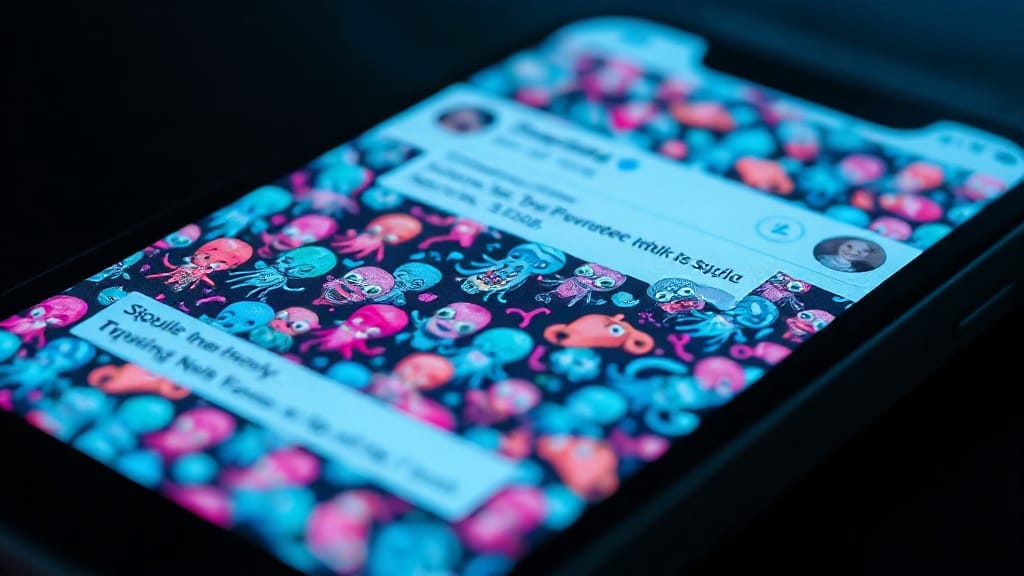
That accumulated culture is precisely what #AsaltoSplatoon tapped into. The memes weren't generic gaming humor repackaged with squid imagery — they were dense with internal reference, legible primarily to people who have logged serious hours in Turf War or Anarchy Battles. The event functioned as a community census as much as a viral moment: a way of locating each other at scale.
The Meme Ecosystem in Detail
Three distinct currents ran through the hashtag. The first was pure aesthetic — fan art ranging from polished illustrations to deliberately crude MS Paint tributes, all united by the franchise's signature neon palette. The second was competitive grievance: highlight reels of missed shots, catastrophic final seconds, and teammates making inexplicable decisions, framed with the specific resigned humor of someone who has lost too many ranked matches to be angry anymore. The third, and most interesting, was meta-commentary — players riffing on the act of raiding itself, turning #AsaltoSplatoon into a recursive joke about the nature of online mob enthusiasm.
That third layer is what separates a genuinely sophisticated fan community from a casual one. The ability to simultaneously participate in a cultural event and satirize one's own participation in it requires a kind of ironic fluency that takes years to develop.
What Nintendo Didn't Do
Nintendo's official accounts watched. They did not engage. This is, paradoxically, the correct move — the company has learned, across decades of community management, that inserting corporate voice into organic fan moments tends to puncture them. The brand's silence during #AsaltoSplatoon wasn't indifference; it was discipline. The community didn't need Nintendo to validate the event. It was already self-sustaining.
That dynamic — a company popular enough that its fans generate cultural events without corporate scaffolding — is the rarest form of franchise equity. It cannot be manufactured. It accrues slowly, through years of actually good games and the social infrastructure that forms around them.
Consistency as the Real Metric
#AsaltoSplatoon will not be remembered as a turning point. It won't generate a think-piece cycle. It won't move sales numbers in any measurable way. What it demonstrates, quietly and without ceremony, is that Splatoon has built something durable: a fanbase capable of generating its own gravity, pulling the rest of the internet briefly into its orbit on a random week, for no particular reason, simply because it felt like the moment to do it.
In an industry obsessed with launches and announcements, that kind of latent energy is the thing most publishers spend millions trying to manufacture and almost never achieve.
 Official trailer