Super Mario Bros. was released for the Family Computer in Japan on September 13, 1985. Read that plainly and it sounds like a minor trivia date. Read it against what had happened in North America two years earlier — a market crash so severe that Atari famously buried unsold cartridges in a New Mexico landfill, and major retailers had simply stopped stocking video games as a category worth the shelf space — and it becomes something closer to a rescue mission that happened to also be a masterpiece.
Nintendo bundled the game with the Nintendo Entertainment System for its 1985 North American test launch and 1986 wide release, betting an entire industry's American comeback on a single cartridge. The bet paid off so completely that "does Nintendo still work" stopped being a fair question to ask about the games industry for the next four decades.
What a Side-Scroller Wasn't, Before This One
The technical leap is easy to understate now, because everything since has been built on top of it. Shigeru Miyamoto and Takashi Tezuka weren't inventing side-scrolling movement from nothing — earlier games had experimented with horizontal scrolling — but Super Mario Bros. was the first to make that movement feel like physics rather than a mechanism. Mario's jump has momentum and arc; his run has acceleration and a top speed that rewards a running start into a jump; blocks react differently depending on whether Mario is small or powered-up. None of that was necessary to make a functioning platformer. All of it was necessary to make one that still feels responsive to a person picking up a controller for the first time in 2026, four decades after the fact.
The level design built on top of that physics engine did something equally influential: it taught the mechanics without ever stopping the game to explain them. World 1-1's opening stretch is still cited in game design courses as close to a perfect tutorial — a Goomba placed exactly where a new player will predictably run into it once, a question-mark block positioned so curiosity gets rewarded, a gap that requires the running jump the level just quietly demonstrated was possible. Miyamoto didn't invent the concept of teaching through level geometry rather than text boxes, but Super Mario Bros. is the version so many later designers learned it from directly.
The Business Case Nobody Wanted to Bet On
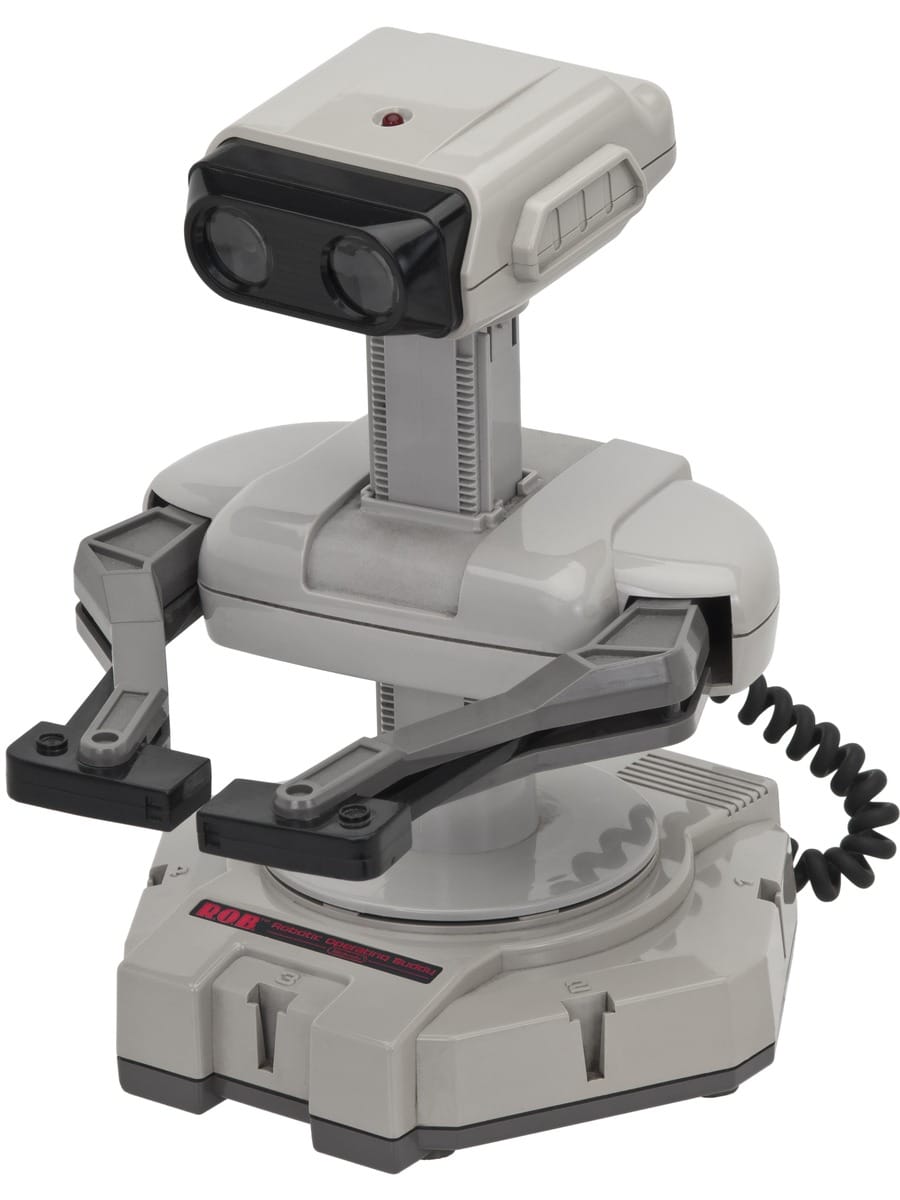
It's worth remembering how unlikely the American side of this story was at the time. Retailers who had just watched the games category implode were not eager to reorder shelf space for another console, and Nintendo's own solution — repackaging the NES as something closer to a toy, complete with R.O.B. the robot as a Trojan horse to get it classified as a novelty rather than a video game system — reads today like a company that fully understood it was selling into a market that no longer trusted the category. Super Mario Bros. was the payload that justified the disguise. Once people were playing it, the question of whether "video games" were a viable retail category again answered itself.
The sales numbers that followed are the kind of figures that stop being useful as soon as they're stated, because there's no real comparison point: more than 40 million copies sold across its original release, a number that held for decades as the best-selling video game in history before mobile-era titles with entirely different distribution models eventually passed it. It did that as a single-cartridge, single-console release in an era with no digital storefronts, no day-one patches, and no marketing budget resembling what a tentpole release commands today.
The Soundtrack Nobody Asked to Hum for Forty Years
Koji Kondo's score deserves its own line in this anniversary, if only because it solved a problem the game itself created. Nintendo's sound chip could only play a handful of channels at once, and Kondo was writing music that had to loop indefinitely without becoming grating during a level a player might spend several minutes stuck on. The overworld theme he wrote to fit inside those constraints has since been recorded by full orchestras, sampled in hip-hop tracks, and is — by most informal reckonings — one of the most widely recognized pieces of music composed in the twentieth century, video game or otherwise. Kondo wrote it to survive repetition inside a cartridge with almost no memory to spare. Forty-one years of orchestral covers later, it clearly survived the transition to rooms with considerably more memory to spare.
The Franchise That Still Hasn't Stopped Paying That Debt Forward
Everything Nintendo has built since traces back to the confidence this specific cartridge purchased. The pattern repeats across the company's other core franchises — Kynari has made the same argument about Metroid's fortieth anniversary and about how Zelda's fortieth was staged as a platform statement rather than simple nostalgia: Nintendo's mid-'80s output wasn't just a handful of good games, it was the foundational grammar an entire console manufacturer still speaks in, four decades and several hardware generations later. Super Mario Bros. is the one that had to work first, because without it there was no install base left for the other franchises to be built on top of.
That's also what makes the game an odd fit for straightforward nostalgia. Kynari recently made the case that gaming has shifted from ownership to access — a library you rent rather than a cartridge you keep. Super Mario Bros. sits on the other side of that shift as the clearest possible counterexample: a single physical object, bought once, that a person could still plug into a working console in 2026 and have it run exactly as it did in 1985. Forty-one years on, that's not nostalgia. That's just the cartridge still doing its job.