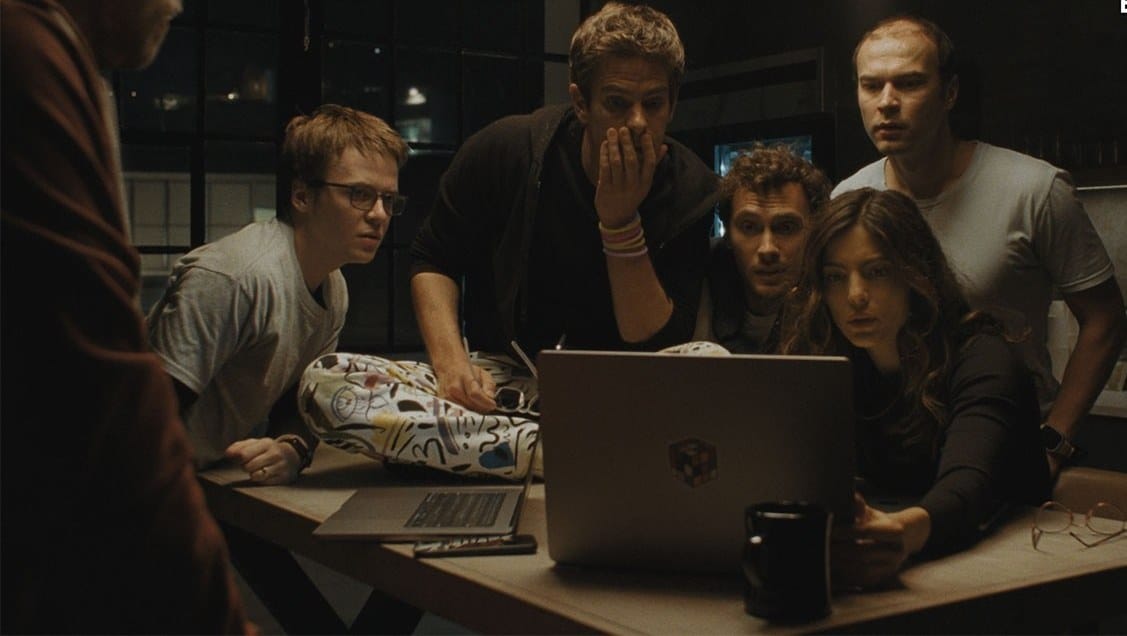
Luca Guadagnino's Artificial had its world premiere at the New York Film Festival on Monday, October 5, and arrived carrying a story almost as pointed as the one on screen. The film is about OpenAI. Specifically, it is about the five days in November 2023 when the company's board fired its CEO, Sam Altman, and then took him back. It was developed and shot at Amazon MGM Studios. And Amazon, a company with its own enormous stake in the AI race, decided not to release it.
 Official trailer
That sequence is the real story of Artificial's first week in public, and it says more about Hollywood's relationship with Silicon Valley than any line of dialogue could.
What the film is
Artificial is a comedy-drama written by Simon Rich, who pitched the idea to Amazon in early 2024 after a conversation at a wedding with an OpenAI researcher. Andrew Garfield plays Altman. Yura Borisov, the breakout of Anora, plays Ilya Sutskever, the co-founder and chief scientist who led the board's move against him. Monica Barbaro plays Mira Murati, Cooper Hoffman plays Greg Brockman, Ike Barinholtz plays Elon Musk and Mark Rylance plays Geoffrey Hinton. Damon Albarn wrote the score. The film runs 140 minutes.
Early reactions out of New York have described it as a biting satire, savage and frightening in roughly equal measure. Deadline's review called Garfield chilling as Altman and the film an origin story that should make its audience very afraid.
Why Amazon walked away
The departure did not happen in a rush before the premiere. According to reporting from the summer, Amazon MGM decided the finished film was not one it wanted to release, and it was shopped to other distributors in late spring. Netflix, A24 and Focus passed. Neon, the independent distributor with two Best Picture wins to its credit, took it and set a Christmas Day release in the United States, with a UK release following in January.
No company has said publicly why Amazon let it go. But the context is hard to ignore. Amazon is not a neutral studio in this story; it is a technology company with enormous financial stakes of its own in artificial intelligence. A film that portrays the leadership of the AI industry as reckless, vain and frightening is an awkward product for one of the companies building that industry to put its name on. The same logic applies, to a lesser degree, to every streamer that now runs its business on recommendation algorithms and is experimenting with generative tools.
That is the shift worth noting. For most of Hollywood's history, studios fought over provocative films because controversy sold tickets. In 2026, the largest buyers of films are also technology platforms, and a film about technology can be a conflict of interest before it is a marketing opportunity.
Guadagnino's strangest subject yet
Guadagnino has spent his career on desire, bodies and the people who want too much: Call Me by Your Name (2017), Suspiria (2018), Bones and All (2022), Challengers (2024). On paper, a boardroom drama about a software company is the least likely material in his filmography. In practice, it fits. The OpenAI saga was a story of ambition, loyalty, betrayal and a small group of people convinced they were holding the future in their hands, and those are the engines of his best work.
It also lands in a crowded season. Artificial arrives alongside Alex Gibney's documentary Musk and Aaron Sorkin's The Social Reckoning, a film about the Facebook whistleblower Frances Haugen. Hollywood has decided, all at once, that the people who run the internet are its most compelling villains. As this weekend's box office showed, audiences are not yet convinced they want to pay to watch them.
What to watch for
Neon has until Christmas to turn a film one studio did not want into an awards-season event. The company has done this before, and it has a cast and a director built for it. The open question is the audience. The Social Network worked in 2010 because Facebook was still a mystery. Years of daily headlines about AI mean that Artificial is dramatizing a story everyone has an opinion on. Its bet is that the private version, the one that happened in rooms no one saw, is still worth the price of a ticket.