The reveal had no title. No key visual. No cast, no studio confirmation, no premiere window. What Aniplex delivered on October 15 was, in the strictest sense, an announcement of an announcement — a YouTube timestamp pinned to October 18 at 21:00 JST, carrying nothing but a teaser that the industry and fandom immediately began treating as if it were the announcement itself. By the time Sunday evening arrived, the pre-reveal had already done most of the work that a conventional reveal campaign takes weeks to accomplish.
That inversion is worth examining carefully, because it is not an accident. It is a deliberate structural choice, and it reflects something real about how attention moves through the anime market in 2026.
The Pre-Announcement as Product
Aniplex's October 15 move was simple on its surface: a headline confirming that a new TV anime announcement would follow on October 18. No title disclosed. Nothing substantial to evaluate. In an industry that typically front-loads disclosure — staff, studio, source material, premiere season — this represented a deliberate reduction of signal. And that reduction, paradoxically, amplified interest rather than suppressing it.
Speculation filled the vacuum immediately. Trending conversations on Japanese social media pointed toward a TRIGGER-affiliated director and a teaser aesthetic suggestive of a Kirara-style slice-of-life project, with discussion centering on an android girl named Kurumi navigating an alternative daily life alongside friends — a premise that sits tonally far from what most viewers associate with that director's previous work, which generated a secondary conversation about creative range and expectation mismatch. That conversation had been running for nearly 72 hours before a single official image was released.
This is the promotional trap that Aniplex set and that fandom walked into willingly: a pre-announcement is most effective not when it withholds information randomly, but when the withheld information is sufficiently legible from available fragments to allow the audience to construct a provisional version of the project themselves. The gap between what is suspected and what will be confirmed is where anticipation lives. Aniplex simply moved into that gap earlier than usual and let it run longer.
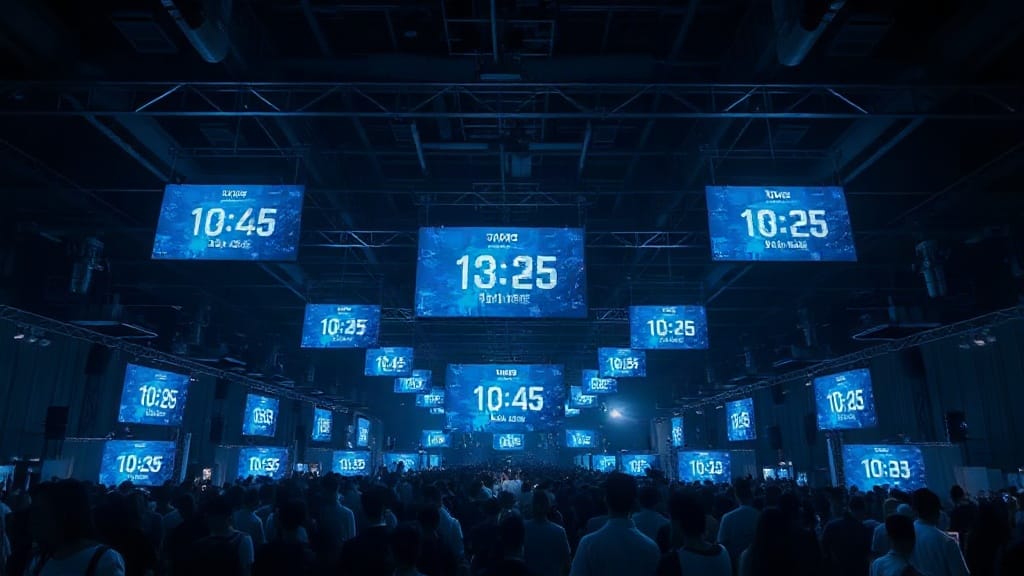
The model is not entirely new. Teaser campaigns in film — particularly in Hollywood franchise culture — have long operated by releasing information in staged waves designed to sustain conversation between beats. What is relatively new in anime is the confidence to announce that an announcement is coming, without defensive supplementary material to justify the tease. Two days prior, TOHO animation ran a near-identical move, teasing its own new TV anime announcement on October 16. The proximity suggests either coincidence or an industry-wide shift in how major producers are approaching the cold-open reveal as a format.
Why It Works Harder in a Sequel Season
Context matters here, and the context is unusually favorable to an unnamed original. Fall 2026 has been described as a "historically rich season", and the description earns its weight: The Apothecary Diaries Season 3, Tokyo Revengers: War of the Three Titans Arc, Tougen Anki: Nikko & Kegon Falls Arc, a Ranma ½ revival, Magic Knight Rayearth, and both Black Clover Season 2 — returning after more than five years away — and Cyberpunk: Edgerunners 2 are all competing for the same weekly attention. Individually, each of these would carry a weaker season. Having all of them in the same twelve-week window is genuinely unusual.
Where summer 2026 leaned on fresh adaptations, fall 2026 is almost entirely continuations — and that density creates a particular problem for anything debuting without an existing audience. Sequels arrive with built-in conversation. They have a fandom already warmed up and ready to post. A new property, however well produced, has to generate its first viewers from scratch, competing for the cognitive bandwidth of an audience already committed to shows they've followed for multiple seasons. In that environment, a nameless tease that generates 72 hours of organic speculation is not a stunt — it is a survival mechanism.
The alternative, dropping a fully-formed reveal into a news cycle already saturated with Black Clover character visuals and BLEACH: Thousand-Year Blood War final episode previews, carries a real risk of compression. The information lands, gets catalogued, and disappears into the queue. The unnamed tease, by contrast, cannot be catalogued. It can only be discussed.
What Anticipation Actually Measures
The harder question is what trending as an unnamed project actually converts into. Attention before a reveal and attention after a reveal are not the same currency. Fandom conversations built on speculation can collapse the moment a full reveal arrives and the project turns out to be less interesting than the fan-constructed version. The gap between the imagined project and the actual one can produce disappointment even when the actual project is good — simply because it is definite rather than possible.

This is the liability embedded in Aniplex's approach. Pre-announcement hype sets a ceiling of expectation that the subsequent content must at least reach. If the reveal on October 18 at 21:00 JST delivered something that matched the scale of conversation surrounding it, the campaign functions as a case study in controlled ambiguity. If it delivered something that felt proportionally smaller — a mid-budget slice-of-life with modest streaming ambitions — then the tease potentially worked against the project by priming an audience for a different register of announcement.
It is also worth noting what this model requires to function: an audience that trusts the brand behind the tease enough to speculate with investment. Not every producer can drop a content-free announcement and generate trending engagement. Aniplex's catalog — running through franchises like Fate, Sword Art Online, Demon Slayer: Kimetsu no Yaiba, and more recently the distributed success of the CloverWorks-produced Grotesqqque (2026) — provides exactly the institutional credibility that makes the absence of information feel like restraint rather than emptiness. This is brand equity functioning as a substitute for disclosed content, and it is not easily transferable.
The Reveal and What It Signals
Whether the October 18 announcement exceeded, matched, or fell below the hype it generated is in some ways secondary to what the move itself reveals about Aniplex's read of the current market. The studio is operating on the assumption that the pre-reveal cycle — teaser, speculation window, payoff — is valuable enough to be built into a campaign from the ground up, not as a side effect of delayed information but as an intentional structural phase.
That assumption reflects a media environment in which attention is scarce, announcement noise is high, and the projects most likely to survive initial crowding are those that have already established a narrative presence before their first image drops. As Kynari has previously examined, Fall 2026 is a season that in several respects began before it began — anticipation preceding content across multiple franchises. The Aniplex tease fits that pattern precisely, and it extends it: here is a project that entered cultural circulation without a name, a face, or a premise, and still managed to trend.
In a season defined almost entirely by known quantities — sequels carrying established audiences, revivals banking on nostalgia — an unnamed original that generates conversation on the basis of a timestamp and a tease is doing something structurally different. Fall 2026 is built on the familiar; Aniplex's unnamed project arrived as a gap in that familiarity, and the gap, for a few days, was the story.
Whether the story holds after the reveal depends entirely on what the reveal contained. But the 72-hour window in which nothing was officially known may turn out to have been the most effective part of the campaign regardless.