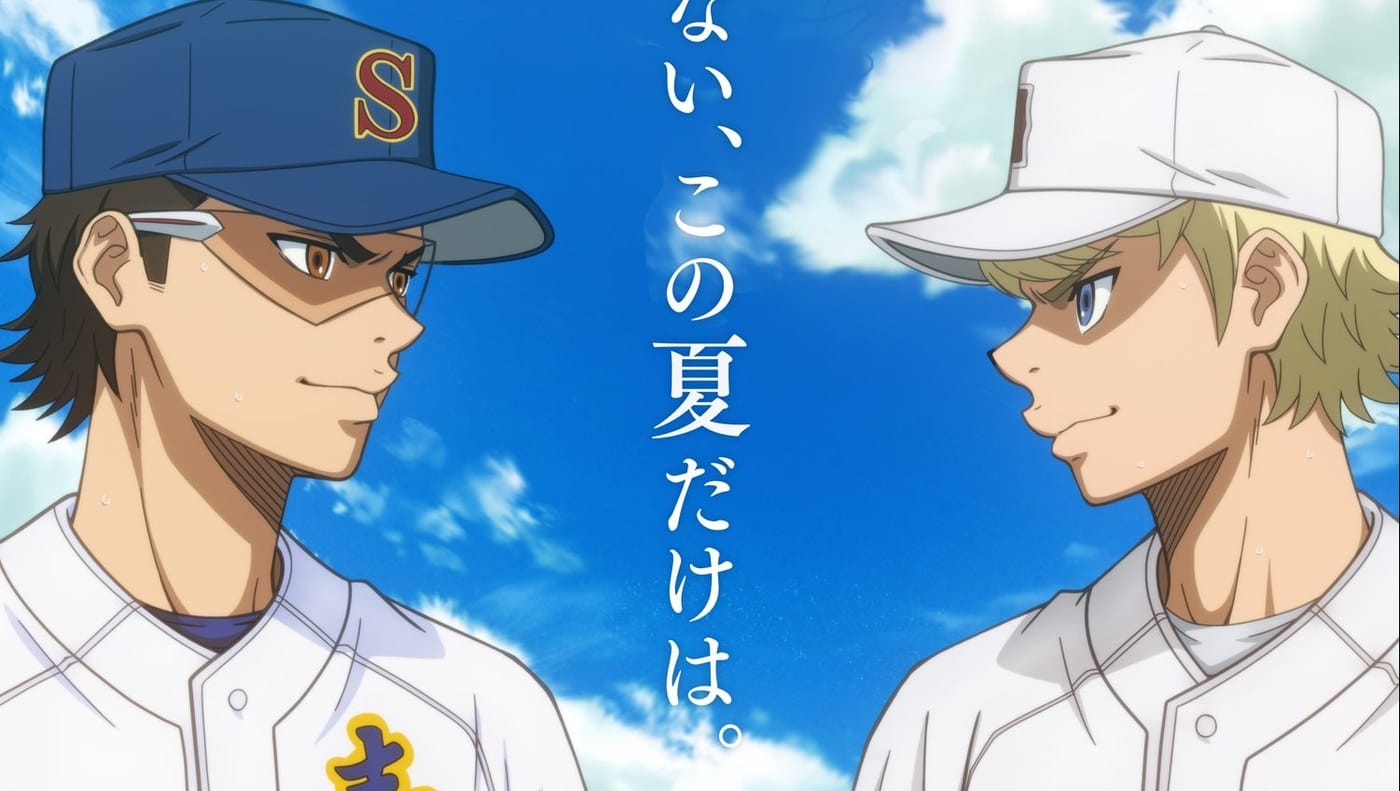
Most of the Fall 2026 anime season is built on returns, and Ace of the Diamond act II is one of the quietest of them. Its second season resumes on Crunchyroll this weekend, on October 11, with the second half of a run that began in April. There is no new studio drama to report, no streaming-war acquisition, no viral trailer. There is a baseball game. Specifically, there is Seido against Inashiro, and for anyone who has followed this series since 2013, that matchup is the whole story.
Where the season picks up
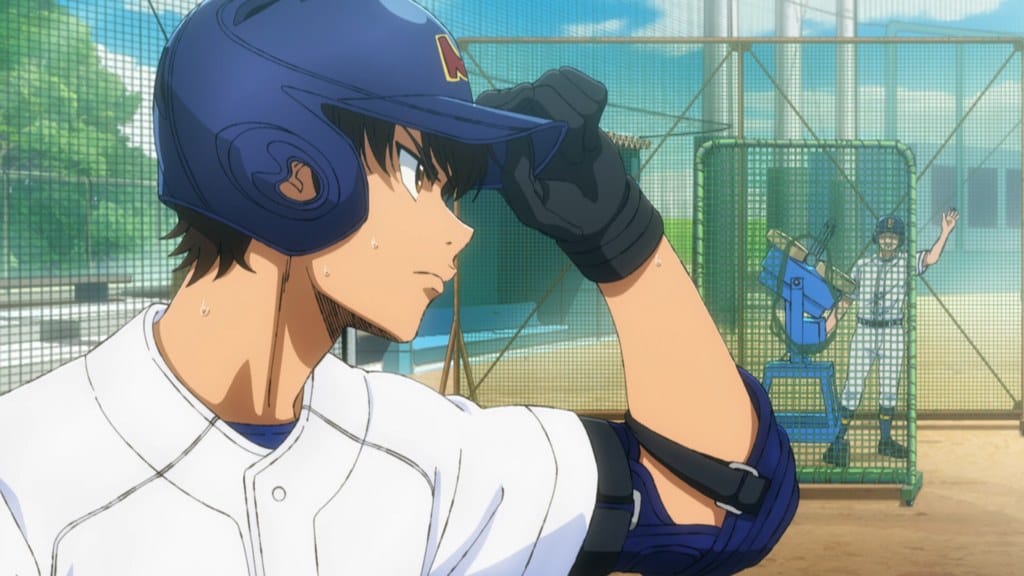
The first cour of the second season aired in Japan from April 5 to June 28, 2026, thirteen episodes on TV Tokyo and its network. The second cour, which Anime Corner reports centers on the continuation of the Seido versus Inashiro match, arrives with GLAY on the opening theme and OxT on the ending, both returning artists for the franchise. Hideaki Oba directs; Ryota Osaka is back as the loud, left-handed pitcher Eijun Sawamura, and Takahiro Sakurai as the catcher Kazuya Miyuki.
The production line-up is the one real change. The first two anime runs were made by Madhouse, with Production I.G on the original series. This season is animated by OLM, and a studio change in a series this long is always a risk: baseball anime depends on pitching sequences that stay readable, on the tension of a count, on a camera that knows where the ball is. The second half is where that risk gets tested at full pressure.
Thirteen years of one rivalry
Yuji Terajima's manga ran in Kodansha's Weekly Shonen Magazine from 2006 to 2015, and its sequel, act II, from 2015 to 2022. The anime has been chasing it ever since. The original series ran from October 2013 to March 2016 for 126 episodes; act II followed from April 2019 to March 2020 for 52 more. Then the adaptation stopped for six years, and the second season was not announced until May 2024.
Across all of that, Inashiro is the constant. It is the school whose ace, Mei Narumiya, ended Seido's summer in the first series, the defeat that gave the entire franchise its emotional engine. Every season since has been, at some level, about whether Seido can get back to that stage and whether Sawamura can become the kind of pitcher who could stand on that mound. A rematch with Inashiro is not one more game in the bracket. It is the payoff the anime has been deferring for more than a decade of real time.
Why sports anime ages differently
Sports anime has a structure no other genre shares: the climax is fixed by the calendar of a fictional tournament, and adaptations can only move as fast as the source material and the budget allow. That makes the genre unusually patient, and unusually vulnerable to gaps. Six years between seasons is long enough for an audience to grow up. The viewers who watched Sawamura's first summer in 2013 as teenagers are now in their thirties.
The genre's international profile has also shifted in that time. Haikyu!! and Blue Lock turned volleyball and football into global streaming hits, and both proved that a sports series can travel if it is built around rivalry and character rather than rules. Baseball has always been the harder sell outside Japan and the Americas, which is part of why Ace of the Diamond remains a cult favorite abroad rather than a phenomenon. Its strength is also its limit: it is unapologetically about the details of pitching, the grip, the count, the catcher's read, and it asks the audience to care about them.
The sequel season's most honest sequel
We described this autumn as anime's season of sequels, and most of those returns are betting on the comfort of familiar characters. Ace of the Diamond is betting on something narrower and more demanding: that an audience will still care about a specific game whose stakes were set thirteen years ago. That is the opposite of a franchise refresh. It is a long promise being kept on schedule, however slowly that schedule moved.
It also reflects how the industry now handles mid-tier properties. Twenty years ago a series like this would have been finished in one continuous broadcast run or abandoned. Today, with global streaming money and committee financing, it can return in split cours years apart, as long as the manga has finished and the fan base is loyal. That model keeps stories alive that would otherwise have ended unresolved. It also means the anime catches up with a story whose ending readers have known since 2022, and the drama shifts from what happens to how it is staged.
What to watch for
The test for this cour is simple and very hard: can OLM make a single game, stretched across weeks, feel like the event the franchise has been building toward? Sports anime lives or dies on its big matches. If the Seido versus Inashiro arc lands, Ace of the Diamond act II will have done something few long-running adaptations manage, finishing the story it started. If it does not, the six-year wait will be the thing fans remember.