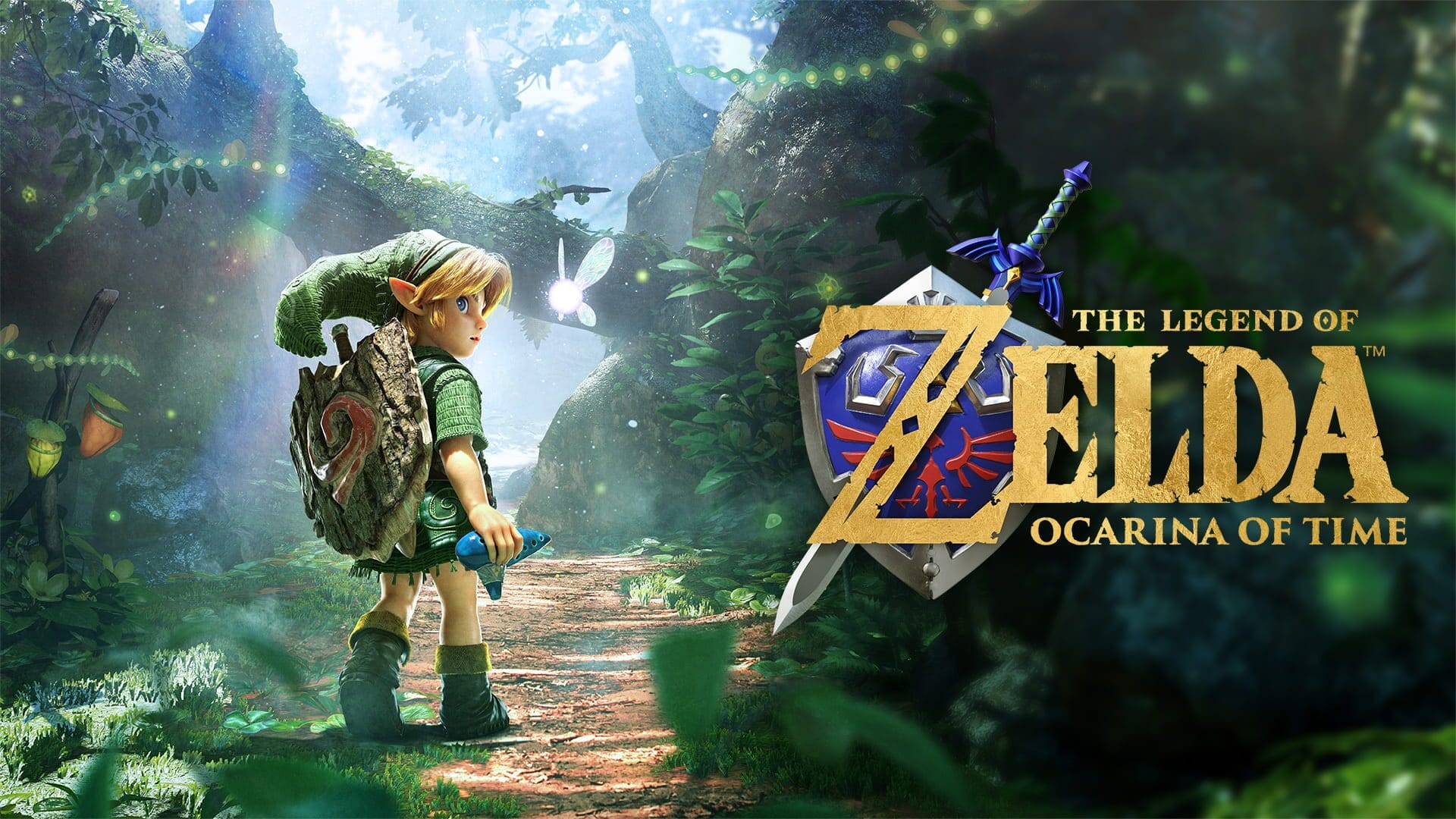
The score that the gaming press assigned to The Legend of Zelda: Ocarina of Time in 1998 was not a number so much as a declaration. A 99 on Metacritic — still the highest aggregate score the site has ever recorded for any game — does not describe quality. It describes consensus approaching unanimity. Twenty-eight years later, Nintendo has shipped a ground-up remake of that same game on Switch 2, and the press has responded with something close to the same reflex: 84 critic reviews, a 96 Metascore, zero mixed or negative notices, and 46 perfect scores from outlets including GamesRadar+, Eurogamer, VGC, and TheGamer. It is, as of today, the highest-rated game of 2026 — and one of the top 30 highest-rated games in Metacritic's history.
 Gameplay
The question the remake poses is not whether Ocarina of Time (1998) is great. That verdict was returned long ago. The question is what it means to treat fidelity as a methodology rather than a limitation — to decide, with full deliberateness, that the right way to build a 2026 game from a 1998 masterwork is to leave the architecture standing and renovate everything else.
What Nintendo Actually Built
Nintendo's official feature list for the Switch 2 remake is worth cataloguing precisely because of what it includes and what it pointedly does not. On the addition side: overhauled visuals rebuilt from scratch, fully voiced cutscenes with expanded character dialogue, a symphonic orchestral score replacing the original's MIDI arrangements, free manual jumping and a dedicated dash button, gyro aiming, a right-stick camera, a Threads of Time objective tracker, and a Hall of Fallen Foes gallery. The original's signature mechanic — playing songs on the ocarina to manipulate the world — has been extended to the physical realm: players can hum or perform melodies on a real instrument into the Switch 2's built-in microphone, and the game responds in kind. A companion app, Zelda Notes, adds a virtual ocarina, a gossip-stone hint system, and over 2,000 quiz questions about the lore. The Water Temple — the dungeon that became a cultural shorthand for punishing, poorly communicated design — has been revised again, following its prior streamlining for Ocarina of Time 3D (2011).
What Nintendo did not do: change the world's layout, restructure the story, rewrite the central mechanics of Z-targeting and context-sensitive interaction, or shift the game's fundamental pacing. The original Nintendo 64 version ran at 20 frames per second; the Switch 2 remake targets and holds 60fps in both docked and handheld modes. That alone is a transformation in feel that no screenshot communicates — Hyrule Field at 60fps, with a free jump and a camera you control, is a meaningfully different experience from the 1998 version even before a single new polygon is counted.
What the Scores Are Actually Measuring
Incredibly, the remake was given 46 perfect scores, with publications such as GamesRadar+, Eurogamer, VGC, and TheGamer awarding it 100. On OpenCritic, the remake carries a Mighty rating with a Top Critic Average of 97, and 100% of critics recommend it. These are not numbers that describe a game that divided its reviewers on ambition. They describe a game that executed its stated brief with near-total success.
The brief, though, is worth examining. Game Informer called the remake "a wonderful recreation of the 1998 experience with improvements on basically every element: visuals, storytelling, timeless design, and more," but noted that "it is, however, a remake, and the coloring, though expertly done, is firmly inside the lines." That phrase — inside the lines — is not damning. It is diagnostic. The remake knew exactly where its lines were and chose to work within them. GameSpot observed that because the remake is "so reverent, the weaker parts of the original Ocarina of Time are still the weakest parts of its remake," and that "it simply wouldn't feel like Ocarina of Time if it tossed out these moments of friction."
The new art direction is the main point of disagreement among reviewers. Critics praise the increased visual scale in some areas, but also identify inconsistencies and locations that feel less recognizably Zelda — the criticism being specific: greater detail does not always preserve the distinctiveness of the older designs. NPR's review noted that the game's ornate textures can jar with its cartoony proportions, and that while the translation is a clear upgrade most of the time, it occasionally leads into the uncanny valley. These are real critiques. They are also the critiques that accompany every serious attempt to modernize a game whose aesthetic was inseparable from its technical constraints. The N64's low-polygon approximations of faces and environments forced a kind of expressive minimalism. Replacing them with high-fidelity models restores detail and loses the ambiguity that players' imaginations filled in.
One reviewer captured the tension precisely: the remake "not only gives it a beautiful new look, but above all removes a number of period compromises and sensitively adjusts the controls and some puzzles," while simultaneously not "losing the original charm or the clearly guided adventure structure" — noting that "it is fascinating to watch how the first 3D Zelda learns from its younger followers without trying to be modern at all costs."
The Generational Argument
Remaking one of the highest-rated video games of all time is a tall order, especially when the original still holds a near-perfect 99 on Metacritic. That score came from just 22 critic reviews, compared with more than 80 for the Switch 2 remake — a statistical asymmetry that makes the two numbers difficult to compare directly but doesn't diminish either. The 96 places the remake several points ahead of other acclaimed 2026 games including Resident Evil Requiem, Phantom Blade Zero, Forza Horizon 6, and The Witcher 3 Remastered. Phantom Blade Zero's remarkable debut, which Kynari covered when S-GAME's wuxia bet paid off with an 88 Metascore, now sits several rungs below this remake on 2026's critical ladder.
The score places the remake among Metacritic's highest-rated games of all time, alongside titles such as Half-Life 2, Mass Effect 2, Elden Ring, The Elder Scrolls V: Skyrim, Metal Gear Solid 2, and other Zelda games like The Wind Waker and Tears of the Kingdom. It currently sits at number 24 on the site's Best Games of All Time list, where the original Nintendo 64 version holds the number one position as the only game to ever earn a Metacritic score of 99.
As one reviewer put it, the remake "feels designed for new players first and foremost, letting new generations see what made us fall in love with it back in the day." That framing matters. The original Ocarina of Time is effectively unplayable for a large portion of the current gaming population — not because it is bad, but because its hardware is inaccessible and its conventions have been superseded by thirty years of iteration on its own innovations. The game introduced features such as a target-lock system and context-sensitive buttons, which have since become common in 3D adventure games — which means a first-time player in 2026 will not experience those features as revolutionary because they have already absorbed them from every game that followed. The remake cannot restore that original shock of recognition. What it can do — and what 84 critics agree it does — is make Hyrule liveable again.
Fidelity as Creative Position
The discourse around game remakes tends to collapse into two positions: that faithful remakes are safe retreads, or that revisionist remakes betray the source. Nintendo's Switch 2 Ocarina of Time forces a third reading. NPR's reviewer described it as "one of the most faithful adaptations" they had seen, less so than the Demon's Souls remake but far more than the Final Fantasy VII Remake trilogy or the Resident Evil 4 remake. Fidelity at that level requires active decision-making at every juncture — every scene, every dungeon, every piece of incidental dialogue that now has a voice behind it. All characters Link meets are fully voiced during in-game cutscenes, with dialogue substantially expanded so that individual personalities come through more clearly, with producer Eiji Aonuma making a point of this with characters like Saria and Mido.
The Nintendo Switch 2 continues to build a compelling library since its launch, with titles like Minecraft Switch 2 Edition and now this remake staking out very different positions on the question of what the platform should be. The Minecraft port is about accessibility and continuity. This remake is about consecration — about taking the game that defined 3D adventure design and asking what it looks like rebuilt for hardware with no excuses.
GameSpot concluded that "Ocarina of Time is still a wonder of game design and a thrilling adventure," and that "by approaching this remake with a degree of reverence and respect for the source material, Nintendo has shown that a true masterpiece can stand the test of time." Forty-six critics said the same thing with a perfect score. The remaining thirty-eight said it with something between 80 and 95. The aggregate: a game that chose its constraints deliberately, executed them with precision, and landed at the top of a year's worth of criticism because it understood that knowing what not to change is as demanding as knowing what to change. The original Ocarina of Time will keep its 99. This remake earns its 96 on entirely its own terms.