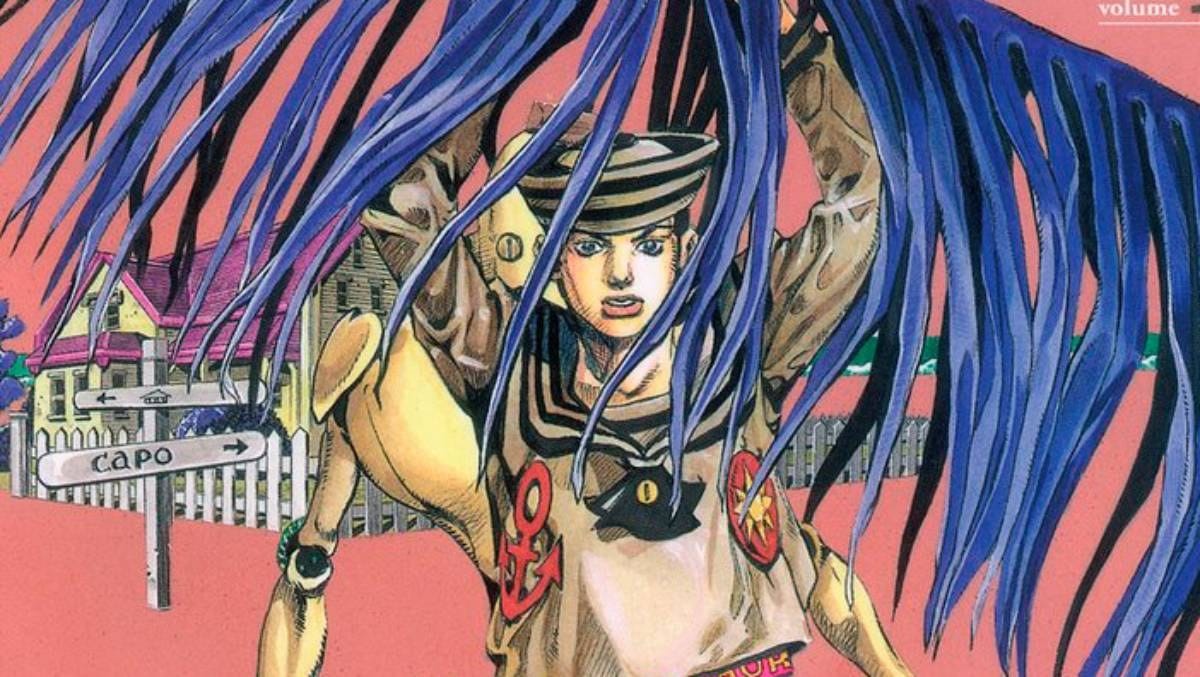
On October 16, 2026, VIZ Media announced its Summer 2027 publishing slate on social media, and buried among the box sets and josei titles was the one announcement the JoJo fandom had been waiting on for over a decade. VIZ confirmed it will release JoJo's Bizarre Adventure: Part 8 — JoJolion (2011) in a deluxe hardcover edition with color pages, beginning with Volume 1 in Summer 2027. The format mirrors what VIZ has done for the preceding parts — the same premium hardcover treatment applied to Stone Ocean and Steel Ball Run — and pricing is expected to land around $25 per volume, consistent with those releases.
The significance here is not simply that another manga got licensed. JoJolion is the last completed part of JoJo's Bizarre Adventure that had not yet received an official English print edition from VIZ. Every other concluded arc — Phantom Blood, Battle Tendency, Stardust Crusaders, Diamond is Unbreakable, Vento Aureo, Stone Ocean, and Steel Ball Run — is already being handled in North America. The ninth and current part, The JOJOLands, remains ongoing in Japan. That left JoJolion as the single completed hole in the library, the one finished arc that English-language readers could only access through scanlations or fan translations. That gap now has a closing date.
What JoJolion Actually Is
Serialized in Ultra Jump from May 19, 2011, to August 19, 2021, JoJolion ran for ten years and three months — the longest part in the franchise's history — accumulating 110 chapters across 27 volumes and over 4,700 pages. It is set in an alternate-universe version of Morioh, the same coastal Japanese town familiar from Diamond is Unbreakable, but reimagined in the aftermath of the 2011 Tōhoku earthquake and tsunami. The protagonist, Josuke Higashikata, begins the story with no memory of who he is; the entire arc is structured around that identity mystery, expanding outward into biological horror and a family conspiracy involving the fictional Locacaca fruit, a plant with extreme exchange-based healing properties.
The critical reception was substantial. JoJolion won the Grand Prize for manga at the 2013 Japan Media Arts Festival — the first time that prize was awarded to a work from an already long-established, commercially dominant series. The judges cited Araki's panel-layout experimentation and described the arc's central theme as "the celebration of humanity." That recognition arrived while the manga was barely two years into what would become a decade-long run, a rare case of institutional validation landing before the work was anywhere near finished.
The Deluxe Format and What It Signals
The English edition will be a hardcover release with color pages included, matching the physical presentation VIZ established for Steel Ball Run. English cover art has not yet been revealed — only the Japanese Volume 1 cover appeared in VIZ's announcement — and pre-orders have not opened. With 27 volumes to publish and VIZ releasing JoJo parts at a measured pace, the full English run of JoJolion will likely extend across several years. Volume 1 in Summer 2027 is a starting gun, not a finish line.
That pacing matters commercially. Each deluxe volume functions as a recurring revenue event, and the hardcover format with color pages positions the release as a collector's object rather than a casual pickup. VIZ has understood for years that the JoJo audience will pay premium prices for premium physical editions — the ongoing success of the Steel Ball Run hardcovers proved the model. Extending it to JoJolion is the logical continuation of a publishing strategy that treats the property as a prestige franchise rather than a legacy title coasting on name recognition. In this sense, the announcement has structural similarities to how publishers approach prestige-format comic releases designed to signal investment and attract both new readers and completionists.
The Anime Question That Now Cannot Be Ignored
The announcement does not exist in a vacuum. Steel Ball Run: JoJo's Bizarre Adventure, the anime adaptation of Part 7, premiered globally on Netflix on March 19, 2026, produced by David Production — the same studio behind every previous JoJo anime season. As of September 2026, the series has moved into weekly releases covering its second and third stages. The infrastructure is live. The relationship between Shueisha, David Production, and Netflix is active and producing material.
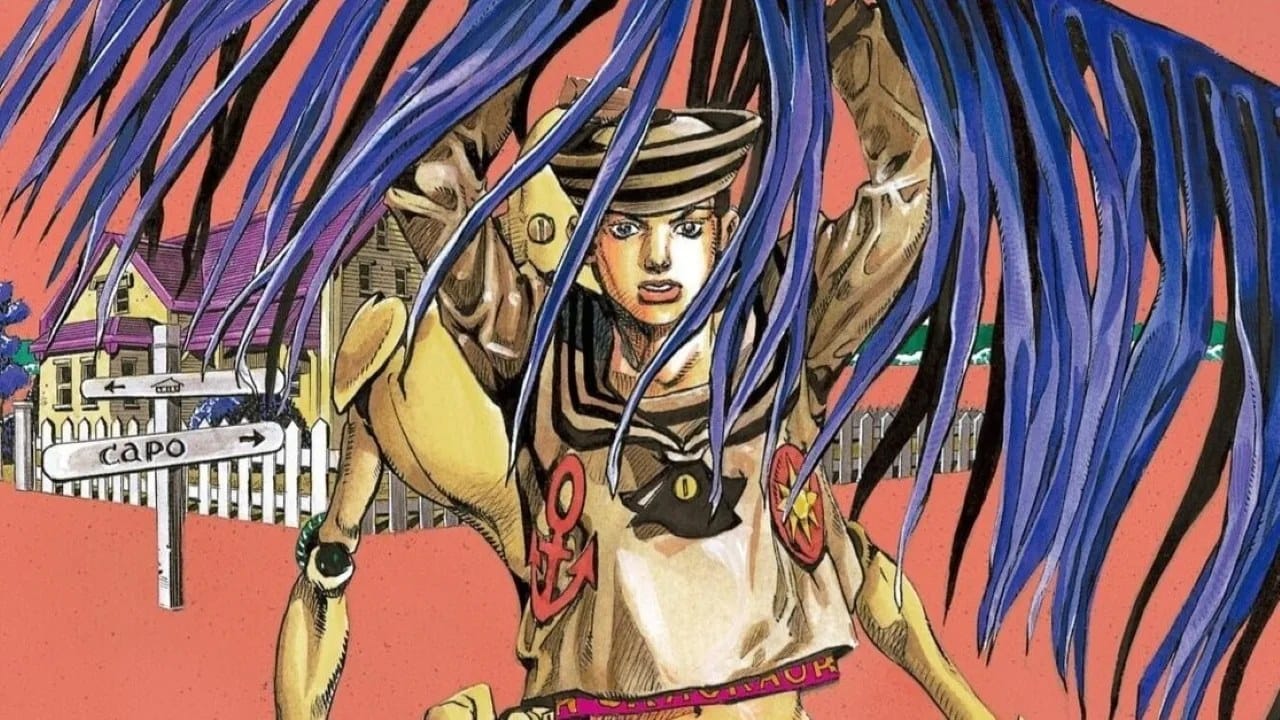
There is no anime adaptation of JoJolion announced. That absence is now conspicuous in a way it simply wasn't before. When VIZ licenses a completed manga arc in a deluxe hardcover format — the same format applied to the part that currently has a running anime — the question of adaptation timing becomes impossible to sidestep. The English print release of Steel Ball Run began in May 2025; its anime premiered in March 2026. The gap between print and screen was less than a year. JoJolion's print release begins in Summer 2027.
The inference is not guaranteed, but the sequence is too consistent to ignore. VIZ does not license and produce expensive hardcover editions of arcs the industry considers dormant. The deluxe treatment is a marker of institutional confidence — the publisher's signal that the property is warm, that an audience exists and is being cultivated, and that additional media activity is either anticipated or already in motion behind closed doors. Whether a JoJolion anime arrives in 2028 or 2029 or later, the print announcement moves the question from speculation into active probability.
The Completeness Problem
There is a structural argument worth making here that goes beyond market mechanics. JoJo's Bizarre Adventure is a franchise that has been publishing continuously since 1987. Its anime adaptations have, with minor exceptions, followed the manga's publication order faithfully. Each part has an anime. JoJolion not having one is an anomaly, not a default state. The longer it remains unadapted, the more it sits as a gap in an otherwise continuous chain — and franchise logic, more than creative ambition, tends to close gaps like that.
The print announcement accelerates that logic. Once English-language readers can access JoJolion officially — once it becomes something that can be sold in bookstores, shelved in libraries, covered by mainstream outlets without the asterisk of fan translation — its cultural surface area expands. More readers means more audience pressure for an adaptation. More audience pressure means more incentive for Netflix and David Production to greenlight the next season. The print release is not merely a publishing event; it is a mechanism for building the audience that justifies what comes after it.
What VIZ announced on October 16 is, on its face, a single Volume 1 of a manga arriving in roughly nine months. What it actually represents is the formal completion of the JoJo print library in English — and, almost certainly, the first move in a longer sequence. The last gap is closing. The next question is already forming.