Marvel's announcement of Magneto: End of Days (2027) at the House of Ideas panel during New York Comic Con 2026 arrived with the shape of a thesis statement, not just a press release. According to Marvel's own announcement, the eight-issue prestige limited series — written by Brian Michael Bendis, drawn by Andrea Sorrentino, colored by Dave Stewart — launches February 3, 2027. That date sits roughly six weeks after Avengers: Doomsday hits theaters on December 18, 2026. The proximity is not coincidental. It is a publishing strategy masquerading as a creative event, and the more interesting question is whether those two things can be the same.
The commercial logic is obvious. Avengers: Doomsday (2026), directed by the Russo Brothers, reunites Ian McKellen and Patrick Stewart as Magneto and Professor X — two actors whose Fox-era portrayals shaped how an entire generation understands those characters. As Disney's official synopsis confirms, the film brings the Avengers, Fantastic Four, and the original X-Men cast together in what amounts to the definitive convergence event of the current MCU phase. Magneto, specifically, arrives at that crossroads carrying sixty years of comic-book moral complexity. The film will compress that into a few minutes of screen time. The series, in theory, will do the opposite.
That tension is where End of Days becomes interesting rather than just well-timed. Sorrentino called it both "an exciting and an intimidating challenge," — those are the exact words a serious artist uses when they mean them, not the language of promotional boilerplate. Bendis, for his part, cited his prior work with the character across House of M (2005), Avengers vs. X-Men (2012), and his run on Uncanny X-Men (2013), framing End of Days as the culmination: "This time, we're going to delve into his world in very curated unique chapters from every era of the Marvel Universe." The word "curated" is doing real work there. It implies selectivity, editorial intent, a structure built around what Magneto means rather than what he did — biography as argument.
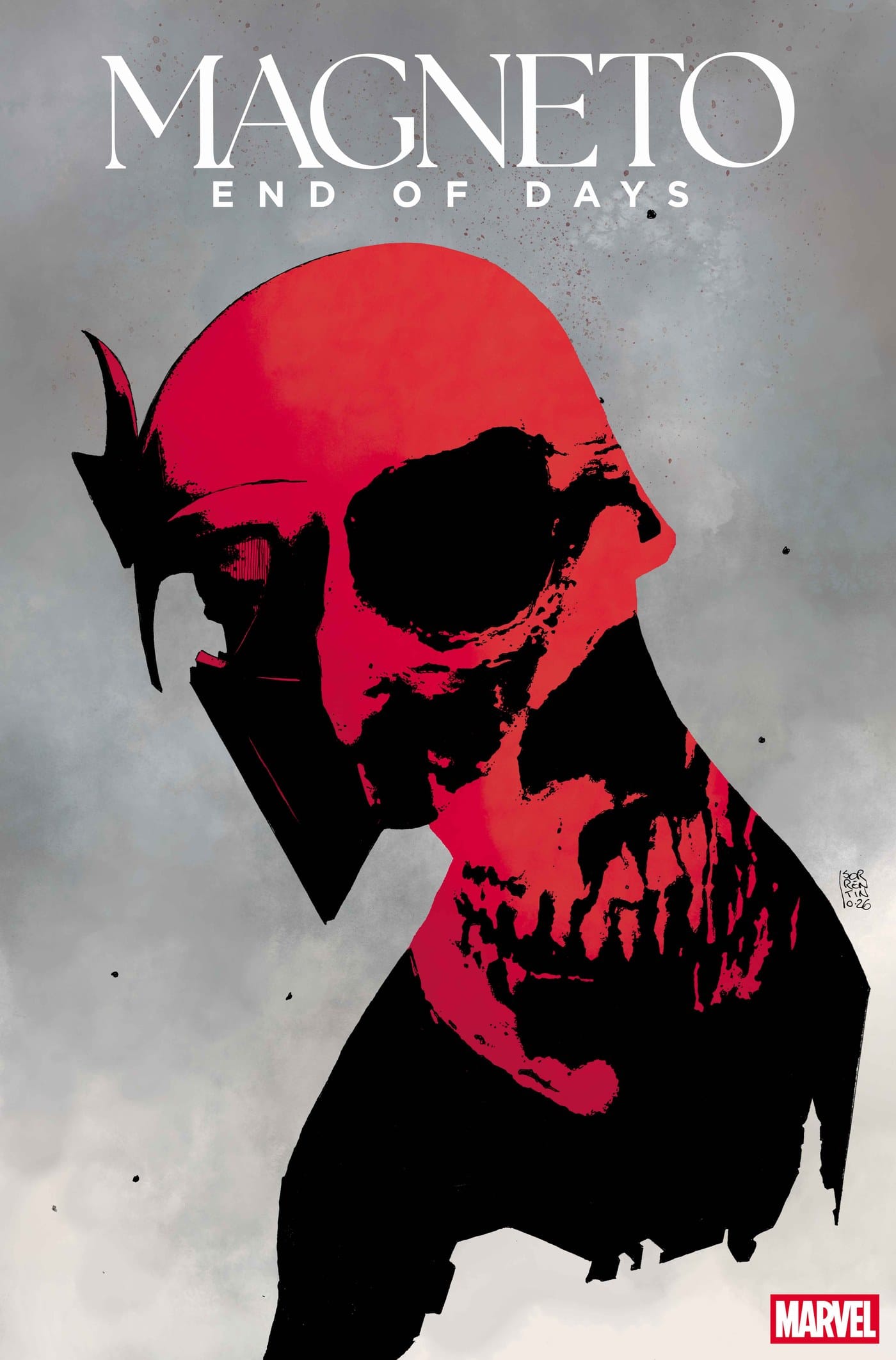
As ICv2 reports, each issue begins at a different point in Magneto's life, moving across his past, present, and an approaching near future shaped by consequences. It's a non-linear portrait, and structurally it borrows from the playbook Bendis used on Daredevil: End of Days (2012) — though the French comics press was quick to note the key difference: where that series built toward the hero's death, Magneto here is very much alive. The "End of Days" framing in this case isn't eulogy; it's reckoning. A man still breathing, still capable of damage, forced to look at what his seventy-plus years of conviction and violence have produced. That's a dramatically richer starting position than a funeral.
The structural ambition requires Sorrentino to do something that very few artists currently working in mainstream comics can pull off: make eight stylistically coherent issues feel genuinely different from each other without losing visual unity. His work has always operated in extreme graphic contrasts — negative space used as psychological pressure, panel layouts fragmented to suggest fractured interiority, color as emotional key rather than realistic light source. Dave Stewart's presence on colors is significant here. Stewart is one of the medium's great collaborators precisely because he never imposes a uniform palette; he listens to the linework. Together, the two should be able to distinguish Magneto in Auschwitz from Magneto on Genosha from Magneto in whatever near-future Marvel chooses to position as the character's horizon — without reducing those eras to costume changes.
Bendis and Sorrentino first worked together when Sorrentino drew Bendis-penned X-Men annuals before their collaboration on the five-issue Old Man Logan (2015) Secret Wars tie-in. That series demonstrated something useful: Sorrentino's atmospheric visual intensity and Bendis's dialogue-driven character interiority are complementary rather than competing. Old Man Logan worked not because the plot was complicated but because the interior life of a man defined by regret was rendered with precision — which is, almost exactly, what End of Days will need to do for Magneto. As Kynari has explored in the context of landmark comics more broadly, the prestige format demands that craft match the occasion — and the occasion here is enormous.
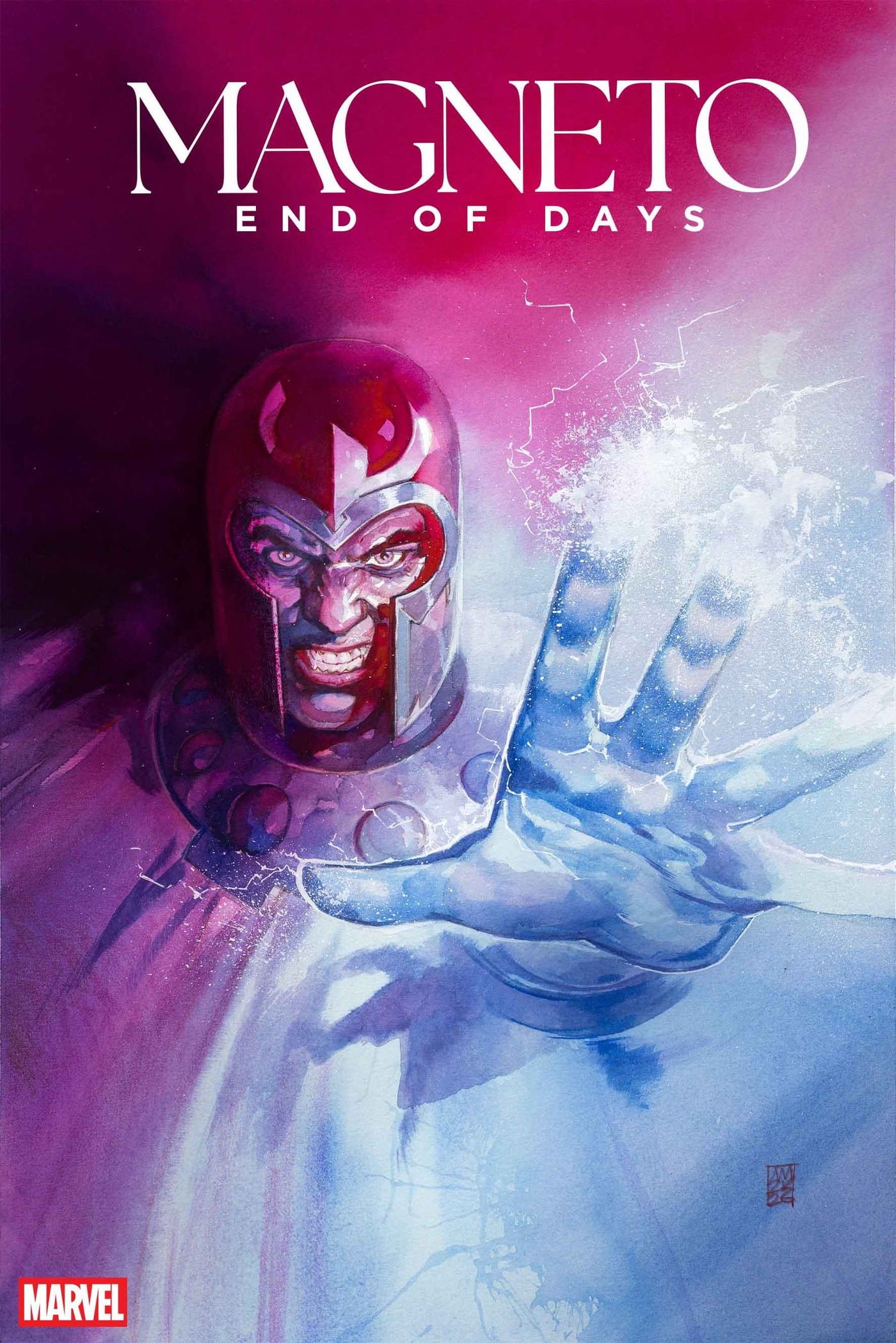
What makes Magneto a genuinely difficult subject — and therefore a genuinely worthwhile one — is that his moral logic is internally consistent in ways that most comics villains aren't. He is a Holocaust survivor who concluded that the only rational response to the world is force. He has been a terrorist, a savior, a leader, a traitor, a father, and a god-king, sometimes in the same storyline. Uncanny X-Men #150 established him as a concentration camp survivor. Chris Claremont spent years building a character whose extremism was a coherent philosophical response to historical trauma. Bendis, during his own Uncanny X-Men run, used Magneto as a moral counterweight to Cyclops's revolution — a fallen knight whose principles were unshakeable but whose moment had passed. End of Days positions itself as the synthesis: not a retcon, not a revision, but a summation.
The risk is the one that all event-adjacent prestige series face — that the proximity to a blockbuster film reduces the comic to a companion piece, a reading guide dressed in expensive paper. Avengers: Doomsday will introduce or reintroduce Magneto to millions of people who will never read this series. The series, conversely, is aimed at an audience that has been reading Magneto for decades and wants to know what a thoughtful writer, given eight uninterrupted issues and the best artist of his generation, can do with that material. The danger is that Marvel's promotional framing collapses those two audiences into one, and the series ends up being neither the deep dive its creators intend nor the accessible entry point the marketing needs. Comics positioned as pre-release mechanisms carry a structural tension that the best creative work has to actively resist.
The variant cover lineup — Alex Maleev, Jerome Opeña, and Netho Diaz alongside Sorrentino's main cover — signals that Marvel is treating this as a collectible event, not just a critical one. That's fine, but it's also a reminder that prestige format and prestige ambition are different things. The format is eight issues with better paper and higher production values. The ambition — making a sixty-year-old villain feel genuinely consequential on the page in ways that a blockbuster trailer cannot — is something that has to be earned, not announced.
Bendis has earned the right to try. Sorrentino has the visual vocabulary to execute. Dave Stewart has the chromatic intelligence to hold it together across eras. The question that February 2027 will answer is whether Magneto: End of Days uses its cinematic moment as a launching pad toward something permanent — or whether the film's shadow ends up being the most interesting thing about it. Given the creators involved, the former seems more likely than the latter. But the page, as always, will decide.