There is a moment in Slam Dunk (1990) — the manga by Takehiko Inoue that ran in Weekly Shōnen Jump until 1996 — where Hanamichi Sakuragi, a delinquent with zero athletic background, stands on a basketball court and realizes, with quiet and almost tragic clarity, that he loves this game. Not because he is good at it. Not because it earns him admiration. But because the game itself has become the only space where his existence feels purposeful. That moment does not arrive with fanfare. There is no crowd, no dramatic soundtrack cue implied by the art. Just a boy and a court and a feeling that Inoue draws with such precise linework that the silence of the panel becomes deafening. That is the signature of a masterpiece: it makes silence speak.
Beyond the Court
The critical consensus around Slam Dunk has long centered on what it did for basketball in Japan — and by extension, across Asia. Sales figures above 170 million copies worldwide, a generation of Japanese athletes who cite it as their reason for picking up a ball, the 2022 theatrical film The First Slam Dunk (2022) grossing over 15 billion yen domestically. These are real and significant facts. They are also, in a sense, the least interesting thing about the work.
What Inoue built across 31 volumes is not a sports story with good characters. It is a character study that uses sport as its most ruthless diagnostic tool. Basketball in Slam Dunk functions the way war functions in the best war literature: as an environment that strips its subjects down to their irreducible truths. You cannot fake your way through a game at this level. You cannot lie to the court. And so every character's deepest wound, every unresolved fracture, eventually surfaces under the pressure of competition.
The Architecture of Sakuragi
Hanamichi Sakuragi is the engine of the work, and he is a genuinely unusual protagonist for shōnen manga. He begins as a caricature — the loud, red-haired fool who takes up basketball purely to impress a girl — and the series never fully abandons that comedic register. What it does, slowly and without announcing itself, is excavate the structure underneath the comedy. Sakuragi is a boy who has been told, in a hundred small and large ways, that he is worthless. His aggression, his need to dominate, his compulsive clowning: these are not personality traits. They are scar tissue.
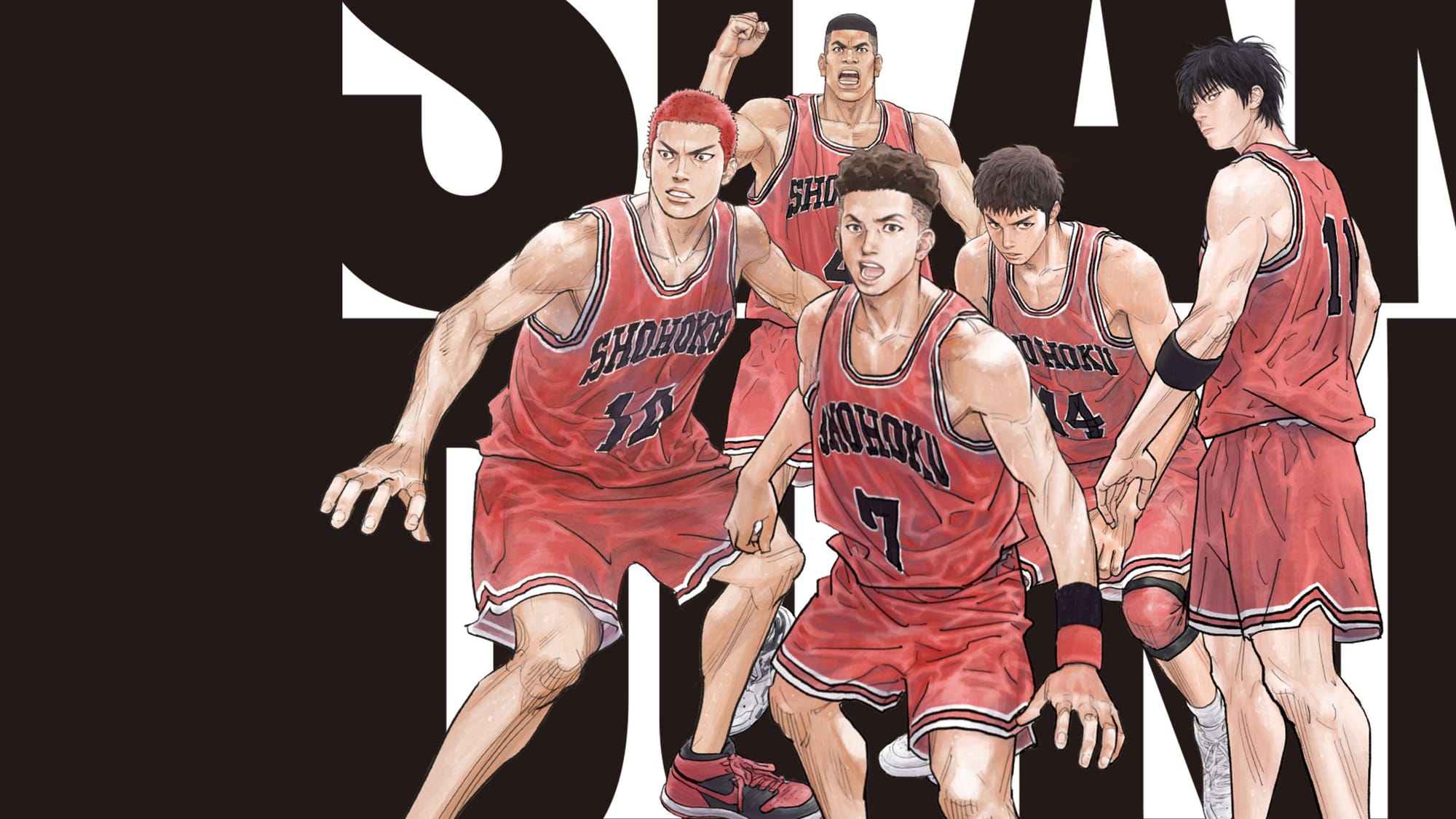
Inoue never delivers this as exposition. He shows it through behavior, through the specific way Sakuragi reacts to being underestimated, through the scenes — and there are several — where the mask slips and the rawness beneath is briefly, painfully visible. The comedy and the tragedy are not separate registers. They are the same register, seen from different distances. This is sophisticated literary construction, and it is present on virtually every page of the series.
A Roster Built on Fracture
The supporting cast of the Shohoku team operates on the same principle. Kaede Rukawa, the rival prodigy, is almost pathologically silent — not because he is cool, but because he has decided that human connection is a liability he cannot afford. Akagi, the captain, carries the weight of a dream the rest of the team does not yet understand is worth carrying. Ryota Miyagi plays with a grief he has never fully processed. Hisashi Mitsui's arc — from former prodigy to dropout to desperate return — is one of the most emotionally complete secondary arcs in manga history, resolved not through victory but through the act of stepping back onto the floor.
None of these characters exist to serve the plot. The plot exists to force them into situations where they must confront themselves. This inversion — story as pressure, not as destination — is what separates Slam Dunk from the vast majority of sports narratives, animated or otherwise.
The Visual Grammar of Inoue
Inoue's draftsmanship deserves its own analysis. His rendering of physical movement in Slam Dunk was, in 1990, unlike anything the medium had produced in a sports context. He had studied basketball obsessively, and it shows not in technical accuracy alone but in kinetic truth — the way a body looks mid-flight, the geometry of a contested rebound, the particular exhaustion of a player in the fourth quarter. But the panels that linger longest are never the action panels. They are the close-ups: a jaw set against doubt, a hand trembling before a crucial free throw, eyes that contain entire histories.
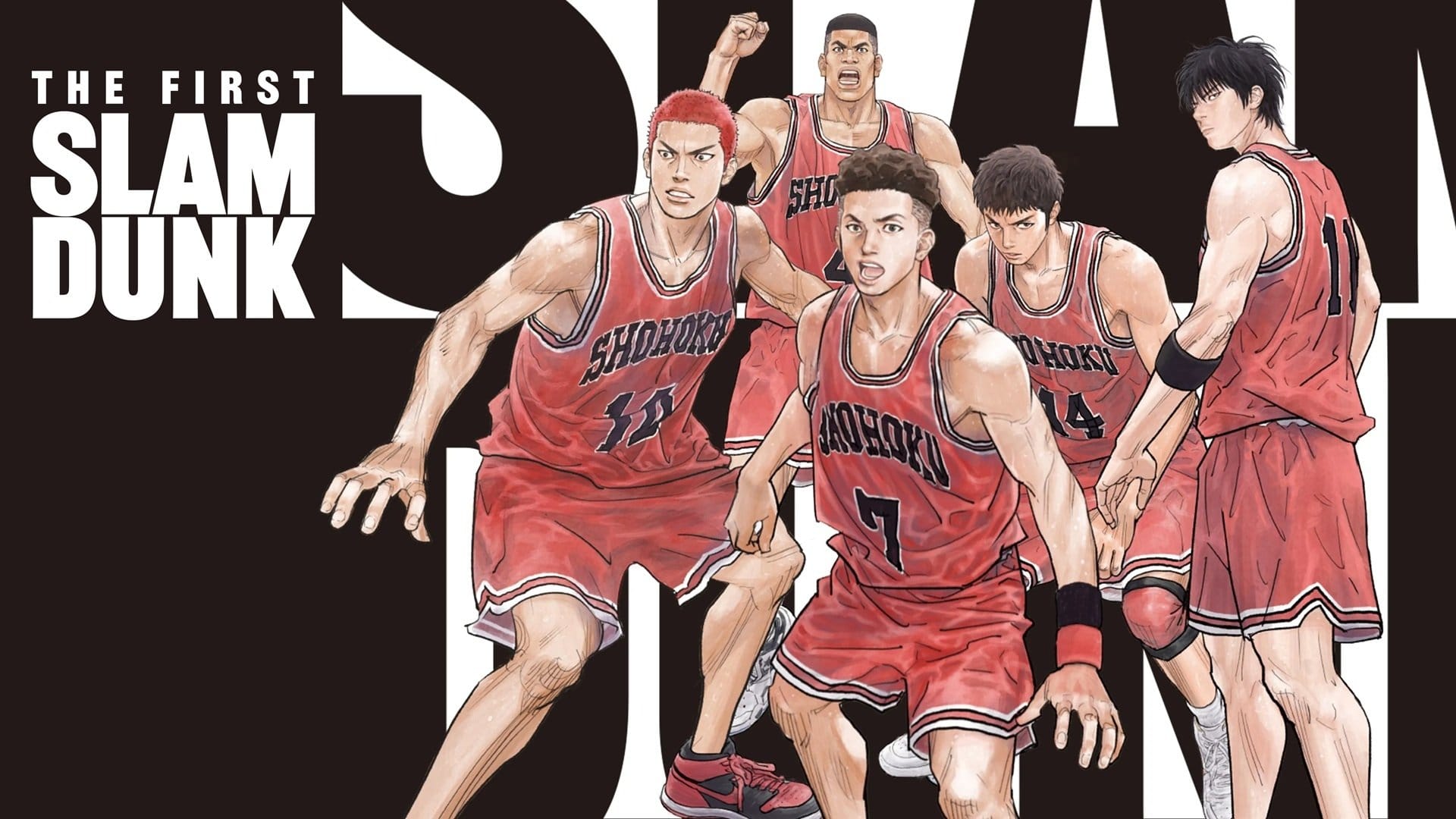
The famous final chapters of the manga — the match against Sannoh, widely considered the peak of the series — demonstrate this duality at full force. Inoue shifts between explosive two-page action spreads and single-panel silences with a rhythmic control that is closer to film editing than to conventional manga pacing. He knows exactly when to cut, exactly when to hold. The effect is cumulative and, at its climax, genuinely overwhelming.
Why It Endures
The question of why Slam Dunk endures is also the question of why any great work of art endures: because it tells a truth about human experience that does not expire. The specific truth Inoue is interested in is the relationship between limitation and desire — what it means to want something badly, to be demonstrably unequipped for it, and to pursue it anyway not because success is guaranteed but because the pursuit itself is the only honest response to being alive.
Sakuragi never becomes the greatest player in Japan. The manga does not end with a national championship. It ends with an injury, an absence, a letter, and a promise that may or may not be kept. It is an ending that trusts its reader completely — trusts them to understand that the point was never the trophy. The point was what the game cost, and what it gave back in return.
Thirty years later, that exchange still feels like the most accurate description of athletic ambition ever committed to paper. More than that: it feels like an accurate description of being young, and broken, and trying anyway. That is why Slam Dunk is not just the best sports manga ever made. It is one of the best mangas ever made, full stop. The court is just where Inoue chose to hold his mirror.