Two theatrical films. Three years apart. Announced in a single livestream on One Piece Day '26. The framing was celebration — confetti, applause, Oda's silhouette behind a curtain — but the substance was a balance sheet. When a franchise of this scale commits to two discrete cinematic releases in one breath, it is not indulging its fanbase. It is filing a motion with the market.
One Piece Film: God Valley (2027) and BAAD (2029) represent something more consequential than content. They represent Toei Animation's most explicit declaration yet that One Piece is no longer being managed as a serialized story with occasional theatrical offshoots. It is being engineered as a self-sustaining IP ecosystem with staggered detonation points — and One Piece Day '26 was the moment that architecture went public.
The God Valley Calculation
One Piece Film: God Valley is the more legible of the two announcements. The God Valley Incident — the off-panel clash between Rocks D. Xebec, Monkey D. Garp, and a young Gol D. Roger — is among the most mythologized events in the manga's lore, precisely because Oda has never shown it. Its value is atmospheric. It lives in the negative space between known history and speculation, which makes it ideal cinematic material: high anticipation, low risk of contradicting ongoing canon, and a story that can be told entirely in flashback without touching the manga's active timeline.
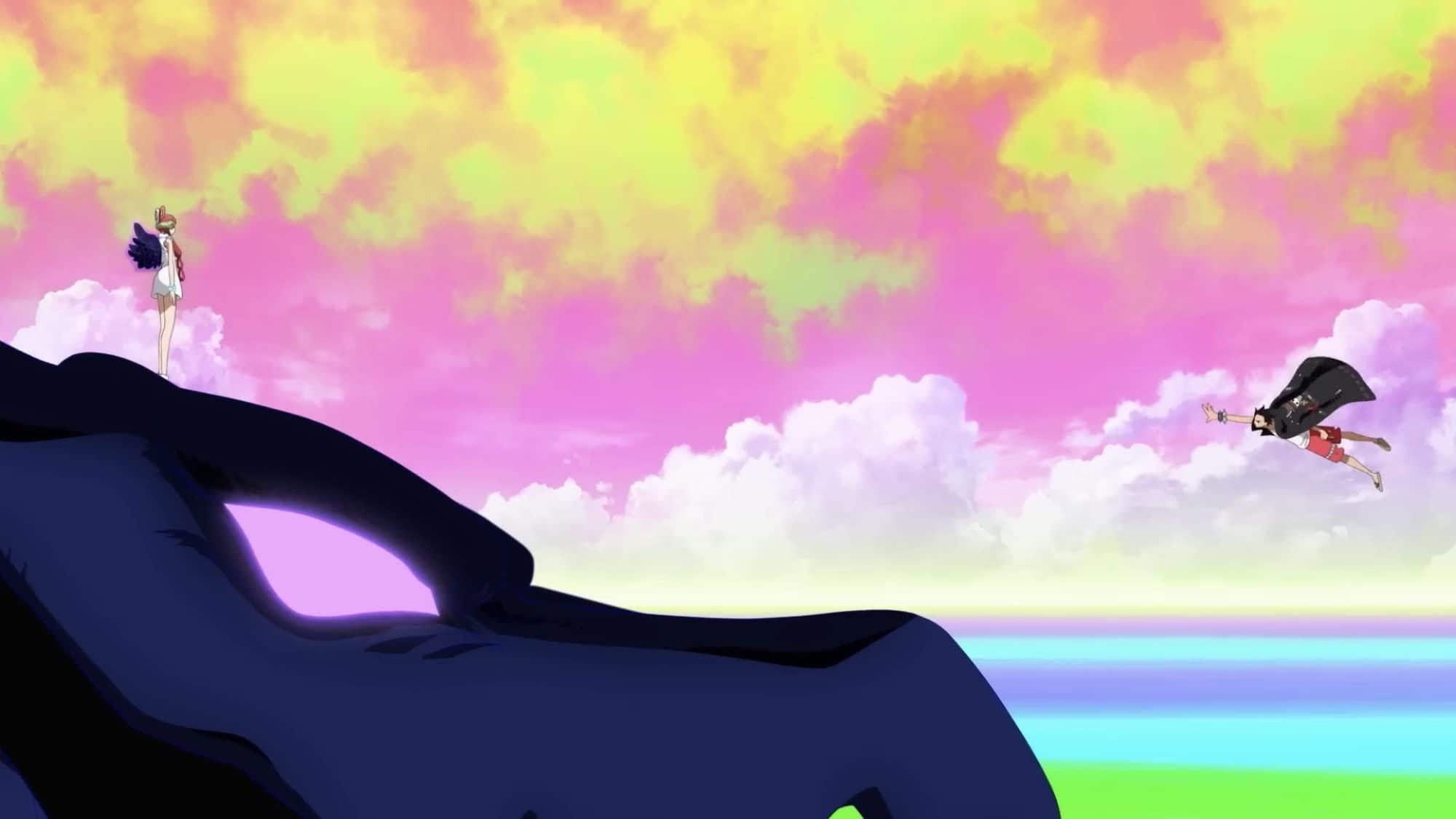
This is not an accident. Toei is not adapting God Valley because it is the most urgent story to tell. It is adapting it because it is the safest large-scale canvas available — a contained mythology that can absorb blockbuster production values, introduce no serialization conflicts, and function as a standalone theatrical event for casual viewers and hardcore fans alike. The 2027 window also places it squarely between the projected conclusion of the Egghead arc in the anime and whatever comes next, giving the theatrical release room to breathe without competing with the weekly broadcast.
BAAD and the Long Horizon
BAAD (2029) is the more revealing announcement precisely because so little is known about it. A title, a year, a deliberate gap. In franchise management, that gap is not ambiguity — it is deliberate load-bearing space. By announcing a 2029 film in 2026, Toei is accomplishing several things simultaneously: it is signaling to exhibition partners and merchandising licensees that the IP has guaranteed theatrical presence through the end of the decade; it is giving itself a fixed creative deadline around which secondary productions — games, spin-offs, streaming events — can be scheduled; and it is telling the investment community that One Piece's theatrical infrastructure is not episodic but continuous.
The name BAAD resists easy interpretation, which is itself a strategy. An opaque title generates sustained conversation in fan spaces for years before a single frame is shown. It occupies cultural bandwidth at zero production cost. Whether the title is an acronym, a character name, or a tonal declaration matters less right now than the fact that it exists — announced, dated, and already embedded in the franchise's forward calendar.

What Toei Is Actually Building
The Marvel Cinematic Universe comparison is too easy and ultimately misleading. Toei is not building a shared universe. It is doing something arguably more sophisticated: extending the lifespan of a single, ongoing narrative across multiple formats without fracturing its continuity. The theatrical films are not separate timelines. They are pressure valves — high-budget events that serve the broader serialization by handling lore and spectacle that the weekly anime cannot accommodate at the same scale or cost.
One Piece Film: Red (2022) demonstrated that a theatrically released One Piece film, when positioned correctly and given genuine production ambition, can generate over $200 million globally and function as a cultural moment rather than a mere product extension. Toei learned the right lesson from that number. The lesson was not "make more films." It was "control the spacing, control the stakes, and announce far enough in advance to make each release feel inevitable."
That is precisely what One Piece Day '26 achieved. Not excitement. Infrastructure. The confetti was real, but the architecture underneath it was the point — and it will be standing long after the livestream ends.