On November 3, 2026, Lionsgate and Sony Pictures issued a joint announcement that ended eleven years of circling. Naruto (2015–present, development), the live-action adaptation of Masashi Kishimoto's manga, has been formally greenlit. Sony will co-finance the film and handle international distribution; Lionsgate retains development, production, and domestic release. Destin Daniel Cretton, who is simultaneously writer and director, will begin shooting in spring 2027. The title has no release date yet, but cameras are rolling in roughly six months. That is a different category of commitment than anything this project has seen before.
To understand what this deal actually represents, you have to understand how long the alternative looked normal. Lionsgate first announced a live-action Naruto film in 2015, with Kishimoto attached as a creative advisor. At the Jump Festa event in 2016, it was confirmed that the manga creator would be co-developing the film to ensure faithfulness to the source material. Then, mostly silence. The project was confirmed to be in active development in 2021. In 2023, Lionsgate declared it was being fast-tracked. Screenwriter Tasha Huo was brought on; she finished a script. Cretton was announced as writer-director in early 2024, at which point Huo's draft became a starting point rather than a finish line — Cretton retooled it. By late 2024, Cretton's commitment to the Marvel Cinematic Universe had taken precedence, and the project went quiet again. Each of these moments was reported as momentum. None of them was structural commitment. A greenlight with a co-financing partner and a production start date is something different.
The distribution split is not just administrative. It tells a precise story about where manga-to-film money actually lives. Lionsgate keeps North America — the territory where it has existing theatrical infrastructure and relationships. Sony takes the rest of the world. This is not a reluctant concession on Sony's part; it was apparently the result of a competitive bidding process involving multiple studios, and Sony won that competition. The reason Sony wanted international distribution is not mysterious: Sony owns Crunchyroll, the dominant anime streaming platform globally. The studio's familiarity with anime audiences, its existing marketing infrastructure into those communities, and the brand recognition that Crunchyroll carries across Asia, Europe, and Latin America give Sony a material advantage in converting awareness into ticket sales outside North America. Lionsgate noted in its statement that Sony was selected precisely because of that experience with anime and manga. The deal is not philanthropic synergy — it is a logical allocation of risk according to where each party has existing leverage.
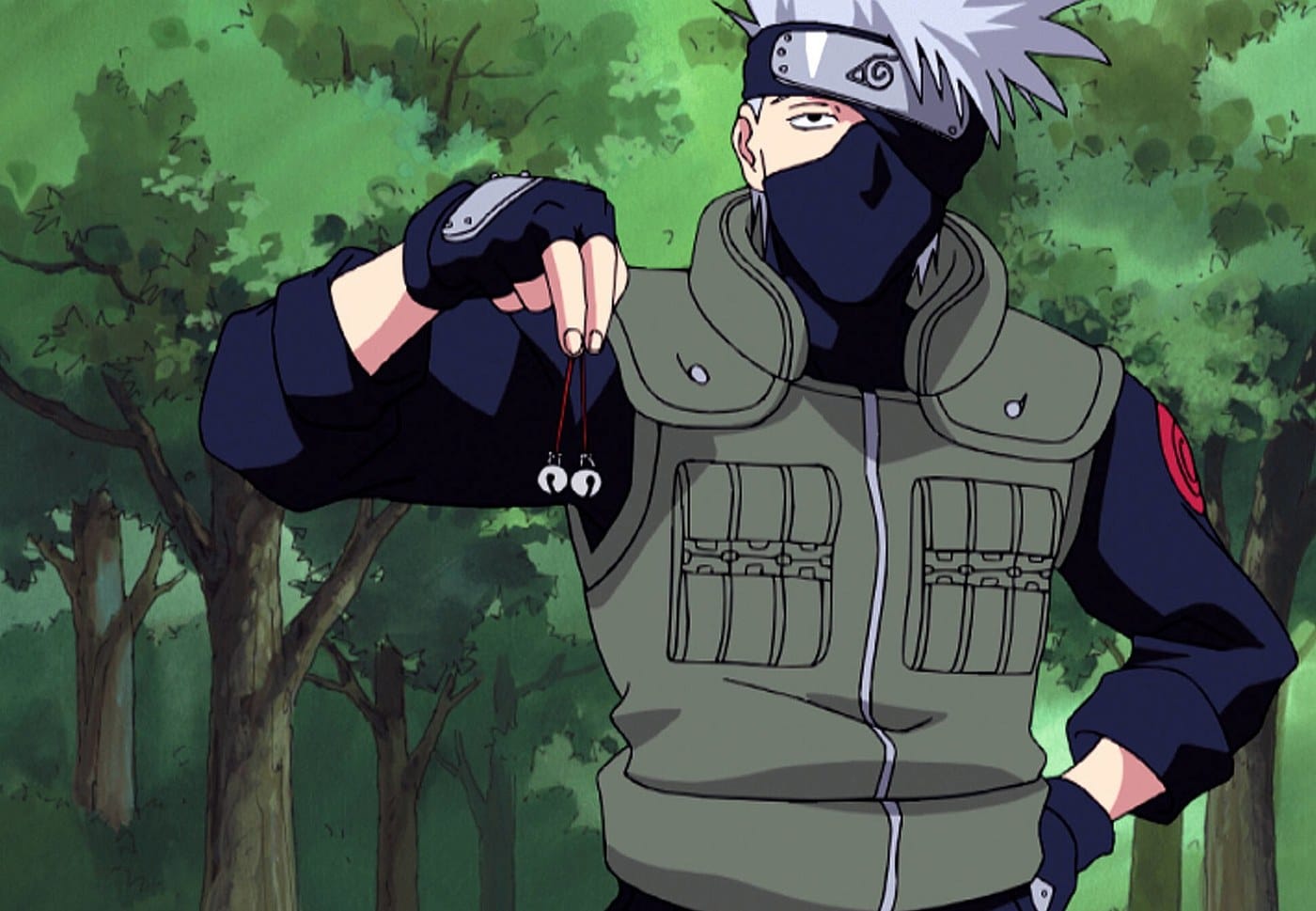
The franchise itself justifies the structural ambition. Kishimoto's manga has sold over 250 million copies worldwide since its debut in 1999, placing it among the top-selling manga series in publishing history. Naruto Shippuden, the anime continuation, topped Netflix's most-watched anime list for the first half of 2025 with 40 million views — a figure remarkable for a series whose anime concluded in 2017. That is not a nostalgia audience. It is a continuously replenishing one, fed by streaming platforms and carried forward by younger viewers discovering the series well after its original run. The global anime streaming market itself hit $7.5 billion in 2024, with projections pushing toward $14.65 billion by 2030. Naruto sits at the center of that expansion — not as a relic but as active catalog.
What the deal required, beyond money, was the right director. The choice of Cretton is analytically interesting precisely because his qualifications are not primarily about action — they are about character-driven narrative scale. He came to this project already having directed Shang-Chi and the Legend of the Ten Rings (2021), a film that succeeded in large part because it located emotional specificity inside superhero spectacle. Then came Spider-Man: Brand New Day (2026), which grossed $2.52 billion worldwide and set the all-time domestic opening weekend record at $360 million, surpassing Avengers: Endgame. That figure matters not because box office defines artistic merit, but because it demonstrates that Cretton can operate at a scale that a property like Naruto demands without losing the character precision that made the films work in the first place. Sony's existing overall deal with Cretton adds another layer to why the international co-financing arrangement fell into place — both parties already knew how to work together.
Kishimoto's own public response to Cretton's attachment was notably direct. "When I heard of Destin's attachment, it happened to be right after watching a blockbuster action film of his, and I thought he would be the perfect director for Naruto," the mangaka said, adding that his forte in creating character-driven dramas convinced him there was no other director for the project. That is not a studio-mandated endorsement. It reflects what the source material actually is beneath the combat sequences: a prolonged study in rejection, belonging, identity, and the cost of becoming who you are supposed to be. Those themes require a director with range, not just someone who can choreograph a fight. Cretton's filmography, from Short Term 12 (2013) through Shang-Chi to Brand New Day, argues he has that range.
The casting picture is still largely incomplete. The production launched a global casting search this summer for the three leads — Naruto Uzumaki, Sasuke Uchiha, and Sakura Haruno — with reports indicating the search is targeting actors aged 18 and older to play characters at approximately 16, suggesting the film may be drawing from the Naruto: Shippuden timeline or aging the characters up slightly for a more mature entry point. Actor Charles Melton has been reported to be in talks to play Kakashi. The film is being produced by Avi Arad, Ari Arad, and Emmy Yu for Arad Productions, alongside Cretton and Jeyun Munford. No release date has been set, with 2028 the most plausible target given a spring 2027 production start.
What distinguishes this moment from every previous moment in this project's eleven-year history is not enthusiasm — there has never been a shortage of enthusiasm for Naruto. What distinguishes it is architecture. Two studios have split real financial exposure. A director with proven franchise command is attached as both writer and director. A global casting search is active. A production start date is confirmed. The property sits at the intersection of a maturing anime streaming market and an audience that has never stopped watching. The industry has been circling this IP for over a decade. The circle just closed.
Whether the film earns what the structural commitment promises is a different question — one that only production, and eventually release, can answer. The comparison that will shadow Naruto throughout its development is Netflix's live-action One Piece (2023), which navigated a similarly beloved and structurally complex source material with enough fidelity to generate serious critical and audience response. Naruto is choosing a different form — a theatrical feature film rather than a serialized adaptation — which means it will compress a story spanning hundreds of chapters into something under three hours. That compression is the central creative challenge, and no co-financing deal resolves it. What the deal does is confirm that the industry has decided the challenge is worth taking seriously. After eleven years, that is not a small thing. It is simply not yet the thing that matters most.
For the broader context of how manga IP is moving through Hollywood pipelines right now, the recent JJK box set release offers a parallel data point on appetite — 6,040 pages of Gege Akutami's series consolidated into a single commercial package, shipping to an audience clearly committed to the long form. And Lionsgate's own genre posture is worth watching: the studio's recent moves in action-adjacent territory, including the upcoming action thriller Karōshi, suggest a studio actively building capacity around high-intensity spectacle rather than drifting toward it. The Naruto greenlight fits a pattern. Whether the pattern produces the right film is what spring 2027 will start to determine.